 Pin it
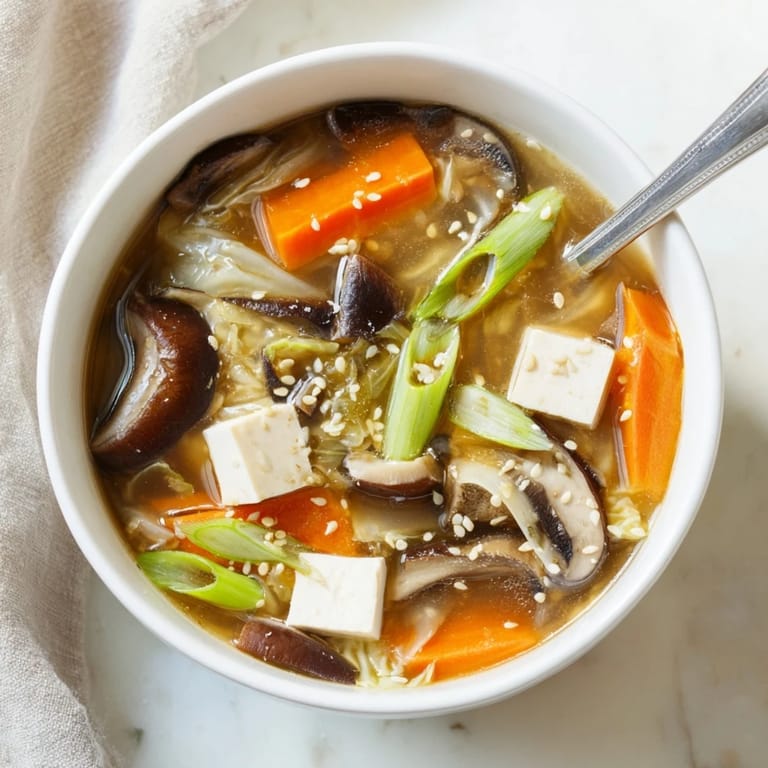
 Ginger-Miso Winter Soup is a light, warming, and restorative meal specifically designed for chilly days. This broth-based dish is packed with umami flavor and features the healing properties of fresh ginger and the probiotic benefits of miso.
Pin it By infusing the broth with thin slices of ginger and garlic, you create a savory base that perfectly complements tender winter vegetables like napa cabbage and julienned carrots.
Ingredients
Tired of Takeout? 🥡
Get 10 meals you can make faster than delivery arrives. Seriously.
One email. No spam. Unsubscribe anytime.
- Broth Base: 6 cups water or low-sodium vegetable broth, 2-inch fresh ginger (sliced), 2 garlic cloves (sliced), 2 tablespoons white or yellow miso paste.
- Vegetables: 1 cup napa cabbage (sliced), 1 medium carrot (julienned), 1 cup shiitake mushrooms (sliced), 2 scallions (sliced).
- Garnishes: 1 tablespoon toasted sesame seeds, fresh cilantro or parsley (optional), chili oil or flakes (optional).
- Optional Add-ins: 200 g silken tofu (cubed), 100 g soba or rice noodles (cooked).
Instructions
- 1. Simmer Broth
- In a large pot, bring the water or vegetable broth to a gentle simmer.
- 2. Infuse Aromatics
- Add the sliced ginger and garlic. Simmer for 10 minutes to infuse the broth.
- 3. Cook Vegetables
- Add the napa cabbage, carrot, and shiitake mushrooms. Simmer for another 5-7 minutes until vegetables are tender.
- 4. Temper Miso
- Remove the pot from the heat. Place miso paste in a small bowl, add a ladle of hot broth, and whisk until smooth. Stir the mixture into the soup.
- 5. Heat Add-ins
- Add tofu and cooked noodles, if using, and let them warm through for 2 minutes.
- 6. Garnish and Serve
- Ladle soup into bowls. Top with scallions, toasted sesame seeds, herbs, and chili oil or flakes as desired.
Zusatztipps für die Zubereitung
To preserve the probiotics in the miso, ensure the pot is removed from the heat before stirring the paste in. Boiling the miso can destroy its beneficial properties and alter the delicate flavor profile.
Varianten und Anpassungen
You can easily swap shiitake mushrooms for enoki or button mushrooms. For more vegetable variety, consider adding bok choy, spinach, or daikon. For extra depth of flavor, stir in a dash of soy sauce or tamari.
Serviervorschläge
Serve this soup immediately while steaming hot. It pairs beautifully with a cup of hot green tea or a crisp, dry white wine for a complete, nourishing experience.
 Pin it
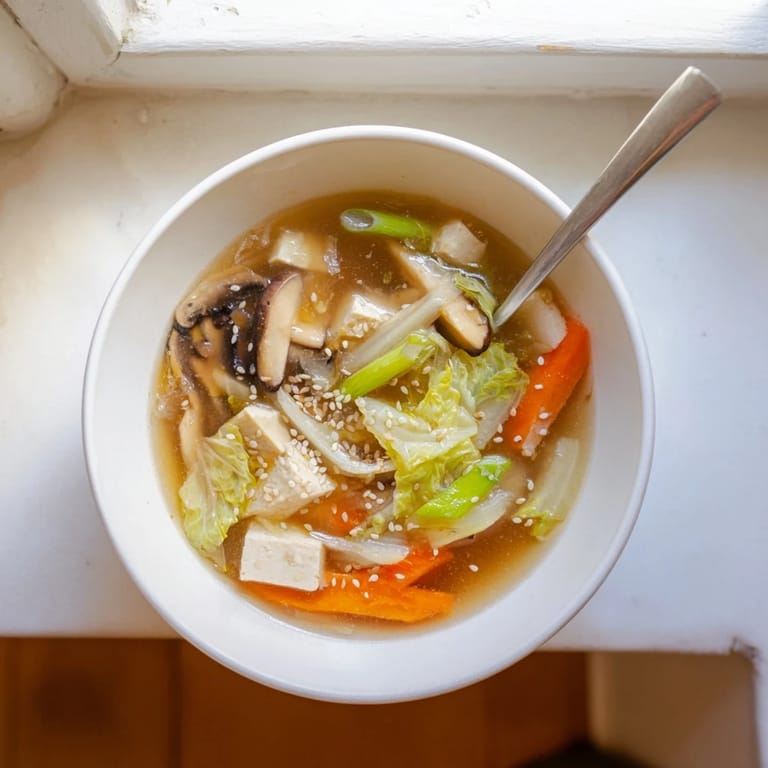
 Whether you are looking for a light lunch or a cozy dinner, this Ginger-Miso Winter Soup is a simple way to bring Japanese-inspired comfort into your kitchen.
Recipe FAQ
- → Can I make this soup gluten-free?
Yes, use vegetable broth, certified gluten-free miso, and skip soba noodles or use rice noodles instead. Always check labels to ensure your miso brand is gluten-free.
- → Why shouldn't I boil the miso?
Boiling miso kills the beneficial probiotics and can make the texture grainy. Always whisk it into warm broth off the heat for the best flavor and health benefits.
- → Can I use red miso instead of white?
Red miso has a stronger, more intense flavor. Use less than the recipe calls for or expect a bolder, deeper taste. White miso provides a lighter, sweeter profile perfect for delicate vegetables.
- → How long does this soup keep?
Store in an airtight container for 3-4 days. Reheat gently without boiling to preserve miso's probiotics. The vegetables may soften but flavors will continue to develop.
- → Can I freeze this soup?
Freeze without the miso added for up to 3 months. Thaw and reheat, then stir in fresh miso off the heat. Freezing with miso can alter its texture and probiotic benefits.
- → What vegetables work best in this broth?
Napa cabbage, carrots, and shiitake mushrooms are classic choices. Bok choy, spinach, daikon radish, or baby kale also work beautifully. Add delicate greens like spinach in the last minute of cooking.