 Pin it
 On the first truly crisp day last autumn, I watched rain streak down my kitchen window and knew it was time for this minestrone. The steam rising from the pot seemed to carry memories of my grandmother's kitchen, though her version never included butternut squash. That addition came after I moved north, where fall arrives with dramatic purpose and demands hearty comfort in response. My hands still remember the satisfaction of dicing that first vibrant orange cube of squash against the backdrop of crimson leaves outside.
Last October, my neighbor knocked unexpectedly with armfuls of kale from her garden just as I was prepping this soup. The timing felt like the universe conspiring in my favor, and I invited her to stay. Three hours later, our conversation still flowed as easily as the wine while we sopped up the last bits of broth with crusty bread. Something about this minestrone loosens tongues and eases shoulders, turning casual meals into lingering gatherings.
Ingredients
- Pancetta: These small, salty cubes create the foundation of flavor, rendering their fat to become the medium in which all other ingredients dance.
- Butternut Squash: Choose a squash that feels heavy for its size, indicating dense flesh that will hold its shape through cooking while still becoming tender.
- Kale: Lacinato kale works beautifully here, but any variety will do as long as you remove those tough stems that never quite soften enough.
- White Beans: Cannellini beans have a creamy interior that partially breaks down during cooking, naturally thickening the broth without need for additional starch.
- Ditalini Pasta: These tiny tubes cook quickly and capture broth in their centers, creating perfect little flavor bombs in each bite.
Tired of Takeout? 🥡
Get 10 meals you can make faster than delivery arrives. Seriously.
One email. No spam. Unsubscribe anytime.
Instructions
- Begin with Pancetta:
- Heat olive oil in your Dutch oven until it shimmers, then add the diced pancetta. Listen for that satisfying sizzle as the fat begins to render and the edges crisp to golden brown.
- Build Your Flavor Base:
- Add your mirepoix of onions, carrots, and celery to the rendered pancetta fat. The kitchen will fill with that sweet, earthy aroma that signals something wonderful is underway.
- Introduce the Squash:
- When your vegetables have softened, add the butternut squash cubes and minced garlic. The garlic should become fragrant but not brown, which would introduce bitterness.
- Create the Broth:
- Pour in your tomatoes with their juice, the broth, and seasonings. This liquid foundation will transform as it simmers, absorbing the essence of each ingredient.
- Allow Time to Meld:
- Let everything simmer gently for about 20 minutes until the squash yields easily to the side of a spoon. The patience here is rewarded with harmony of flavors.
- Finish with Freshness:
- Add the kale and pasta, cooking just until the pasta is al dente and the kale has wilted but still maintains its vibrant color. The contrast of textures here is what makes each spoonful interesting.
- Garnish and Serve:
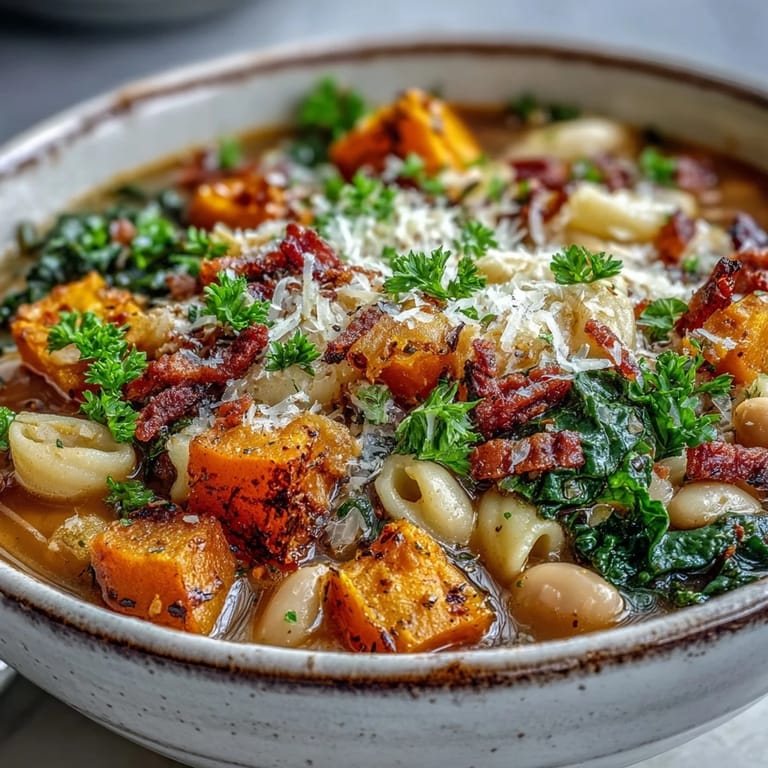
- Ladle into bowls and crown with the reserved crispy pancetta, fresh parsley, and a snowfall of freshly grated Parmesan. The cheese will melt slightly into the hot broth, creating wisps of salty richness.
 Pin it
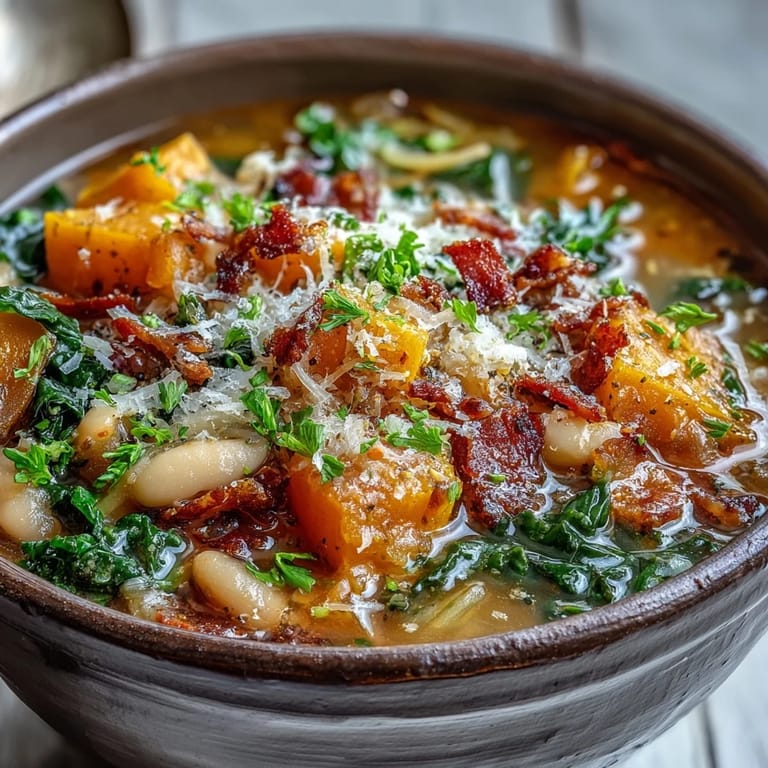
 My daughter, typically suspicious of anything containing visible vegetables, once approached her bowl with narrowed eyes and a spoon held like a scientific instrument. The first reluctant taste led to a surprised pause, followed by a small nod of approval. By the third spoonful, she was fully engaged, fishing specifically for the butternut squash pieces she had initially attempted to avoid. Now she requests this soup by asking for that orange chunky one, which in our house is high praise indeed.
Seasonal Adaptations
While fall is the obvious season for this minestrone, Ive found it adapts beautifully throughout the year. Summer brings opportunities for fresh tomatoes and zucchini instead of butternut squash. Winter calls for heartier additions like turnips or parsnips alongside the squash. Spring welcomes asparagus tips and fresh peas in the final minutes of cooking, creating a lighter version that celebrates new growth while still providing comfort during those unpredictable temperature swings.
Make It Your Own
The beauty of minestrone lies in its forgiving nature and flexibility. Some nights when the pantry seems particularly bare, this soup has saved dinner by accepting whatever vegetables remained in the crisper drawer. Once, out of celery, I substituted fennel bulb, which introduced an unexpected but delightful anise note that paired surprisingly well with the pancetta. Another time, running short on ditalini, I broke spaghetti into small pieces and discovered my children preferred the irregular shapes for their treasure hunt appeal.
Serving Suggestions
While perfectly satisfying on its own, this minestrone welcomes thoughtful accompaniments that elevate the meal. A simple arugula salad dressed with lemon and olive oil provides bright contrast to the richness of the soup. Rosemary focaccia or a crusty sourdough boule serves as both edible utensil and satisfying companion, especially when lightly toasted and rubbed with a garlic clove.
- For an impressive dinner party presentation, serve the soup in hollowed out small pumpkins or acorn squash halves that have been roasted until just tender.
- A small bowl of extra grated Parmesan alongside allows guests to adjust the savory depth to their preference.
- Remember that a final drizzle of your best olive oil just before serving adds a fruity freshness that lifts all the flavors.
 Pin it
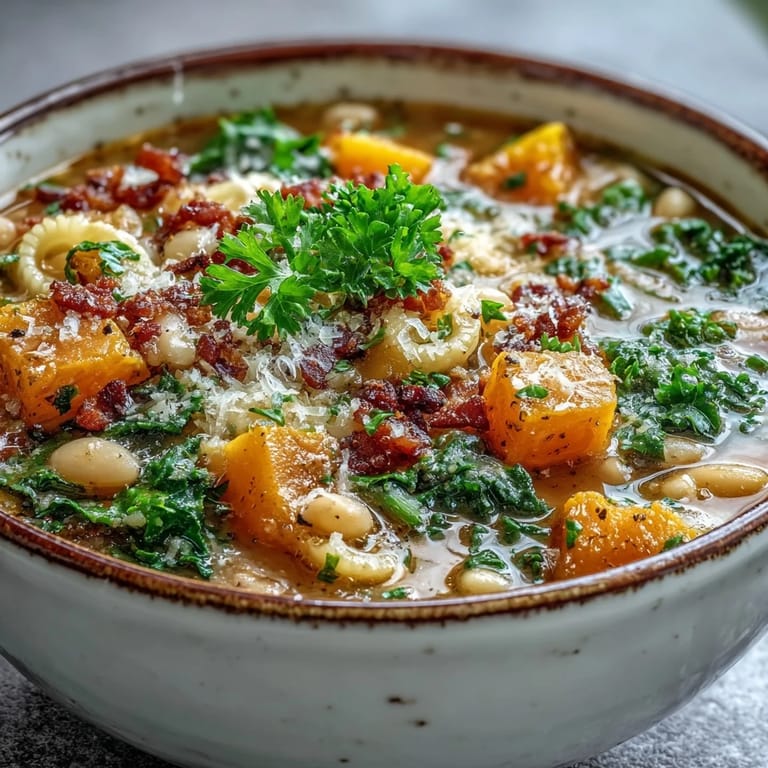
 This minestrone has become my kitchen barometer, marking the transition of seasons and providing steady comfort through lifes unpredictable weather. When words fail, sometimes a steaming bowl communicates care more eloquently than any conversation could.
Recipe FAQ
- → Can I make this minestrone vegetarian?
Absolutely. Simply omit the pancetta and use vegetable broth instead of chicken broth. Add a pinch of smoked paprika when sautéing the vegetables to replicate the smoky depth that pancetta provides.
- → What other vegetables work well in this soup?
You can substitute acorn or delicata squash for the butternut. Swiss chard or spinach replaces kale beautifully. Zucchini, green beans, or diced potatoes also make excellent additions during the summer months.
- → How do I prevent the pasta from becoming mushy?
Cook the pasta separately and add it to individual bowls when serving, or slightly undercook the pasta in the soup since it will continue absorbing liquid as it sits. The pasta will continue softening in leftovers.
- → Can I freeze this minestrone?
Yes, though the pasta texture may change. For best results, freeze without the pasta and add fresh pasta when reheating. The soup freezes beautifully for up to 3 months in airtight containers.
- → What can I serve with this soup?
Crusty Italian bread or garlic bread is ideal for soaking up the broth. A simple green salad with vinaigrette balances the heartiness. For wine, a light Pinot Noir or Chianti complements the savory flavors perfectly.
- → How long does this keep in the refrigerator?
Stored in an airtight container, this minestrone keeps well for 4-5 days. The flavors actually develop and improve after a day or two. You may need to add additional broth when reheating as the pasta will absorb liquid.