 Pin it
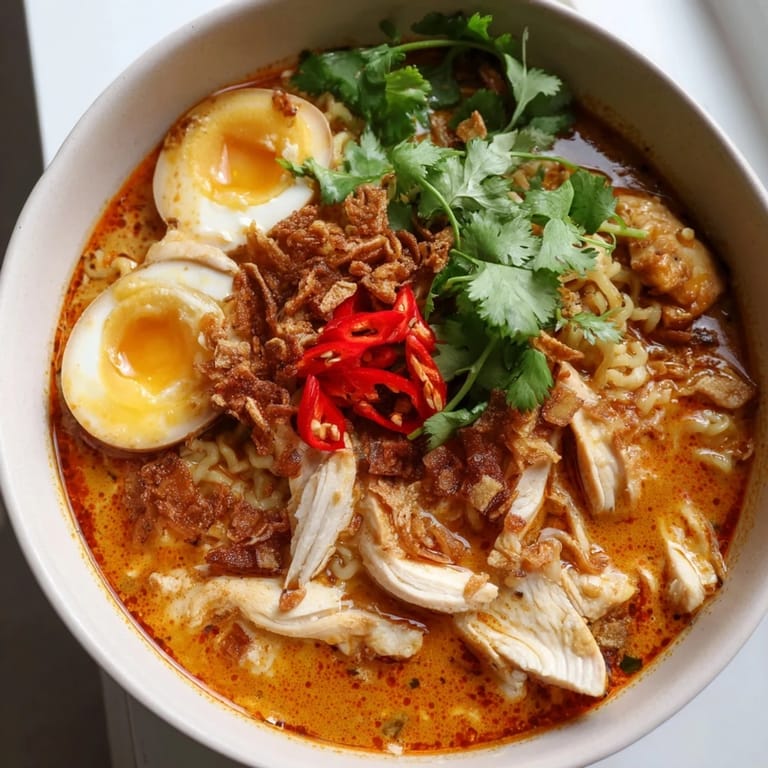
 The kitchen window was fogged up, steam curling from the pot, and I realized I'd been standing there stirring longer than I meant to. This bowl started as a weeknight experiment when I had leftover miso paste and a craving for something warmer than takeout but bolder than plain ramen. The smell of ginger and curry paste hitting hot oil is what hooked me first. Now it's the dish I make when I want comfort with a little kick, something that feels like a hug and an adventure at the same time.
I made this for a friend who swore she didn't like ramen because it was always too salty or too bland. She finished her bowl before anyone else and asked if there was more broth left. Watching her tilt the bowl to sip the last bit made me realize this recipe had become more than a dinner, it was a gateway, a way to show someone that a little fusion and a lot of flavor can change everything. Since then, it's become my go to when I want to cook for someone I'm trying to impress without making it obvious.
Ingredients
- Vegetable oil: A neutral base that lets the aromatics bloom without competing flavors, essential for building the broth foundation.
- Onion: Finely chopped so it melts into the broth and adds sweetness that balances the curry paste.
- Garlic cloves: Minced fresh, never jarred, they release a sharpness that wakes up the whole pot.
- Fresh ginger: Grated to release its juice and warmth, it cuts through richness and adds that unmistakable zing.
- Thai red curry paste: The heart of the fusion, bringing lemongrass, galangal, and chili heat in one spoonful.
- Chicken broth: Low sodium gives you control over the salt, letting the miso and soy sauce season to taste.
- White miso paste: Adds that creamy, fermented depth that makes the broth cling to the noodles.
- Soy sauce: A splash of umami and color, it ties the Japanese and Thai elements together.
- Fish sauce: Just a tablespoon brings an ocean of savory complexity you can't quite name but will miss if you skip it.
- Sugar: A teaspoon to round out the heat and saltiness, keeping everything in balance.
- Sesame oil: Drizzled at the end for a nutty, toasted aroma that lingers in every spoonful.
- Boneless, skinless chicken breasts: Lean and quick cooking, they soak up the broth while staying tender when sliced thin.
- Salt and pepper: Simple seasoning that preps the chicken for its sear and ensures every element is properly seasoned.
- Fresh ramen noodles: Bouncy and tender, they hold onto the broth better than dried, though either works in a pinch.
- Bok choy: Halved and blanched, it adds a crisp, slightly bitter contrast to the rich broth.
- Large eggs: Soft boiled so the yolk is jammy and golden, they enrich every bite when stirred into the bowl.
- Crispy fried shallots: Store bought or homemade, they add crunch and a sweet, caramelized flavor that's impossible to resist.
- Scallions: Sliced thin for a fresh, sharp bite that brightens the whole bowl.
- Red chili: Optional but encouraged, it adds color and a gentle heat that builds as you eat.
- Fresh cilantro leaves: Torn and scattered on top, they bring herbal freshness that cuts through the richness.
- Lime wedges: A squeeze at the end adds acidity and brightness, tying all the flavors together.
Tired of Takeout? 🥡
Get 10 meals you can make faster than delivery arrives. Seriously.
One email. No spam. Unsubscribe anytime.
Instructions
- Prepare the chicken:
- Season the chicken breasts generously with salt and pepper, then sear them in a hot pot with a splash of oil until golden on both sides. This step locks in flavor and gives the broth a richer base.
- Make the broth:
- In the same pot, sauté the onion until soft, then add garlic and ginger, stirring until your kitchen smells like a dream. Stir in the Thai red curry paste and let it toast for a minute, releasing its oils and deepening the color.
- Simmer the chicken:
- Pour in the chicken broth and bring it to a gentle simmer, then nestle the seared chicken back in and let it cook through slowly. Once done, remove the chicken, shred or slice it thinly, and set it aside.
- Finish the broth:
- Whisk in the miso paste, soy sauce, fish sauce, sugar, and sesame oil until everything dissolves into a smooth, fragrant broth. Keep it hot but don't let it boil, or the miso will lose its delicate flavor.
- Cook eggs:
- Boil water, gently lower in the eggs, and cook for exactly 7 minutes for that perfect jammy yolk. Transfer them to ice water immediately, peel carefully, and halve them just before serving.
- Cook noodles and bok choy:
- Boil the ramen noodles according to the package, then toss in the bok choy during the last 2 minutes to blanch. Drain everything and divide among your bowls.
- Assemble bowls:
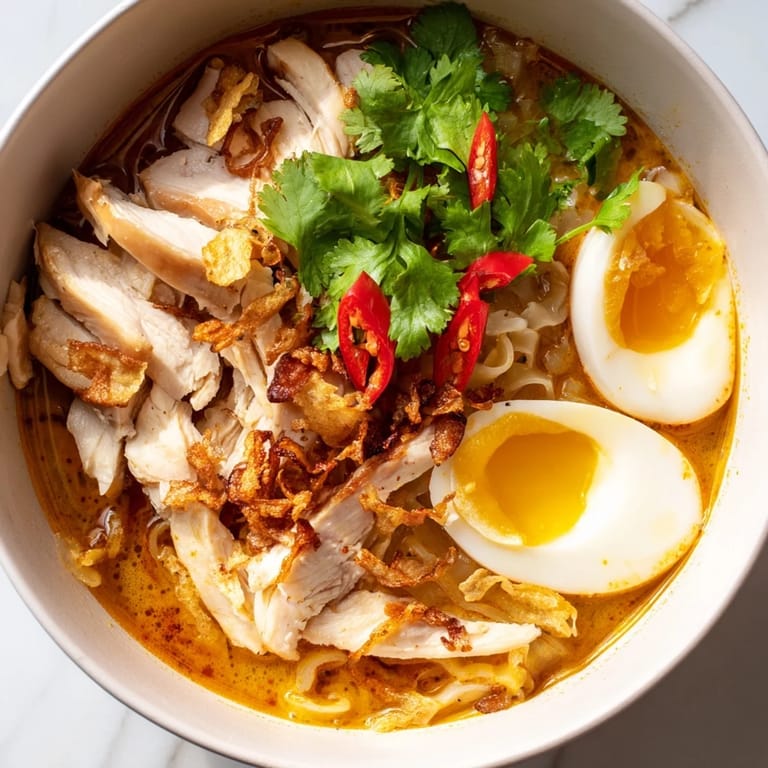
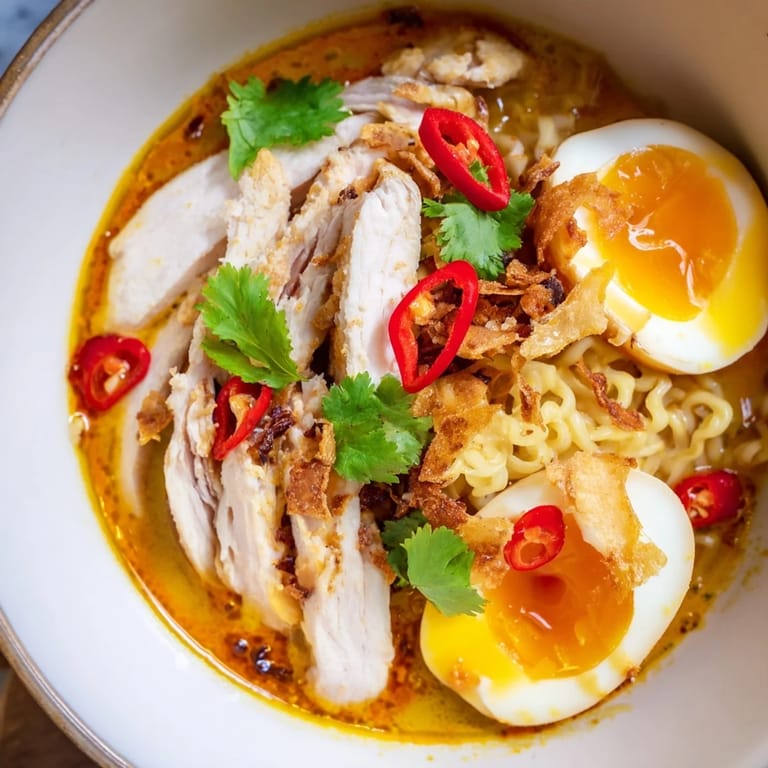
- Ladle the hot broth over the noodles and bok choy, then arrange the sliced chicken, halved eggs, crispy shallots, scallions, chili, and cilantro on top. Serve with lime wedges on the side for squeezing.
 Pin it
 One night I made this for my sister after a long week, and she sat at the counter in silence, spooning up noodles and broth with her eyes half closed. When she finally looked up, she said it tasted like someone cared, and I realized that's exactly what a good bowl of ramen should do. It's not just food, it's presence, warmth, and a little bit of magic in a bowl.
Storing and Reheating
Store the broth, chicken, and toppings separately from the noodles to keep everything fresh and prevent the noodles from turning mushy. The broth will keep in the fridge for up to 3 days and actually tastes even better the next day as the flavors meld. When reheating, warm the broth gently on the stove and cook fresh noodles, then assemble as usual. The soft boiled eggs are best made fresh, but you can prep them a day ahead and store them peeled in a little soy sauce for extra flavor.
Customizing Your Bowl
This recipe is a template, not a rulebook, so feel free to make it your own based on what you have or what you're craving. Swap the chicken for thinly sliced pork, shrimp, or even crispy tofu if you want to keep it vegetarian. Add more vegetables like mushrooms, snap peas, or corn for extra texture and color. If you love heat, stir in chili oil or Sriracha at the end, and if you want it richer, add a spoonful of coconut milk to the broth.
Serving Suggestions
This bowl is a meal on its own, but if you're feeding a crowd or want to stretch it further, serve it with a simple cucumber salad dressed in rice vinegar and sesame seeds. A cold, citrusy Riesling or a light lager pairs beautifully with the spice and richness of the broth. For a finishing touch, set out small bowls of extra toppings like more crispy shallots, chili oil, or fresh herbs so everyone can customize their bowl.
- Let guests squeeze their own lime, it makes a surprising difference in brightness and flavor.
- If you have leftover broth, freeze it in portions for a quick base for future soups or noodle bowls.
- Don't skip the crispy shallots, they add a textural contrast that makes every bite more satisfying.
 Pin it
 This bowl has saved more weeknights and impressed more guests than I can count, and it never gets old. Make it once, and I promise it'll become part of your regular rotation.
Recipe FAQ
- → Can I prepare this dish ahead of time?
Yes, the broth can be made up to 2 days in advance and reheated gently. Cook noodles and assemble bowls fresh for best texture. Prepare toppings in advance but keep crispy shallots separate until serving to maintain crispness.
- → How do I achieve the perfect soft-boiled egg?
Bring water to a rolling boil, gently add eggs, and cook for exactly 7 minutes. Transfer immediately to an ice bath to stop cooking. The runny yolk will add richness to the broth when broken into the bowl.
- → What's the best way to make crispy fried shallots at home?
Thinly slice shallots and separate layers. Heat oil to 325°F and fry until golden and crispy, about 3-4 minutes. Drain on paper towels. Store in an airtight container for up to a week.
- → Can I substitute the chicken with another protein?
Absolutely. Try tofu for vegetarian versions, pork shoulder for richer flavor, or shrimp for a lighter option. Adjust cooking times based on protein type—tofu needs 5-7 minutes, shrimp 3-4 minutes.
- → How spicy is this dish?
The base level is moderately spiced from the Thai red curry paste. Adjust heat by reducing curry paste to 1 tablespoon or omitting fresh chili. Add extra chili for those who prefer more heat.
- → What type of miso paste should I use?
White miso paste offers a mild, slightly sweet flavor that works best here. Avoid red or dark miso as they're too intense and will overpower the delicate balance. Always whisk miso into cooler broth first to prevent clumping.