 Pin it
 I discovered this bowl on a Tuesday night when I was scrolling through videos while my salmon thawed on the counter, and something about the way the glaze caught the light made me stop and really pay attention. The combination of gochujang and fresh orange felt like a conversation between two cuisines that actually wanted to know each other, and I became completely absorbed in the idea of bringing it to life. My kitchen smelled like toasted sesame and ginger for hours afterward, and honestly, that alone made me feel like I'd accomplished something worth repeating.
The first time I made this for someone I was trying to impress, I forgot to remove the salmon skin and had this moment of panic halfway through, but somehow it didn't matter because the glaze was so good that they didn't even notice. There's something liberating about cooking something that's forgiving enough to survive small mistakes while still tasting absolutely extraordinary.
Ingredients
- Salmon fillets (about 150 g each): Look for ones that feel firm to the touch and have a bright color; the quality of your fish makes all the difference, and a good fishmonger can tell you which ones were caught most recently.
- Gochujang: This Korean chili paste is the soul of the glaze, bringing heat and umami depth that can't be replicated; find it in most Asian markets or online.
- Fresh orange juice: Squeeze it yourself if you can; bottled loses some brightness that makes the glaze sing against the spice.
- Soy sauce: Use a good quality one since it's a foundational flavor here.
- Honey: This balances the heat and creates the sticky, caramelized finish when the glaze broils.
- Rice vinegar: Adds a subtle tang that prevents the dish from feeling too heavy.
- Toasted sesame oil: Use sparingly; its nutty intensity is concentrated, and a little goes a long way.
- Fresh ginger and garlic: These aromatics build the flavor foundation and smell like home cooking to me.
- Short-grain rice: Warm rice soaks up the glaze better than cold, and the slight stickiness holds everything together.
- Cucumber, avocado, nori, sesame seeds, scallions: These toppings add freshness, creaminess, and crunch that make each bite feel complete and alive.
Tired of Takeout? 🥡
Get 10 meals you can make faster than delivery arrives. Seriously.
One email. No spam. Unsubscribe anytime.
Instructions
- Get everything ready first:
- Preheat your oven to 200°C and line a baking tray with parchment paper so you're not fumbling when the salmon is ready to go in. There's something calming about having your mise en place done.
- Season and place:
- Pat your salmon dry, season both sides generously with salt and pepper, and arrange skin-side up on the tray. The dry surface helps the glaze grip better as it bakes.
- Make the glaze magic:
- Whisk gochujang, orange juice, soy sauce, honey, rice vinegar, sesame oil, ginger, and garlic together until you have a smooth sauce that smells incredible. Taste it and adjust the heat or sweetness if needed; this is your moment to own it.
- First glaze application:
- Brush about half the glaze onto the salmon, reserving the rest for later, and slide it into the oven. In about 12 to 14 minutes, the salmon should be opaque and flake easily when pressed.
- Prepare your bowl components:
- While everything bakes, slice your cucumber paper-thin, slice your avocado, toast your sesame seeds if they aren't already, and chop your scallions. Having warm rice ready means you can assemble without hesitation.
- The broiler moment (optional but worth it):
- Once the salmon is cooked through, brush on the remaining glaze and broil for one to two minutes until it's sticky and slightly caramelized. This step makes it taste like you spent way more time than you actually did.
- Assemble with intention:
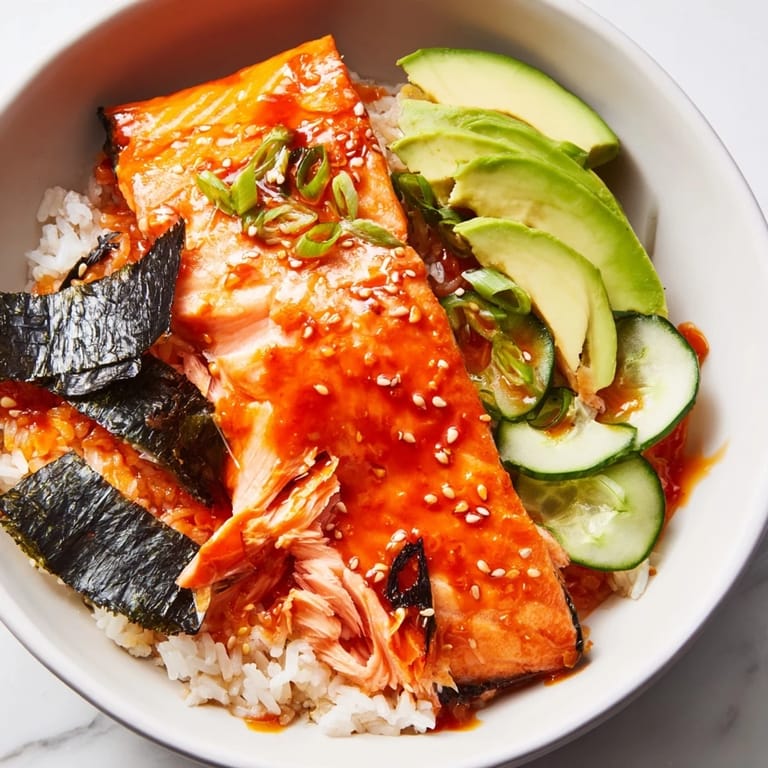
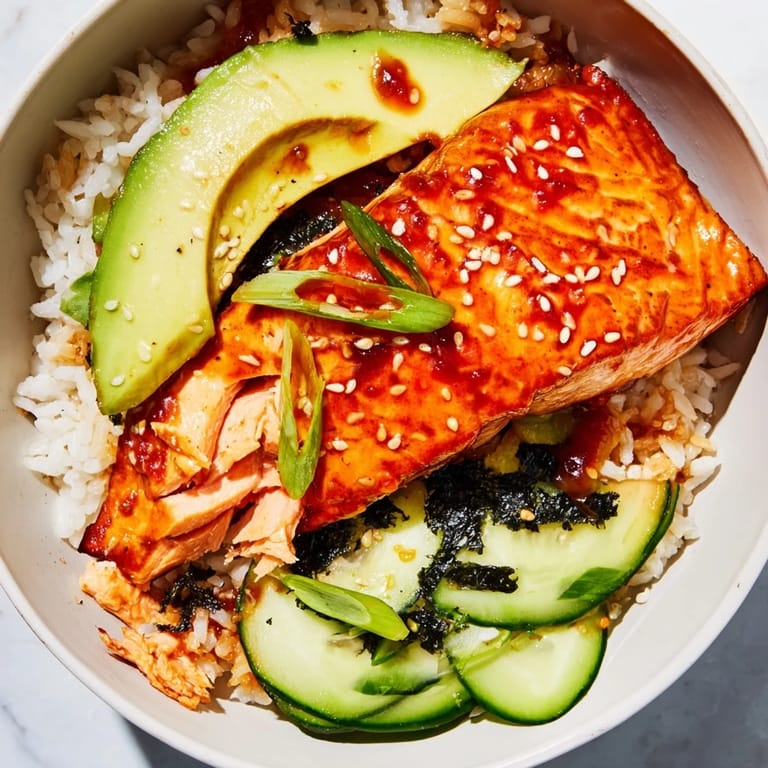
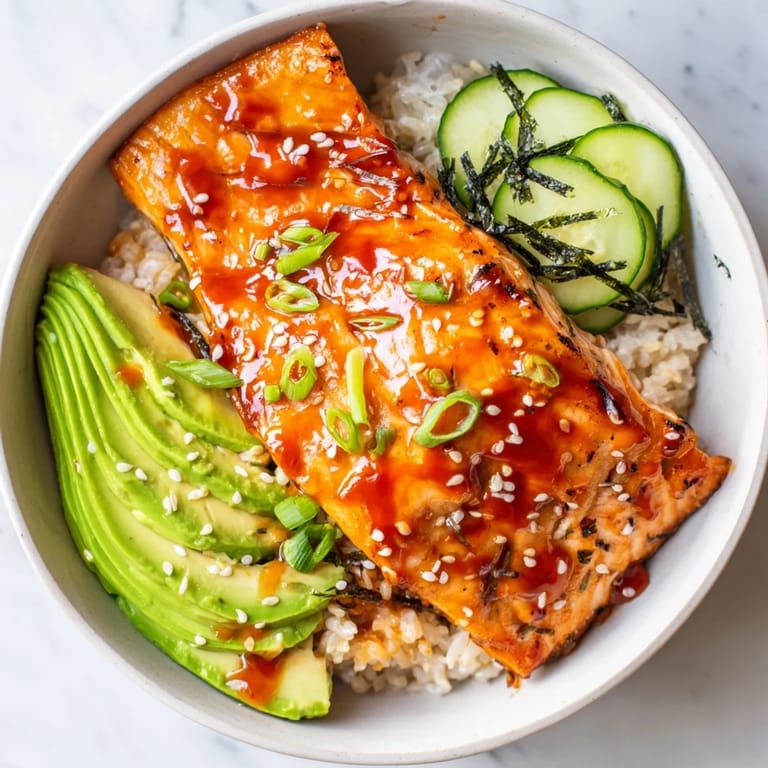
- Divide warm rice between two bowls, top each with a salmon fillet, then arrange cucumber, avocado, and nori strips around it. Scatter sesame seeds and scallions over everything and serve immediately while the rice is still warm.
 Pin it
 There's a particular kind of satisfaction that comes from setting a warm bowl in front of someone and watching them take that first bite, seeing their face shift as they process the balance of flavors. This dish has this way of making a simple weeknight feel like you've done something thoughtful.
The Story Behind the Glaze
Korean flavors have this incredible generosity built into them; gochujang doesn't whisper, it announces itself, and somehow fresh orange juice listens instead of competing. I was skeptical when I first heard about this combination, but the citrus actually softens the heat and adds brightness that makes the salmon taste more like itself. The honey is there to balance everything into harmony, creating a sauce that feels both bold and balanced.
Why This Works as a Complete Meal
Each component of this bowl serves a purpose beyond just tasting good. The warm rice catches any glaze that drips and becomes a vehicle for flavor, the cucumber provides cool crunch and cleanse between bites, the avocado adds richness that makes the salmon feel luxurious, and the nori strips bring an oceanic umami that speaks to the fish. The sesame seeds add toasted nuttiness that ties everything back to that Asian flavor profile, and the scallions bring a gentle allium note that perks everything up. It's a bowl designed to be eaten, not just assembled.
Variations and Flexibility
This recipe feels rigid when you read it, but it's actually incredibly forgiving once you understand the principle at play. If you don't have fresh orange juice, blood orange or even a mix of citrus works beautifully. If you want to swap the salmon for firm tofu or even chicken, the glaze remains absolutely delicious. Some nights I add pickled ginger for extra zing or shredded carrots for sweetness, and the bowl just gets better. The beauty of this format is that you're building a flavor profile, not following a rulebook.
- Try crispy tofu if you want a vegetarian version that still has textural interest.
- Pickled ginger adds brightness and a little bite that cuts through the richness beautifully.
- A cold beer or crisp Sauvignon Blanc pairs perfectly with the heat and citrus.
 Pin it
 This is the kind of dish that feels special enough for company but simple enough that you'll make it again next Tuesday because you're craving it. Once you've made it once, your hands remember the motions, and it becomes the kind of meal that tastes like care without demanding it.
Recipe FAQ
- → What type of salmon is best for this dish?
Choose fresh, skinless salmon fillets for even cooking and optimal texture. Wild-caught is preferred for flavor.
- → Can I adjust the level of spiciness in the glaze?
Yes, modify the amount of gochujang according to your heat preference. Reducing it will make the glaze milder.
- → How do I get the glaze to stick well to the salmon?
Brush the glaze onto the salmon before baking and again after cooking, then optionally broil briefly to caramelize and intensify stickiness.
- → What rice works best with this bowl?
Short-grain rice is ideal for its fluffy texture and ability to soak up the glaze, enhancing each bite.
- → Can I substitute any ingredients for dietary needs?
Yes, swap salmon for tofu for a vegetarian option, and ensure gluten-free soy sauce if needed to cater for allergies.