 Pin it
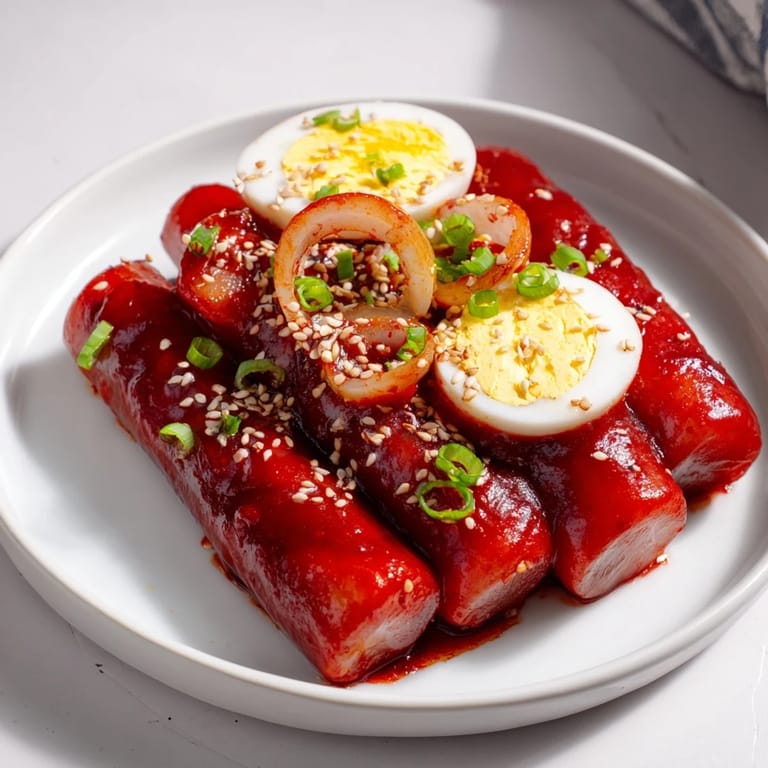
 The first time I tasted tteokbokki was at a cramped food stall in Seoul during a particularly cold November, hands wrapped around a steaming paper cup as the vendor stirred the pot with practiced, rhythmic motions. What struck me wasn't just the heat of the sauce or the way those chewy rice cakes yielded under my teeth—it was how the dish seemed to hold the warmth of the entire street, a comfort that went beyond flavor. Years later, I realized I was chasing that exact feeling every time I made it at home, trying to capture that moment in my own kitchen.
I made this for my roommate on a Tuesday when she came home looking defeated by her day, and watching her face transform at the first bite—that quiet, surprised smile—reminded me why cooking for someone else feels different than cooking alone. She asked for the recipe that night, and I realized tteokbokki had become our thing, a shorthand for checking in without saying much at all.
Ingredients
- Korean cylindrical rice cakes (tteok), 500 g: These need to be soft and slightly chewy, not hard or dense—if yours are refrigerated or stiff, a quick soak in warm water wakes them up beautifully.
- Large eggs, 4: Boiled eggs add richness and substance; the creamy yolk mingles with the sauce in the most satisfying way.
- Gochujang (Korean chili paste), 3 tablespoons: This is the soul of the dish—fermented, complex, and far more interesting than plain red chili powder.
- Gochugaru (Korean chili flakes), 2 tablespoons: These give you texture and a fresh heat that gochujang alone can't quite deliver.
- Soy sauce, 2 tablespoons: The savory backbone that keeps everything in balance.
- Sugar and honey or corn syrup, 1 tablespoon each: A touch of sweetness plays beautifully against the chili heat; honey adds a subtle depth that regular sugar doesn't.
- Garlic, 2 cloves minced: Fresh garlic brings brightness and sharpness that rounds out the sauce.
- Toasted sesame oil, 1 teaspoon: Just a whisper of this transforms the broth into something aromatic and deeply satisfying.
- Water, 3 cups: The foundation that carries all your flavors.
- Dried kelp (kombu) and anchovies: These build umami depth without tasting fishy when prepared correctly—remove them after simmering so the broth stays clear and elegant.
- Onion and green onion: One for cooking into the sauce, one for brightness and freshness at the end.
- Fish cake (eomuk), optional: Adds chewiness and a subtle savory note if you want it.
- Toasted sesame seeds: The final flourish that catches the light and your attention.
Tired of Takeout? 🥡
Get 10 meals you can make faster than delivery arrives. Seriously.
One email. No spam. Unsubscribe anytime.
Instructions
- Start with the rice cakes:
- If they feel hard or stiff from the refrigerator, soak them in a bowl of warm water for about 10 minutes—they'll soften and separate slightly, making them much easier to work with. This small step prevents lumpy, stuck-together cakes in your final dish.
- Build your broth:
- Pour water into your saucepan, add the kombu and anchovies, and bring everything to a gentle boil. Let it simmer quietly for 10 minutes, which is just long enough for the kelp and anchovies to share their umami without overpowering the sauce. Remove both carefully with a slotted spoon and set the broth aside—you've just made something far better than plain water.
- Cook the eggs while the broth steeps:
- Boil your eggs for 8 to 9 minutes depending on how runny you like the yolk, then transfer them immediately to cold water. The shock of cold stops the cooking and makes peeling easier, and you'll get that tender, barely-set yolk that makes the whole dish sing.
- Build the sauce:
- Into your warm broth, add the gochujang, gochugaru, soy sauce, sugar, honey, minced garlic, and sesame oil. Stir everything together slowly—the gochujang will dissolve gradually, creating a sauce that's silky and evenly colored. Taste as you go; this is where you adjust heat and sweetness to match your preferences.
- Cook the rice cakes:
- Add your drained rice cakes along with the sliced onion and fish cake to the sauce, then turn the heat to medium. Stir occasionally and let everything simmer for 10 to 12 minutes—you're looking for the sauce to thicken slightly and the rice cakes to become completely soft and tender, almost melting in the liquid. This is when your kitchen smells absolutely incredible.
- Add the eggs and finish:
- Once the rice cakes are cooked through, gently place the peeled boiled eggs into the pot and let everything simmer together for another 2 to 3 minutes. This isn't just about warming the eggs; it's about letting them absorb the flavors around them.
- Serve with love:
- Transfer everything to a bowl, scatter green onions and sesame seeds over the top, and serve immediately while the sauce is still hot and glossy. Eat it straight from the pot if you're with friends, or pour it into bowls if you're being fancy about it.
 Pin it
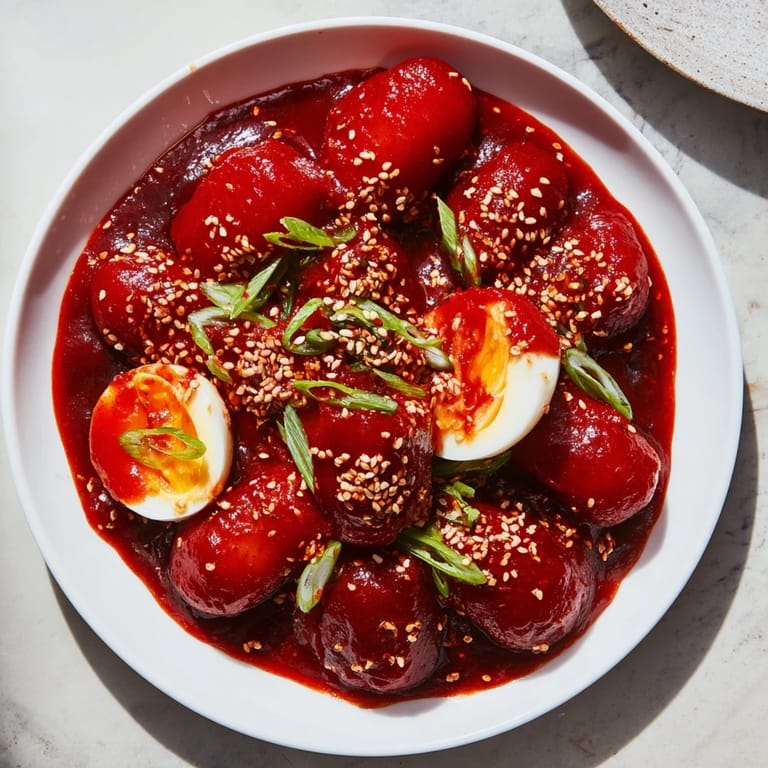
 There's something about the moment when everyone at the table goes quiet because they're too busy eating to talk—that's when I know I've gotten tteokbokki right. It's such a simple dish, really, but it carries weight because it's about gathering people around something warm and fiery and deeply satisfying.
Playing with Heat and Sweetness
The balance between spice and sweet is what makes tteokbokki memorable rather than just hot. Gochujang brings a natural sweetness that honey deepens, while the chili flakes add sharp heat that cuts through richness—it's a conversation rather than a shout. Start with the recipe as written, taste it, and then trust your instincts. If you want more fire, add gochugaru; if you want more comfort, add another drizzle of honey. There's no wrong answer here, only preferences.
Variations and Add-Ins
Once you've made tteokbokki the traditional way, the fun starts. I've added shredded cabbage for crunch, sliced carrots for sweetness, even instant ramen noodles stirred in at the last minute for something more substantial. Some nights I'll throw in sliced mushrooms or a handful of spinach, and the sauce adapts beautifully every time. The beauty of this dish is that it's forgiving enough to welcome whatever you find in your kitchen.
Making It Your Own
For vegetarian versions, skip the anchovies and fish cake entirely, and use vegetable broth instead—the kombu alone brings enough umami to keep everything tasting deep and satisfying. I've also discovered that a splash of apple juice or a touch of mirin adds complexity if you're playing with the sweetness profile. Keep the sesame oil and toasted sesame seeds no matter what; they're non-negotiable for that final warmth and nuttiness that ties everything together.
- Gochujang brands vary in salt and spice level, so check yours before adding extra salt to the pot.
- Fresh rice cakes are always better than frozen, but either works as long as you give them that initial soak.
- Leftovers (though there rarely are) can be reheated gently on the stovetop with a splash of water to loosen the sauce again.
 Pin it
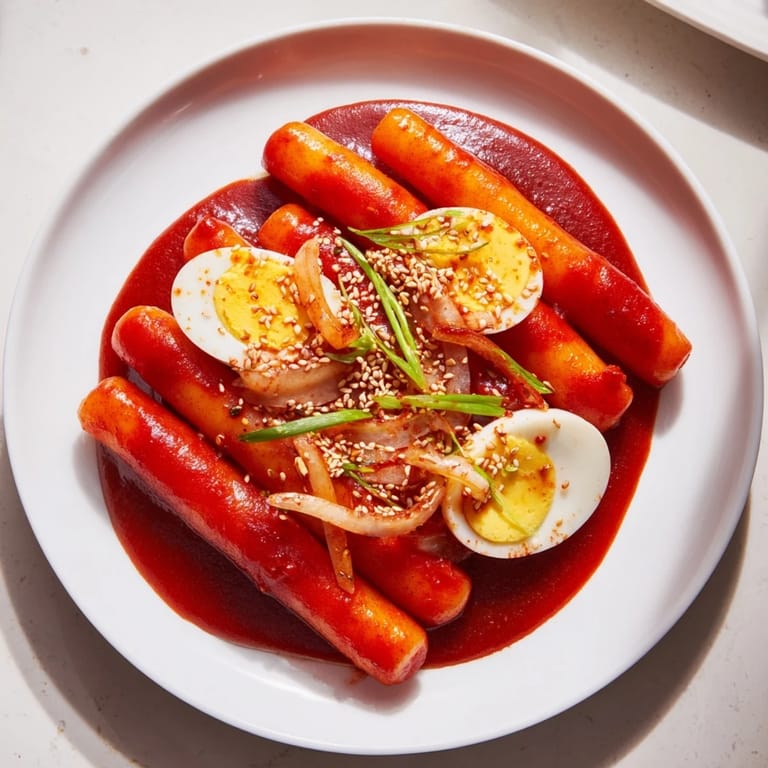
 Tteokbokki is street food that tastes like home, whether you're eating it standing in Seoul or sitting at your kitchen table with people you love. There's comfort in that contradiction, and once you've made it a few times, you'll find yourself reaching for it whenever you need something warm and honest.
Recipe FAQ
- → How should I prepare the rice cakes before cooking?
Soak the rice cakes in warm water for about 10 minutes if they are hard or refrigerated to soften them before simmering.
- → Can I adjust the spice level of this dish?
Yes, modify the amount of gochujang and gochugaru according to your preferred heat intensity.
- → Is there a vegetarian alternative for the broth?
Omit anchovies and fish cake, and use vegetable broth in place of the seafood-based broth for a vegetarian variant.
- → What is the purpose of simmering the broth with kombu and anchovies?
This step creates a clear, umami-rich broth that forms the flavorful base of the sauce.
- → How long should eggs be boiled for optimal texture?
Boil eggs for 8 to 9 minutes, then cool and peel for a tender yet firm texture that complements the dish.