 Pin it
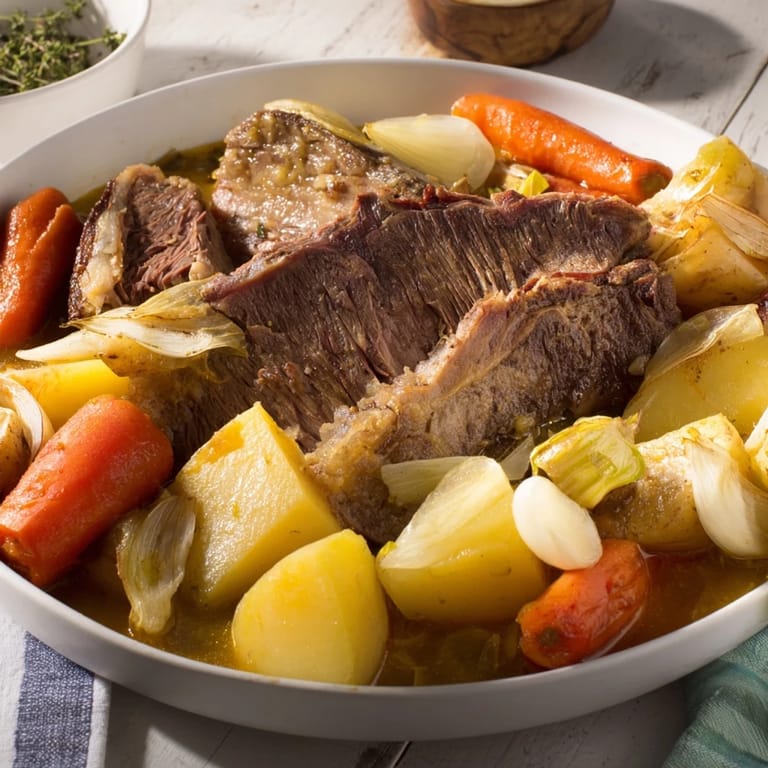
 The smell of beef browning in oil always takes me straight back to Sunday afternoons at my grandmother's house. She'd stand at the stove with a wooden spoon, poking at a massive roast while the kitchen windows fogged up from the heat. I didn't understand patience back then, but watching her wait three hours for dinner taught me that some things can't be rushed. This pot roast is my version of that lesson, and every time I make it, the house fills with the same rich, herby warmth that made me feel safe as a kid. It's the kind of meal that turns a regular evening into something worth remembering.
I made this for my neighbors the winter after they had their first baby, and when I dropped it off, the new dad actually teared up a little. He said it was the first real meal they'd had in weeks that didn't come from a bag or a box. We stood in their doorway for a minute, steam rising between us, and I realized that pot roast isn't just food. It's a way of saying I see you, I care, and you deserve something warm and slow and good. That moment stuck with me more than any dinner party ever has.
Ingredients
- Boneless beef chuck roast (3 to 4 lb): This cut has enough marbling to stay juicy during the long roast, and it shreds beautifully if you let it cook low and slow without peeking too often.
- Kosher salt and black pepper: Simple seasoning is all you need here because the beef and vegetables create their own deep flavor as everything braises together.
- Carrots, parsnips, onions, potatoes, celery: These roots turn sweet and soft in the oven, soaking up all the savory pan juices like little flavor sponges.
- Garlic (6 cloves, smashed): Smashing releases the oils without burning, and whole cloves become mild and almost buttery after hours in the pot.
- Tomato paste: A small spoonful adds umami and a subtle sweetness that balances the richness of the beef without tasting like tomatoes.
- Beef broth and red wine: The wine deglazes all those browned bits stuck to the pot, and together they create a sauce that tastes like you simmered it all day on purpose.
- Worcestershire sauce: This adds a tangy, slightly funky depth that makes people ask what your secret ingredient is.
- Fresh thyme, rosemary, bay leaves: Woody herbs hold up to long cooking and perfume the whole dish without turning bitter or soggy.
- Olive oil: You need something with a high smoke point to get a good sear on the beef, and olive oil adds a hint of fruity richness.
Tired of Takeout? 🥡
Get 10 meals you can make faster than delivery arrives. Seriously.
One email. No spam. Unsubscribe anytime.
Instructions
- Preheat and Prep the Beef:
- Set your oven to 300°F and pat the roast completely dry with paper towels so it browns instead of steams. Season every side generously with salt and pepper, pressing it in gently so it sticks.
- Sear the Beef:
- Heat olive oil in a heavy Dutch oven over medium high heat until it shimmers, then lay the roast in carefully and let it sit undisturbed for 3 to 4 minutes per side until a dark crust forms. Transfer the beef to a plate and don't worry about cooking it through yet.
- Sauté the Vegetables:
- Toss the onions, carrots, parsnips, potatoes, and celery into the hot pot and stir occasionally for about 5 minutes until they start to soften and pick up color. Add the garlic and tomato paste, stirring for another minute until everything smells toasty and sweet.
- Deglaze and Build the Sauce:
- Pour in the red wine and scrape up all the browned bits stuck to the bottom of the pot with a wooden spoon. Let it simmer for 2 minutes to cook off the raw alcohol and concentrate the flavor.
- Nestle and Braise:
- Place the beef back in the pot, then add the broth, Worcestershire sauce, thyme, rosemary, and bay leaves so the liquid comes about halfway up the sides of the roast. Bring everything to a gentle simmer, cover tightly with the lid, and slide it into the oven.
- Roast Low and Slow:
- Let it cook undisturbed for 3 to 3 and a half hours until the beef is fork tender and the vegetables are meltingly soft. Resist the urge to peek too often because every time you lift the lid, you lose precious heat and moisture.
- Rest and Serve:
- Pull the pot from the oven, fish out the herb stems and bay leaves, and let the beef rest for 10 minutes before slicing or shredding. Serve it with the vegetables and spoon the rich pan juices over everything like liquid gold.
 Pin it
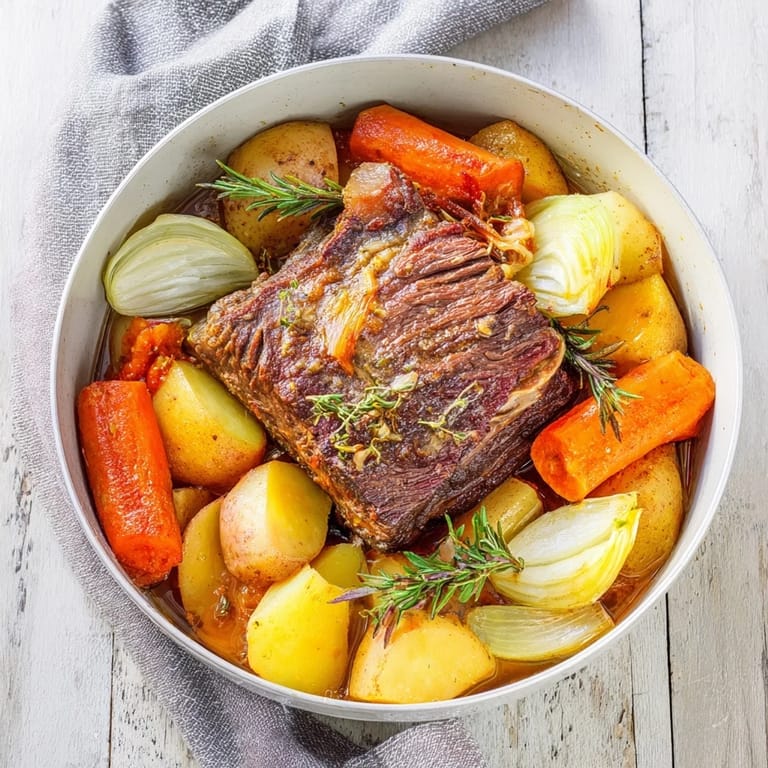
 One rainy October evening, I served this to a table full of friends who'd driven two hours to visit, and we ended up sitting around the empty pot talking until midnight. Someone said it tasted like a hug, and we all laughed, but nobody disagreed. That's when I realized this dish isn't just about feeding people, it's about slowing down long enough to actually be together. Food like this buys you time and conversation, and that's worth every minute it takes to make.
How to Get the Best Sear
Make sure your beef is bone dry before it hits the pan, because any moisture will steam the meat instead of browning it. I learned this the hard way after a few pale, sad roasts that never developed that deep crust. Pat it down with paper towels, let it sit out for 15 minutes to take the chill off, and don't move it around once it's in the pot. The crust will release on its own when it's ready, and forcing it too early just tears the surface and leaves flavor stuck to the pan.
What to Do with Leftovers
Leftover pot roast is one of those rare things that tastes even better the next day after all the flavors have had time to settle in together. I like to shred the beef and pile it onto crusty bread with a little horseradish mayo, or chop everything up and turn it into a quick stew with extra broth. My brother once made hash with the potatoes and beef, crisped it up in a cast iron skillet, and topped it with a fried egg. He said it was the best breakfast he'd ever had, and I'm still not sure he was exaggerating.
Making It Your Own
This recipe is forgiving enough that you can swap vegetables based on what's in your fridge or what's in season without throwing off the balance. I've used turnips instead of parsnips, sweet potatoes instead of regular ones, and even tossed in mushrooms when I had them sitting around. The key is cutting everything into similar sized chunks so it all cooks evenly and doesn't turn to mush while the beef is still tough.
- If you want a thicker sauce, pull out the beef and vegetables at the end and simmer the juices on the stove until they reduce by half.
- Try adding a splash of balsamic vinegar in the last 30 minutes for a subtle tangy sweetness that plays nicely with the wine.
- For a deeper color and richer flavor, use a dark beer instead of red wine and it'll taste almost like a stew from an old tavern.
 Pin it
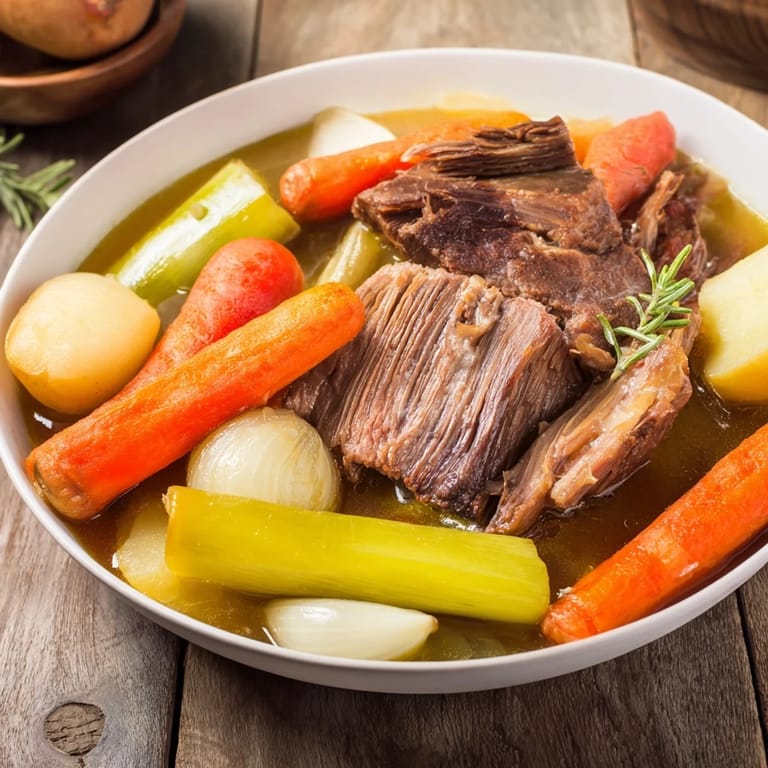
 This pot roast has become my go to whenever I need to remind myself that cooking doesn't have to be complicated to feel special. It's just good ingredients, a little patience, and the willingness to let the oven do most of the work while you sit down and breathe.
Recipe FAQ
- → What cut of beef is best for slow roasting?
Boneless beef chuck roast is ideal for slow roasting due to its marbling and connective tissue which break down, resulting in tender, flavorful meat.
- → Can I substitute root vegetables in this dish?
Yes, parsnips can be replaced with turnips or other root vegetables depending on availability and preference.
- → Is it necessary to sear the beef before roasting?
Searing helps develop a rich crust and deep flavor by browning the meat, enhancing the overall dish.
- → How do I thicken the sauce after roasting?
Remove the meat and vegetables, then simmer the pan juices on the stove. You can reduce it or stir in a cornstarch slurry for a thicker consistency.
- → Can I omit the red wine in the cooking liquid?
Yes, substituting additional beef broth works well if you'd prefer to avoid wine, without sacrificing much flavor.