 Pin it
 The kitchen smelled like a wine bar that had collided with a trattoria. I was halfway through deglazing the pan when my neighbor knocked, drawn by the scent of garlic and Chianti billowing through the open window. She stood in the doorway, eyes wide, and asked what on earth I was making. I handed her a fork and a bowl, and she declared it the best fusion accident she'd ever tasted.
I made this for a birthday dinner once, doubling the recipe and piling it onto a huge platter. My friend, who usually picks at her food, went back for thirds. She said the basil tasted like summer and the heat from the red pepper flakes woke up her entire palate. We finished two bottles of wine that night, and she still texts me asking when I will make the drunken noodles again.
Ingredients
- Spaghetti or linguine: I prefer linguine because the flat noodles catch more sauce, but spaghetti works beautifully and cooks a minute or two faster.
- Extra virgin olive oil: Use a fruity, robust oil, it becomes the base of every flavor you build in that skillet.
- Yellow onion: Thin slices soften into sweet, silky ribbons that melt into the sauce.
- Garlic cloves: Mince them finely so they bloom in the oil without burning, releasing that unmistakable perfume.
- Red pepper flakes: Start with less if you are cautious, you can always add more heat but you cannot take it back.
- Italian sausage or shrimp: Sausage brings deep, fennel laced richness, shrimp offers a delicate sweetness that plays against the tomatoes.
- Cherry tomatoes: They burst when you press them with a spoon, painting the pan with bright, tangy juice.
- Tomato paste: Two tablespoons deepen the sauce, adding umami and body without overwhelming the wine.
- Dry red wine: Chianti or Sangiovese are classic, but any dry red you would drink will do the job.
- Soy sauce: This is the secret bridge between Italian and Asian, salty and savory in a way Parmesan alone cannot achieve.
- Worcestershire sauce: A tablespoon brings a subtle tang and complexity that rounds out the sauce.
- Balsamic vinegar: Just a teaspoon cuts through the richness and brightens every bite.
- Fresh basil leaves: Torn by hand, they release oils that smell like a garden in July.
- Fresh parsley: Chopped parsley adds a clean, grassy note that balances the heavier flavors.
- Parmesan cheese: Grate it fresh, the pre shredded stuff does not melt the same way or taste as nutty.
- Salt and black pepper: Taste as you go, the soy sauce and cheese add salt, so go easy at first.
Tired of Takeout? 🥡
Get 10 meals you can make faster than delivery arrives. Seriously.
One email. No spam. Unsubscribe anytime.
Instructions
- Boil the pasta:
- Bring a large pot of generously salted water to a rolling boil, then cook your pasta until it still has a slight bite. Reserve a mugful of that starchy cooking water before you drain, it will be your secret weapon for a silky sauce.
- Heat the skillet:
- Set a large skillet over medium high heat and let it get hot before you add the olive oil. Swirl the oil so it coats the entire surface, shimmering and ready.
- Sauté the aromatics:
- Toss in the sliced onion and let it sizzle for two to three minutes until it softens and starts to turn golden at the edges. Stir in the garlic and red pepper flakes, cooking just thirty seconds until the kitchen fills with that heady, spicy fragrance.
- Cook the protein:
- Add your crumbled sausage or shrimp to the pan. If using sausage, break it into bite sized pieces and let it brown for five to seven minutes, if using shrimp, cook two to three minutes per side until they turn pink and opaque.
- Add tomatoes and paste:
- Stir in the halved cherry tomatoes and tomato paste, cooking for two minutes while you gently press some tomatoes with the back of your spoon to release their juices. The pan will start to look vibrant and glossy.
- Deglaze with wine:
- Pour in the red wine, scraping up all those caramelized bits stuck to the bottom of the skillet. Let it simmer for two to three minutes until the wine reduces by about half and smells rich and slightly sweet.
- Season the sauce:
- Stir in the soy sauce, Worcestershire sauce, and balsamic vinegar, tasting as you go. Adjust with salt, pepper, or more red pepper flakes until the sauce sings.
- Toss the pasta:
- Add the drained pasta directly to the skillet and toss everything together with tongs. Add reserved pasta water a few tablespoons at a time until the sauce clings to every noodle without pooling at the bottom.
- Finish with herbs and cheese:
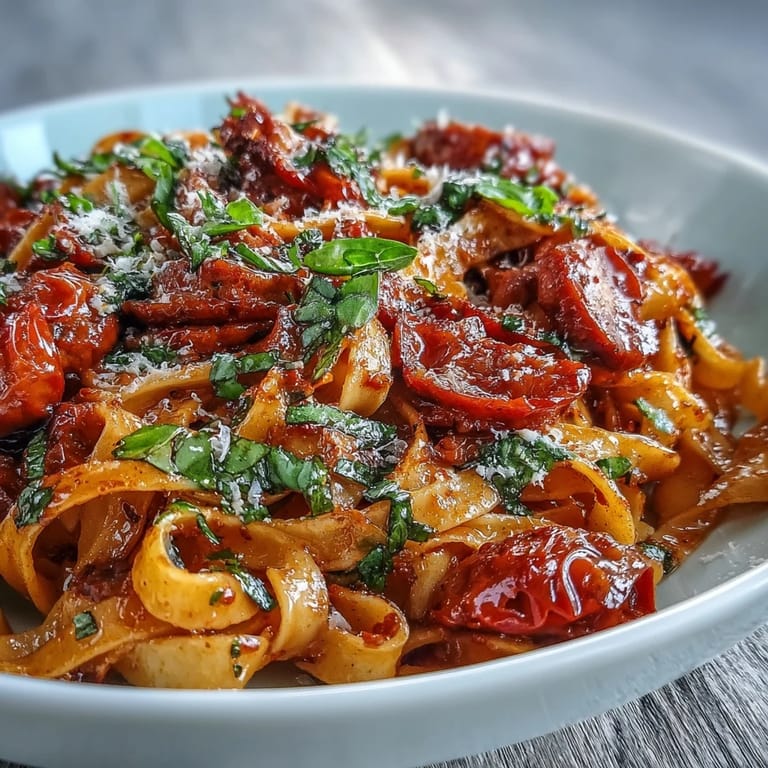
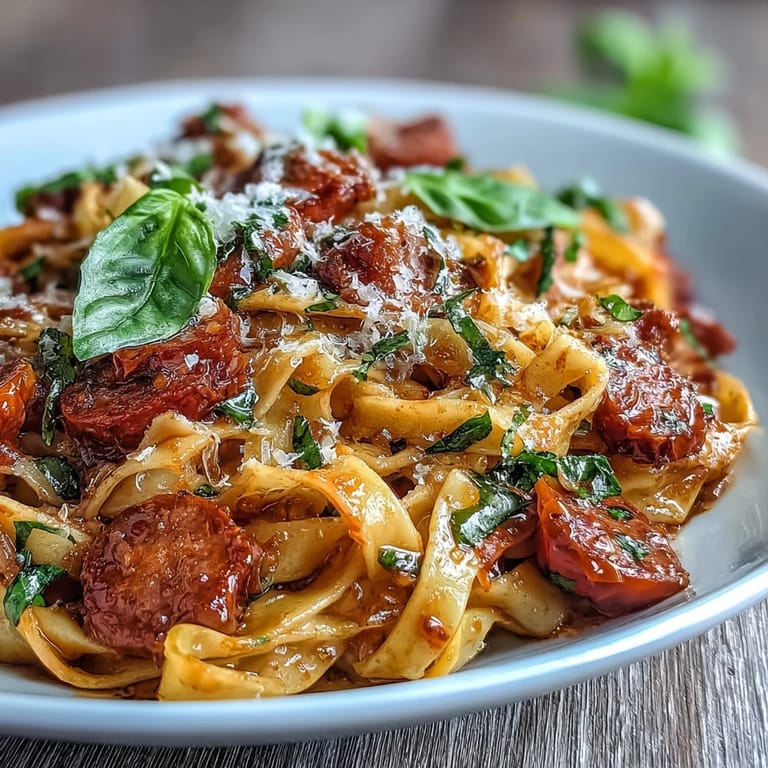
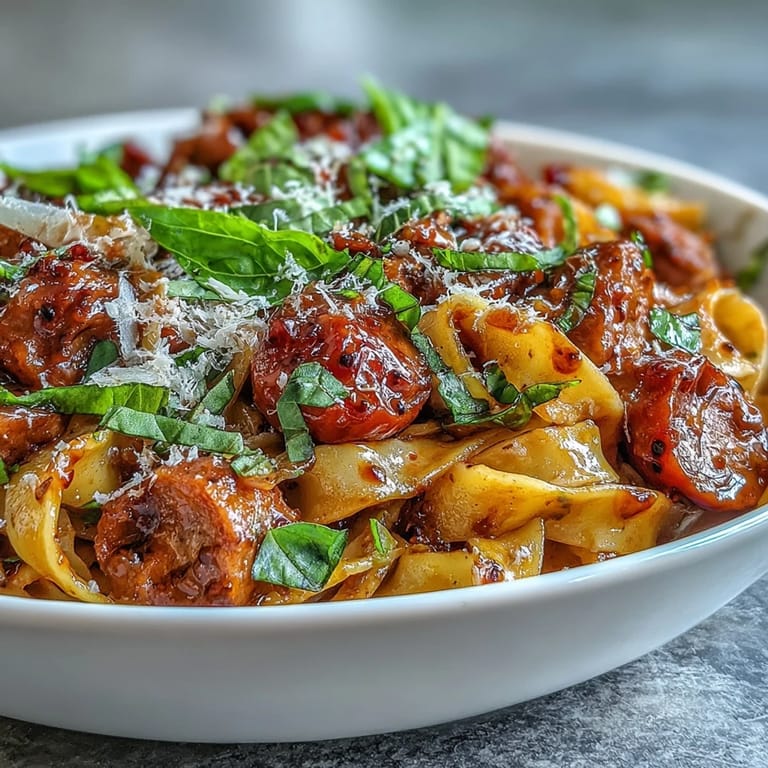
- Remove the skillet from the heat and stir in the torn basil, chopped parsley, and grated Parmesan. The residual heat will melt the cheese into a creamy, fragrant coating.
- Serve and garnish:
- Divide the pasta among bowls and top with extra basil, a shower of Parmesan, sliced red chili if you like heat, and a wedge of lemon for a bright squeeze. Serve immediately while it is still steaming.
 Pin it
 There was a rainy Thursday when nothing seemed to go right, deadlines looming, laundry piling up. I made this dish on autopilot, and the moment I took the first bite, everything slowed down. The heat, the wine, the way the basil tasted like hope, it reminded me that sometimes the best reset button is a hot skillet and a glass of something red.
Storing and Reheating
Leftovers keep in an airtight container in the fridge for up to three days. The pasta will soak up some sauce as it sits, so when you reheat, add a splash of water, broth, or even a little more wine to the pan. Warm it gently over medium heat, stirring often, until it loosens up and smells fragrant again. I have reheated this in the microwave in a pinch, but the stovetop gives you better control and revives the texture.
Swaps and Variations
This dish is endlessly flexible. If you want to keep it vegetarian, skip the sausage and shrimp and use thick slices of portobello mushrooms or cubes of marinated tofu, both soak up the sauce beautifully. For a gluten free version, use your favorite gluten free pasta and double check the Worcestershire sauce label. I have also made this with whole wheat pasta when I wanted something heartier, and it held up perfectly against the bold flavors.
Pairing and Serving Ideas
I like to serve this with a crisp green salad dressed simply in lemon and olive oil, the brightness cuts through the richness of the pasta. A loaf of crusty bread for mopping up any sauce left in the bowl is non negotiable. And of course, pour yourself a glass of the same Chianti you used in the sauce, the flavors mirror each other in the best way.
- Top with a handful of arugula just before serving for a peppery bite.
- Finish with a drizzle of good quality olive oil and a few shavings of Pecorino Romano.
- Squeeze fresh lemon over the top if you want to brighten the whole dish at the last second.
 Pin it
 This recipe has saved more weeknights than I can count, and it never gets old. Make it your own, adjust the heat, swap the proteins, and let the wine do its magic.
Recipe FAQ
- → What makes Italian drunken noodles different from regular pasta dishes?
The unique fusion combines Italian pasta with Asian-inspired techniques. The Chianti wine reduction adds depth, while soy sauce and Worcestershire bring umami flavors typically found in Asian cuisine, creating a distinctive cross-cultural dish.
- → Can I make this vegetarian?
Absolutely. Substitute the sausage or shrimp with sautéed mushrooms, marinated tofu, or even eggplant. The vegetables absorb the bold Chianti sauce beautifully while maintaining the dish's hearty character.
- → What type of wine works best?
Chianti or Sangiovese is recommended for their medium body and bright acidity. Any dry Italian red wine like Barbera or Montepulciano works wonderfully. Avoid sweet wines as they'll unbalance the savory sauce.
- → How spicy is this dish?
The red pepper flakes provide moderate heat that's adjustable. Start with one teaspoon and taste before adding more. The spice level complements rather than overpowers the rich tomato and wine flavors.
- → Can I prepare this ahead?
The sauce can be made up to a day ahead and reheated gently. Cook the pasta fresh when serving, tossing with the warmed sauce. Leftovers store well for three days and reheat beautifully with a splash of wine or water.
- → What pasta shapes work best?
Long strands like spaghetti, linguine, or fettuccine capture the sauce beautifully. The sauce clings to the noodles while the protein and vegetables distribute evenly throughout. Whole wheat or gluten-free options work equally well.