 Pin it
 There's something about watching salmon glaze under the broiler that makes you feel like you've unlocked a secret. The miso marinade darkens just slightly, catching the heat, and suddenly your kitchen smells like a Japanese izakaya. I stumbled onto this bowl one weeknight when I had salmon thawing and leftover jasmine rice in the fridge, plus an inexplicable craving for something both comforting and bright. What started as improvisation became the thing I make whenever I want to feel nourished without spending hours at the stove.
I made this for my sister on a rainy Sunday when she was stressed about work, and watching her face light up when she took the first bite reminded me that food doesn't need to be fancy to be meaningful. The warm rice, the gentle bitterness of the wilted spinach, the rich salmon—it all came together like the dish was speaking directly to her mood. She asked for the recipe before she'd finished eating.
Ingredients
- Salmon fillets (4, about 150 g each, skinless): The quality of your salmon matters more than anything else here; look for bright color and firm flesh that doesn't smell fishy, which means it's fresh.
- White miso paste (3 tbsp): This is the soul of the glaze, bringing saltiness and depth that honey alone could never achieve, so don't skip it or substitute with red miso unless you enjoy bitter surprises.
- Mirin (2 tbsp): A touch of Japanese sweetness that balances the miso and helps the glaze caramelize beautifully under the broiler.
- Soy sauce (2 tbsp): Use the regular kind here unless you need gluten-free, in which case tamari works just as well.
- Honey (1 tbsp): A small amount adds complexity to the glaze rather than just sweetness, helping it stick to the salmon.
- Rice vinegar (1 tbsp): This brightens everything and prevents the glaze from tasting one-dimensional or cloying.
- Toasted sesame oil (1 tsp): A little goes a long way; it's the whisper that makes people ask what you did differently.
- Fresh ginger (1 tsp grated, plus 1 tsp for spinach): Never use the jarred stuff for the marinade because fresh ginger has a clean bite that bottled versions simply lack.
- Garlic (2 cloves minced total): Mince it just before using so it stays sharp and aromatic rather than turning dark and bitter in the glaze.
- Jasmine rice (1 1/2 cups): Rinsing it removes excess starch and keeps each grain separate; skip this step at your own peril if you enjoy gluey rice.
- Fresh spinach (300 g): Baby spinach wilts down beautifully in seconds and tastes less earthy than mature leaves, though either works fine.
- Vegetable oil (1 tbsp for spinach, plus more for the baking sheet): A neutral oil that won't compete with the other flavors.
- Green onions (2, thinly sliced): These add a fresh sharpness that cuts through the richness of the salmon and rice.
- Toasted sesame seeds (1 tbsp): Toast them yourself if you have time because store-bought sometimes lacks that nutty depth, but honestly, either way tastes good.
- Nori strips (optional): A thin sheet cut into strips adds umami and a satisfying chew that makes the bowl feel complete.
- Lime wedges (optional): A squeeze at the end brightens everything and reminds your palate that vegetables exist.
Tired of Takeout? 🥡
Get 10 meals you can make faster than delivery arrives. Seriously.
One email. No spam. Unsubscribe anytime.
Instructions
- Make the miso glaze:
- Whisk together miso paste, mirin, soy sauce, honey, rice vinegar, sesame oil, ginger, and garlic in a small bowl until the mixture turns smooth and glossy. This takes about a minute, and you'll notice how the honey starts to blend seamlessly into the miso rather than staying grainy.
- Marinate the salmon:
- Place salmon fillets in a shallow dish or zip-top bag and pour the marinade over them, making sure each fillet is fully coated. Slide it into the refrigerator for 15 to 30 minutes while you handle the other components, which also gives the fish time to absorb the flavors.
- Cook the jasmine rice:
- Rinse the rice under cold water in a fine-mesh strainer until the water runs mostly clear, which removes starch and keeps grains from clumping. Combine rinsed rice, 3 cups of water, and a pinch of salt in a saucepan, bring to a boil, then reduce heat to low, cover with a lid, and simmer for 12 to 15 minutes until the water is absorbed and the grains are tender; let it rest covered for 5 minutes before fluffing.
- Sauté the spinach with ginger and garlic:
- Heat vegetable oil in a large skillet over medium heat, add minced ginger and garlic, and let them sizzle for about 30 seconds until fragrant and golden at the edges. Add fresh spinach and a small pinch of salt, then toss everything together for 1 to 2 minutes until the leaves soften and darken, then finish with a teaspoon of soy sauce and set aside on a plate.
- Broil the marinated salmon:
- Preheat your broiler or oven to 220°C (425°F) and line a baking sheet with foil, then lightly oil it so the salmon doesn't stick. Arrange marinated salmon fillets on the prepared tray and broil or bake for 8 to 10 minutes, watching carefully until the salmon turns opaque, flakes easily with a fork, and the miso glaze darkens into a caramelized crust.
- Assemble your bowls:
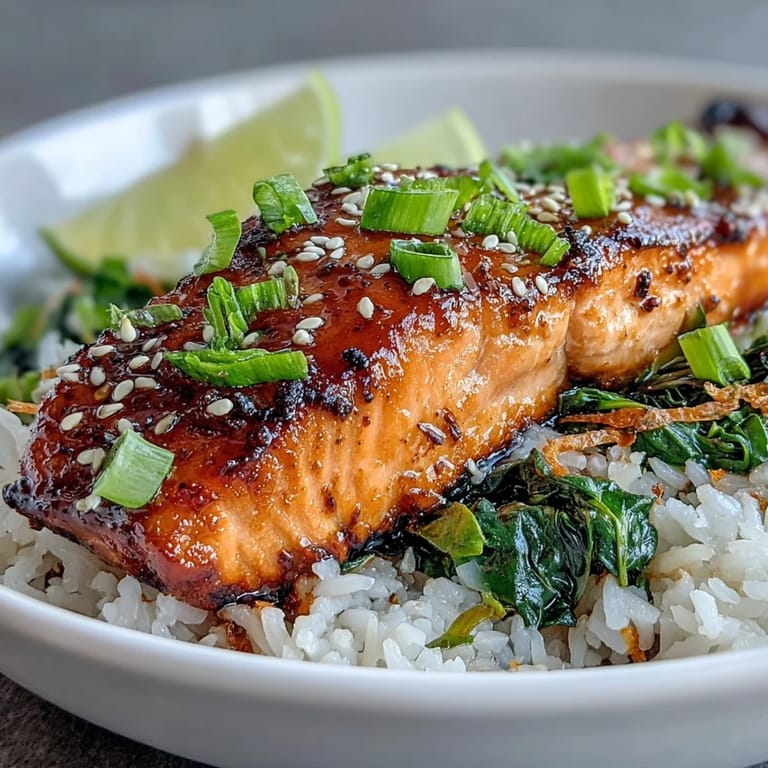
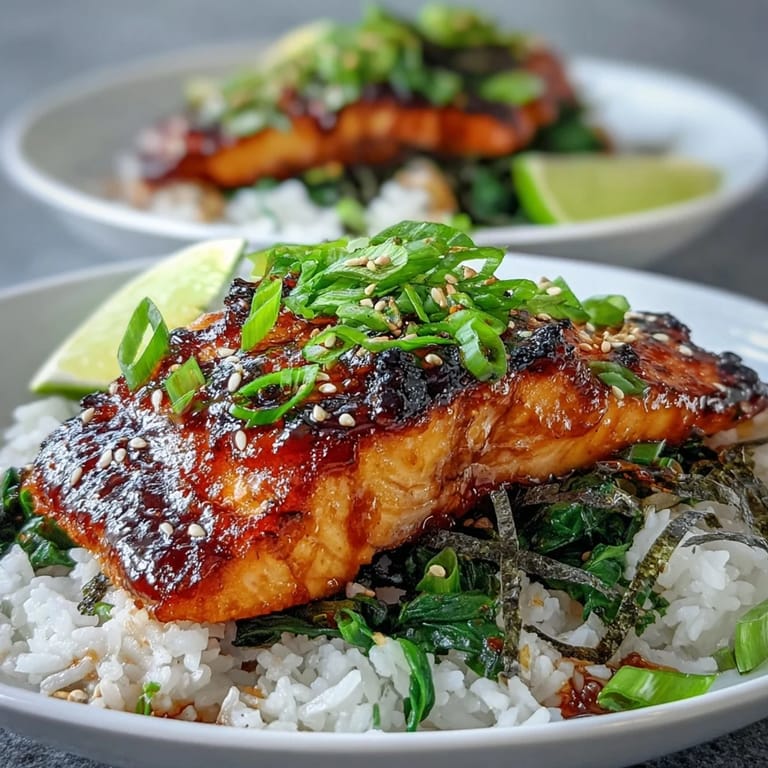
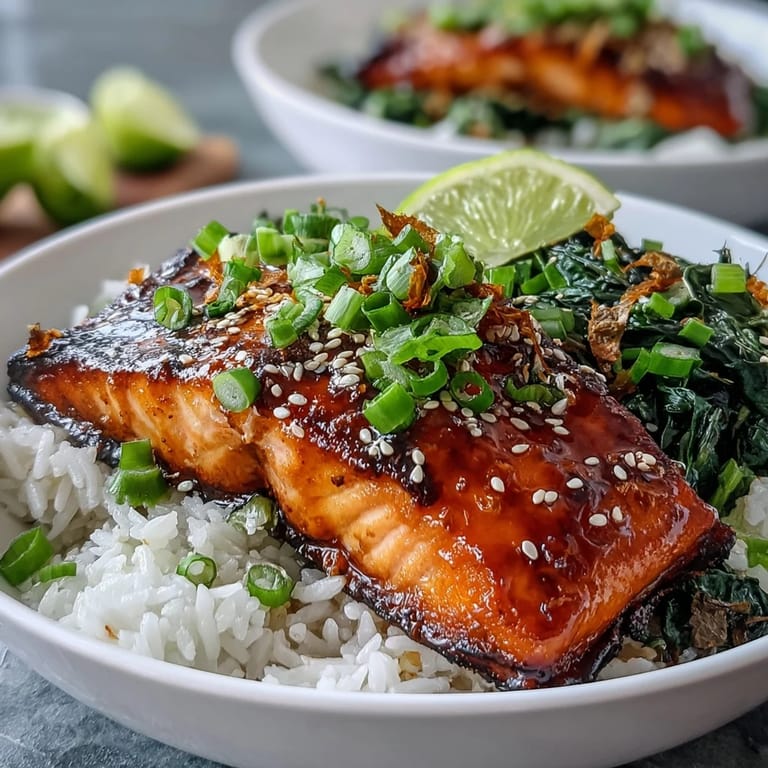
- Divide the warm jasmine rice among four bowls, creating a gentle mound in the center of each one. Top each rice mound with a portion of sautéed spinach and then a broiled salmon fillet, arranging them so you can see all three components; sprinkle generously with sliced green onions and toasted sesame seeds, then add nori strips and lime wedges if you're using them.
 Pin it
 The first time I served this to a group of friends, someone asked if I'd ordered it from the Japanese place downtown because it looked too polished to be homemade. That moment of being believed made me realize that technique matters less than confidence and fresh ingredients—and that sometimes the biggest compliment is someone thinking you did more work than you actually did.
Why This Bowl Works as a Balanced Meal
The combination of protein from the salmon, complex carbs from jasmine rice, and vegetables from the spinach creates a plate that satisfies you without making you feel heavy afterward. I've noticed that meals built this way keep me steady through an afternoon without that 3 p.m. energy crash, which is partly why I find myself making this bowl over and over.
Building Flavor Layers Without Complexity
What makes this dish feel sophisticated is that each component brings its own flavor without competing—the miso glaze is umami and sweet, the spinach is earthy and slightly bitter, the rice is neutral and comforting. Adding citrus at the end ties everything together, which is a trick I learned from a cookbook years ago and have never forgotten because it genuinely works.
Ways to Make It Your Own
Once you have the basic formula down, this bowl becomes a canvas for whatever's in your crisper drawer or whatever you're craving that week. I've added avocado on days when I wanted richness, pickled ginger when I wanted sharp brightness, and edamame when I wanted extra protein and color. Consider these adjustments not as departures from the recipe but as conversations with it.
- Slice a ripe avocado and tuck it between the spinach and salmon for creaminess that balances the savory glaze.
- Swap out jasmine rice for brown rice or quinoa if you want earthier notes or more fiber, though the cooking time might shift slightly so check your grain's package directions.
- Top with a soft-boiled egg or a poached egg if you want to add extra richness and have something to cut through with the lime wedge.
 Pin it
 This bowl has quietly become my answer to the question of what to cook when I want something that tastes intentional but doesn't demand my full attention. It's the kind of dish that reminds you why cooking matters.
Recipe FAQ
- → What does miso glaze taste like?
Miso glaze offers a complex balance of savory umami, subtle sweetness from honey and mirin, and a gentle tang from rice vinegar. The fermented miso paste creates depth while the aromatics add warmth and brightness.
- → Can I use other fish besides salmon?
Yes, this glaze works beautifully with cod, halibut, black cod, or even sea bass. Adjust cooking time based on fillet thickness—thinner pieces may need only 6-8 minutes under the broiler.
- → Is it better to broil or bake the salmon?
Broiling creates superior caramelization on the glaze, giving the salmon a gorgeous golden finish. Baking at 220°C works well too but produces a softer, less concentrated glaze. Choose broiling for that restaurant-quality presentation.
- → How long should I marinate the fish?
Fifteen to 30 minutes is ideal—enough time for the flavors to penetrate without overwhelming the delicate salmon. Longer marinating beyond an hour isn't necessary and can make the texture slightly mushy due to the salt content in miso.
- → What sides pair well with this bowl?
This bowl is quite complete on its own, but you could add quick-pickled cucumbers, steamed edamame, or a simple miso soup. For extra richness, sliced avocado or a soft-boiled egg makes excellent additions.