 Pin it
 The steam rising from a pot of minestrone takes me straight back to my grandmother's kitchen in late autumn. I discovered this recipe during a rainy weekend when I had nothing but odds and ends in my refrigerator. The magic of minestrone lies in its forgiving nature—a handful of vegetables, some beans, a bit of pasta, and suddenly you have something that tastes like it's been perfected over generations. What started as a clean-out-the-fridge necessity has become one of my most treasured recipes.
Last winter, when my friend Lisa was recovering from surgery, I brought over a large container of this minestrone. Her eyes lit up at the first spoonful, and she called me later that night saying she felt better already. There's something about a homemade vegetable soup that seems to have healing properties beyond nutrition—perhaps it's the intention behind each chopped carrot and stirred pot that infuses the broth with comfort.
Ingredients
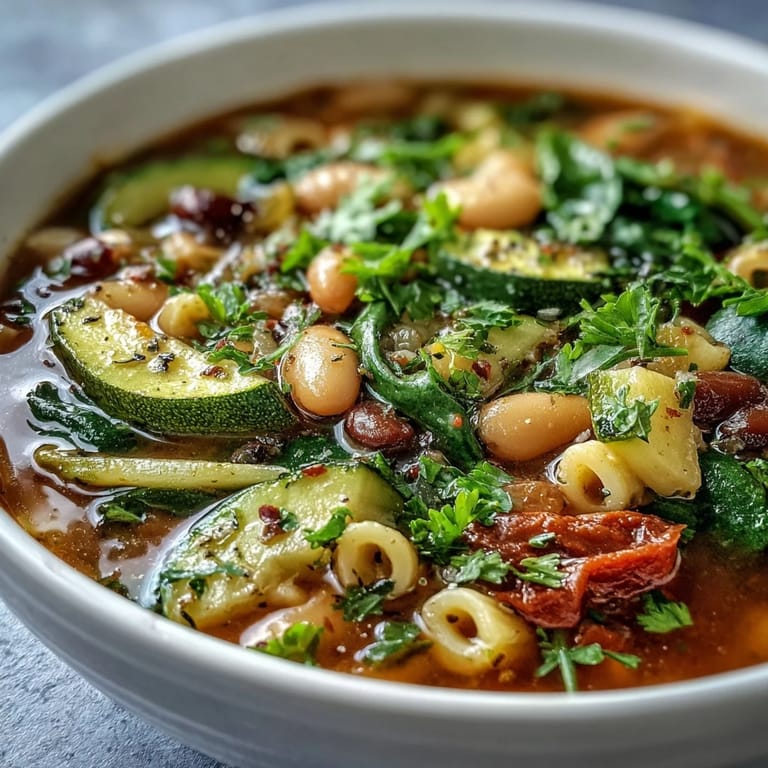
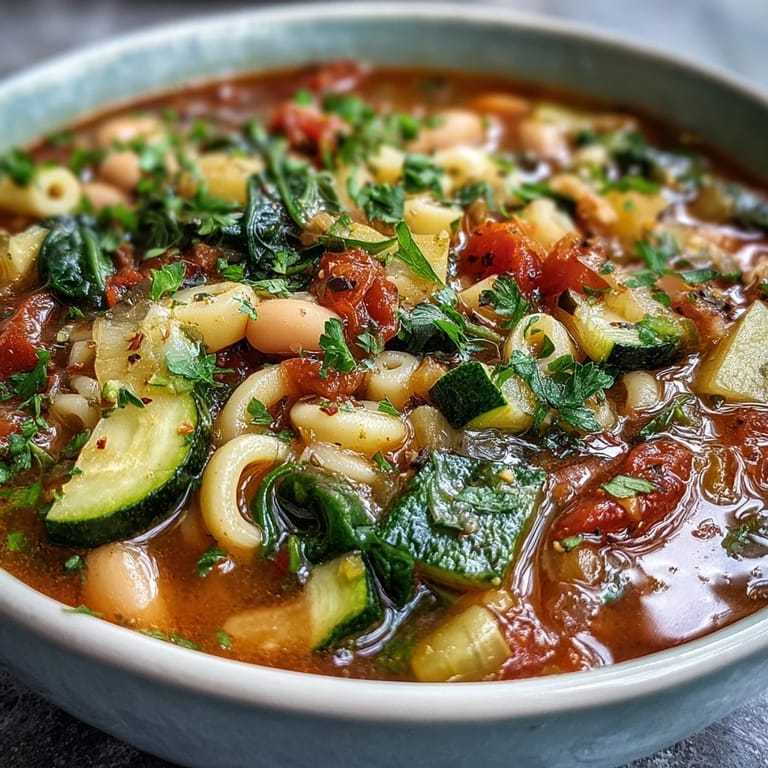
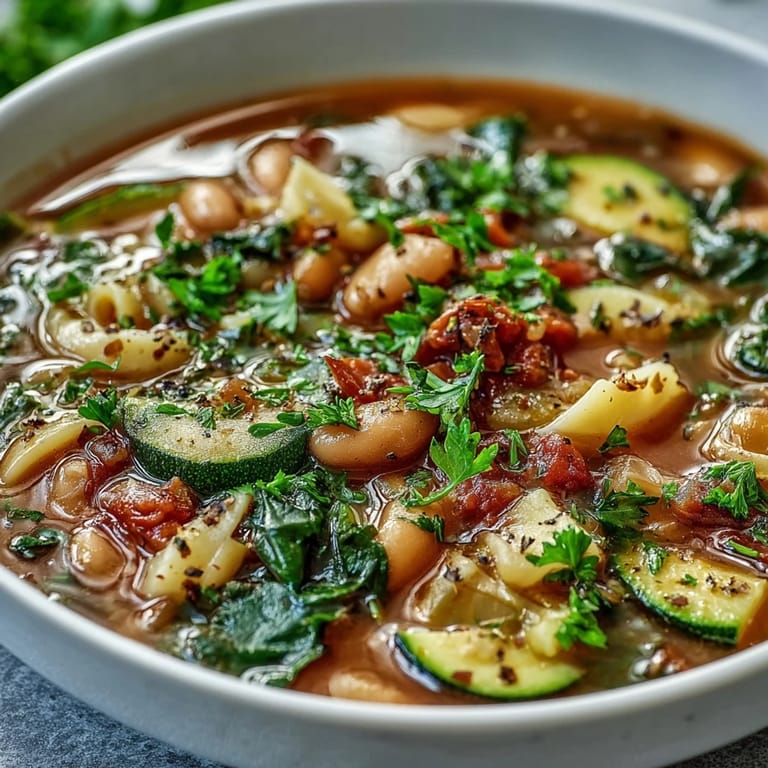
- Seasonal vegetables: The holy trinity of onion, carrot, and celery creates the aromatic foundation, but I've learned that zucchini adds a subtle sweetness that balances the acidity of tomatoes perfectly.
- Cannellini beans: These creamy white beans hold their shape while adding protein and substance—I accidentally doubled the amount once and discovered it made the soup even more satisfying.
- Small pasta: Little pasta shapes like ditalini capture broth in their crevices, creating perfect little flavor bombs in each spoonful.
- Herbs: The combination of dried herbs during cooking and fresh parsley added at the end creates layers of flavor that make this soup taste like it simmered all day.
Tired of Takeout? 🥡
Get 10 meals you can make faster than delivery arrives. Seriously.
One email. No spam. Unsubscribe anytime.
Instructions
- Build your flavor base:
- Heat olive oil in a large pot and sauté onion, celery, and carrots until they begin to soften and release their aromas. You'll know it's right when the kitchen starts smelling like comfort itself.
- Layer in more vegetables:
- Add garlic, zucchini, and green beans, stirring occasionally as they release their flavors. This brief cooking before adding liquid helps vegetables maintain their distinct character in the finished soup.
- Create your broth:
- Pour in diced tomatoes, tomato paste, vegetable broth and dried herbs, then bring everything to a gentle boil. The bay leaf might seem insignificant, but it adds a subtle depth that you'd miss if it weren't there.
- Add substance:
- Stir in pasta and beans, simmering until the pasta is tender but still has a slight bite. The pasta will continue absorbing liquid even after cooking, so I aim for just slightly firmer than I want the final texture to be.
- Finish with freshness:
- Fold in leafy greens and parsley just before serving, allowing them to wilt without losing their vibrant color. These last-minute additions bring brightness to balance the rich, developed flavors.
 Pin it
 One particularly memorable dinner party, I served this minestrone as a starter, not expecting it to outshine the elaborate main course I'd spent hours preparing. Yet guests kept returning to the kitchen for more soup, dipping crusty bread into the broth and asking for the recipe. What I thought was a simple beginning became the highlight of the evening—a reminder that sometimes the most straightforward foods create the strongest connections around a table.
Seasonal Adaptations
Summer minestrone welcomes fresh corn kernels, bell peppers, and basil, creating a lighter version that celebrates the garden's peak. In autumn, I've added cubes of butternut squash and kale with spectacular results. Winter calls for heartier additions like potato and cabbage, while spring invites tender peas, asparagus tips, and fresh herbs. The recipe evolves with the calendar, making it impossible to tire of.
Serving Suggestions
While delicious on its own, minestrone reaches new heights with thoughtful accompaniments. A swirl of good olive oil just before serving adds richness, while a sprinkle of freshly grated Parmesan adds savory depth. My Italian neighbor taught me to place a small piece of Parmesan rind in the pot while simmering—it slowly melts into the broth, adding an unmistakable umami quality without overpowering the vegetables.
Storage and Freezing
Minestrone keeps beautifully in the refrigerator for up to five days, developing deeper flavors with each passing day. When freezing portions for future meals, I've discovered that filling containers only three-quarters full prevents the liquid from expanding and cracking containers.
- Allow soup to cool completely before transferring to storage containers to prevent condensation that waters down the flavors.
- Freeze individual portions in muffin tins, then transfer the frozen discs to freezer bags for quick single servings.
- When reheating, add a splash of fresh broth or water if the soup has thickened too much during storage.
 Pin it
 This minestrone has taught me that cooking isn't always about precision or exotic ingredients, but about harmony and balance. It's a reminder that sometimes the most nourishing things come from what we already have at hand.
Recipe FAQ
- → What vegetables go in minestrone?
Traditional minestrone includes onion, celery, carrots, zucchini, green beans, and leafy greens like spinach or kale. The beauty of this soup lies in its versatility—feel free to add whatever seasonal vegetables you have on hand.
- → Can I make minestrone soup ahead of time?
Absolutely. Minestrone tastes even better the next day as flavors have time to develop. Store in an airtight container in the refrigerator for up to 4 days. Note that the pasta will continue absorbing liquid, so you may need to add extra broth when reheating.
- → Is minestrone soup healthy?
Yes, this nutritious soup packs plenty of fiber from vegetables and beans, protein from the pasta and legumes, and vitamins from the variety of produce. Each serving contains approximately 225 calories with 9 grams of protein and 4 grams of fat.
- → What pasta works best in minestrone?
Small pasta shapes like ditalini, elbow macaroni, shells, or small tubes work perfectly as they fit well on the spoon and hold onto the flavorful broth. For gluten-free options, choose rice-based or chickpea pasta in similar small shapes.
- → Can I freeze minestrone soup?
You can freeze minestrone for up to 3 months, though the pasta texture may soften slightly. For best results, consider cooking the pasta separately and adding it when reheating. Cool completely before transferring to freezer-safe containers, leaving some room for expansion.