 Pin it
 The first time I made Malaysian laksa at home, I'd just returned from a cooking class in Kuala Lumpur where our instructor casually mentioned that the soul of laksa lives in the broth. Standing in my own kitchen weeks later, crushing lemongrass and breathing in its lemony brightness, I realized she was right—the smell alone told me I was building something special. That single pot became my favorite way to feed people, a dish that somehow tastes like travel without leaving home.
I made this for my friend Maya on a rainy Tuesday when she'd had a terrible week, and watching her face light up as she squeezed lime into that golden broth reminded me why cooking for people matters. She took a bite and immediately texted her sister the recipe—that's when I knew I'd made something worth keeping in rotation.
Ingredients
- Vegetable oil: A neutral oil helps the aromatics bloom without competing with the laksa's warm spices.
- Onion, garlic, ginger, and lemongrass: This fragrant base is non-negotiable; don't skip the mincing step or you'll miss the texture they bring when you bite into them.
- Laksa paste: This is your flavor shortcut—it contains the spice blend that makes laksa unmistakably itself, and good store-bought versions are genuinely reliable.
- Coconut milk: Use full-fat for richness that makes the broth feel luxurious and coat your mouth with comfort.
- Vegetable broth: This dilutes the coconut without watering down the taste, keeping the balance between creamy and light.
- Soy sauce and sugar: These aren't afterthoughts—they round out the spice and add savory depth that makes people ask for the recipe.
- Rice noodles: Thick ones hold the broth better than vermicelli, but either works depending on your mood.
- Firm tofu: Frying it first gives you that textural contrast that makes every bite satisfying rather than mushy.
- Fresh vegetables: Bean sprouts, carrot, bell pepper, and snow peas add crunch and color; don't cook them until soft or they lose their charm.
- Spring onions, cilantro, and lime: These finish the dish with brightness that cuts through the richness.
Tired of Takeout? 🥡
Get 10 meals you can make faster than delivery arrives. Seriously.
One email. No spam. Unsubscribe anytime.
Instructions
- Build Your Flavor Base:
- Heat oil in a large pot and sauté onion, garlic, ginger, and lemongrass until the kitchen smells like a Southeast Asian market. You'll know it's ready when the onions turn translucent and the raw edge fades from the aromatics—usually 3 to 4 minutes.
- Deepen the Spice:
- Add laksa paste and stir constantly for 2 minutes, letting it toast slightly in the oil. This step releases the compound flavors that make laksa taste complex and craveable.
- Create the Creamy Base:
- Pour in coconut milk and vegetable broth, stirring well so the paste dissolves completely and the broth turns a beautiful golden color. Bring to a simmer, not a boil, to keep the coconut milk from curdling.
- Let Flavors Marry:
- Season with soy sauce, sugar, and salt, then simmer uncovered for 10 minutes. This rest time is when the individual flavors stop fighting and start harmonizing.
- Prepare Your Components:
- While the broth simmers, cook or soak rice noodles according to package directions, then fry tofu cubes in a separate skillet until golden and slightly crispy on all sides. This parallel cooking keeps you moving without rushing.
- Finish Cooking Vegetables:
- Add carrots, bell pepper, and snow peas to the broth about 3 to 4 minutes before serving so they stay crisp with just enough tenderness to be pleasant without losing their snap.
- Assemble and Serve:
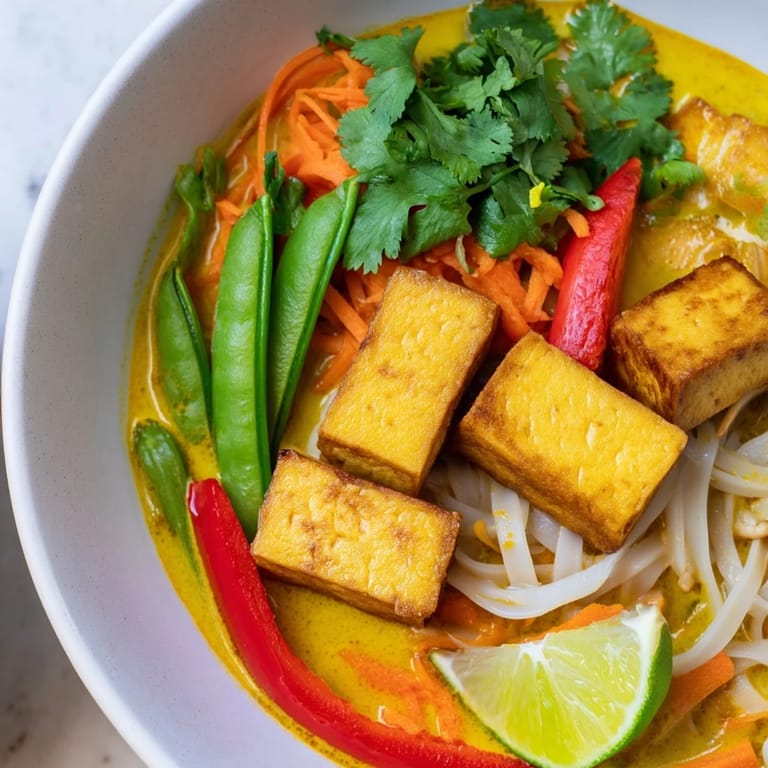
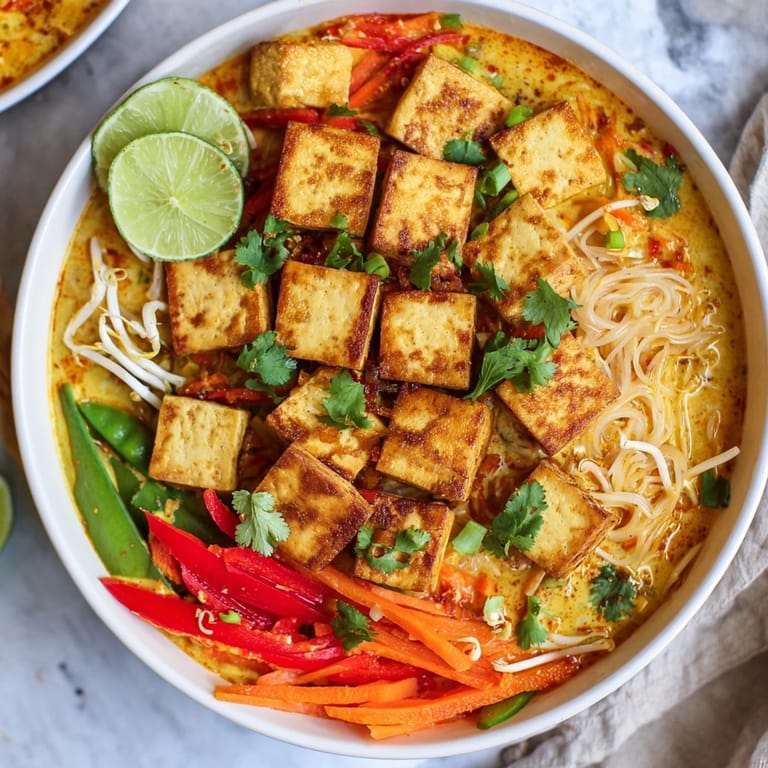
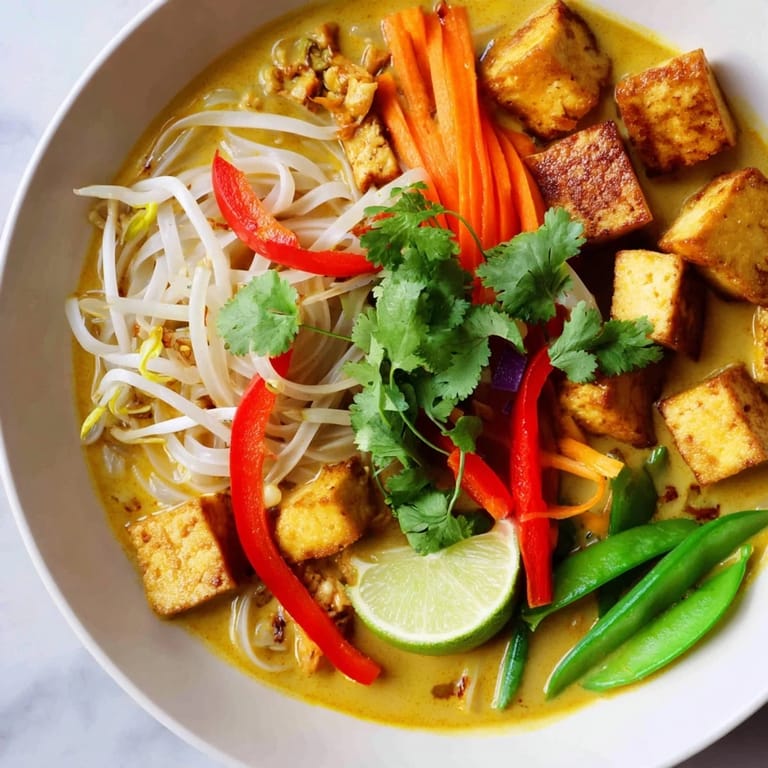
- Divide noodles into bowls, ladle hot broth and vegetables over them, then crown each bowl with fried tofu, bean sprouts, spring onions, cilantro, and chili slices. Pass lime wedges for everyone to add their own brightness.
 Pin it
 Years ago, I made this for a dinner party where everyone was quiet at first, just eating, and then someone looked up and said this tastes like somewhere I've always wanted to go. That's when I understood that cooking isn't just about feeding people—it's about giving them a moment to step away.
Why the Broth Matters Most
The broth is what separates laksa from just another noodle soup—it's supposed to taste rich, spiced, and alive. I learned this by trying shortcuts, by skipping the initial sauté or using weak broth, and every time the dish fell flat. Once I accepted that the 20 minutes of prep and simmering are the real work, everything clicked.
Making It Your Own
This recipe is flexible enough to welcome variations without losing its soul. I've added mushrooms when that's what I had, swapped in bok choy when carrots seemed boring, and even thrown in baby corn and seen people light up at the discovery. The core—the aromatic broth, the noodles, the contrast of textures—stays constant while the vegetables around it can shift with the season or your vegetable drawer.
Serving and Pairing
Serve this in shallow bowls so people can see all the layers and get a bit of everything in each spoon. Pair it with a crisp white wine like Riesling if you're setting a table, or simply with cold water if it's a casual weeknight. If you want to make it heartier for non-vegetarians, add a hard-boiled egg on top or serve with crusty bread for soaking up the last of the golden broth.
- Set out lime wedges and extra chili slices so people can dial the brightness and heat to their taste.
- Make the broth up to 2 days ahead and reheat gently to let flavors deepen even more.
- Toast the rice noodles in a dry pan before soaking to add a subtle nutty note that changes everything.
 Pin it
 This laksa has taught me that simple ingredients become something magnificent when you give them time and respect. Make it when you want to feel like you're traveling or when someone needs a bowl of comfort that tastes like care.
Recipe FAQ
- → What type of noodles work best for this dish?
Thick rice noodles or vermicelli both work well; soak or cook them according to package instructions for desired texture.
- → Can I make this dish vegan?
Yes, ensure the laksa paste contains no shrimp paste or fish sauce and use plant-based ingredients throughout.
- → How do I adjust the spice level?
Modify the amount of laksa paste or add optional red chili slices to increase heat.
- → What are good vegetable additions for variety?
Mushrooms, baby corn, and bok choy are excellent options to add more texture and flavor.
- → What’s the best way to prepare the tofu?
Lightly fry firm tofu cubes in a nonstick skillet until golden brown on all sides to enhance texture and flavor.