 Pin it
 My friend Sarah showed up at my apartment one Tuesday night with leftover Korean BBQ chicken and a half-eaten block of cheddar, insisting we turn it into something nobody had tried before. We were standing in my tiny kitchen, the kind of place where you can't open two cabinet doors at once, when she grabbed a tortilla and said, 'What if we just... grilled it?' Twenty minutes later, we were biting into something that tasted like Seoul met a grilled cheese stand and they decided to stay for dinner. It became our go-to late-night creation, the kind of thing you make when you want restaurant-quality flavor without the ceremony.
The first time I made these for my book club, everyone assumed I'd ordered from that new Korean fusion spot downtown, and I let them think that for exactly long enough to taste their surprise when I admitted they were homemade. One person asked for the recipe three times before I finally wrote it down, and now she texts me photos of hers every other month, usually with a caption like 'Why didn't you tell me these were this easy?'
Ingredients
- Boneless, skinless chicken breasts (2): Slice them thin so they cook through quickly and soak up the marinade like they mean it; I use a sharp knife and work with cool chicken, which is way less slippery.
- Soy sauce (2 tablespoons): This is your umami backbone, the thing that makes people stop mid-bite and ask what it is.
- Gochujang (1 tablespoon): Korean chili paste that brings heat, depth, and a slight fruitiness that plain hot sauce can't match.
- Honey (1 tablespoon): The secret balancer that keeps this from tasting one-note spicy.
- Sesame oil (1 tablespoon): A little goes a long way, and its nuttiness is non-negotiable here.
- Garlic and ginger (2 cloves and 1 teaspoon): Fresh only; there's no substitute for the brightness they bring to the marinade.
- Rice vinegar (1 tablespoon): Adds tang and cuts through the richness so nothing feels heavy.
- Toasted sesame seeds (1 teaspoon for marinade, 1 more tablespoon for serving): Buy them already toasted unless you enjoy the smell of burning nuts in your kitchen.
- Scallions (2, thinly sliced, plus 2 more tablespoons for the wrap): Green onions give you a fresh bite that makes the whole thing feel less heavy.
- Flour tortillas or wraps (4 large): The sturdier the better so they don't fall apart when you flip them on the pan.
- Shredded mozzarella and cheddar (1 ½ cups and ½ cup): Mozzarella melts smooth while cheddar adds flavor and color.
- Unsalted butter (2 tablespoons, softened): This browns into golden exterior magic, so don't use cold butter straight from the fridge.
Tired of Takeout? 🥡
Get 10 meals you can make faster than delivery arrives. Seriously.
One email. No spam. Unsubscribe anytime.
Instructions
- Mix Your Marinade Magic:
- Whisk together soy sauce, gochujang, honey, sesame oil, minced garlic, ginger, and rice vinegar in a bowl until the chili paste dissolves and everything looks glossy. Toss in your chicken slices and let them sit for at least 15 minutes while you prep the cheese and scallions; if you have 30 minutes, that's even better, but don't let it go longer than an hour or the acid starts changing the texture.
- Cook the Chicken Until It's Caramelized:
- Heat a nonstick skillet over medium-high heat and let it get hot enough that the chicken sizzles immediately when it hits the pan. Cook for 4 to 5 minutes, stirring constantly, until the edges are golden brown and a little crispy, then fold in the sesame seeds and scallions right at the end so they stay fresh and bright.
- Build Your Wraps:
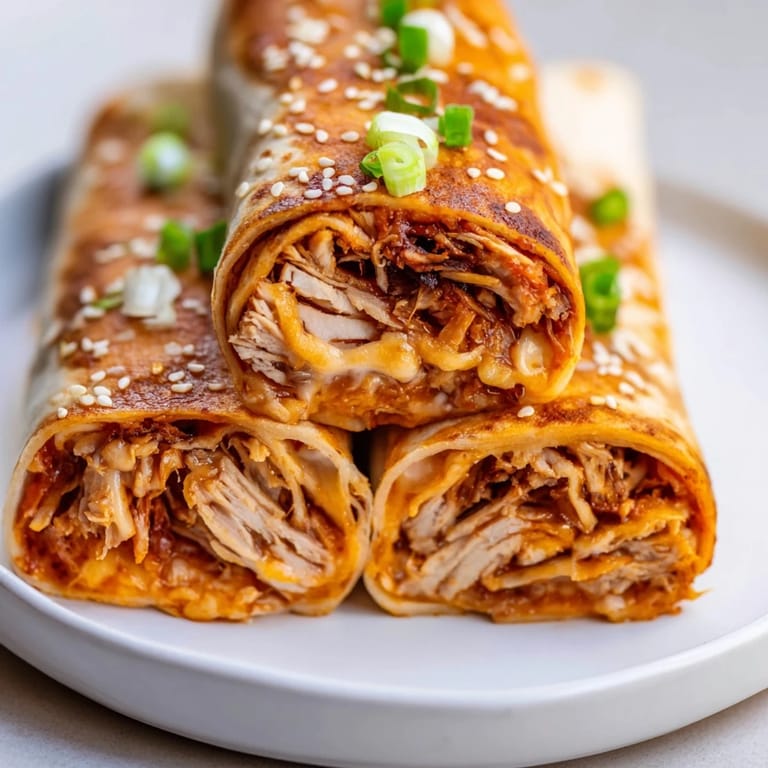
- Lay out each tortilla and sprinkle a quarter of the mozzarella and cheddar on one half of each wrap, leaving a border so it doesn't leak everywhere when it melts. Top the cheese with a generous spoonful of BBQ chicken, then scatter extra scallions and a pinch of sesame seeds on top for texture and flavor.
- Fold Like You Mean It:
- Fold each tortilla in half gently to form a half-moon, pressing the edges so the filling doesn't make a break for it during cooking.
- Butter the Outside:
- Brush softened butter on the outside of each wrap so it browns evenly and turns crispy rather than just steaming.
- Grill Until Golden:
- Heat a clean skillet or grill pan to medium, then lay the wraps in carefully and cook for 2 to 3 minutes per side, pressing gently with your spatula so the cheese melts and the exterior gets those brown, crispy spots. You're looking for that moment when you can smell the butter and cheese merging into something almost caramelized.
- Rest and Serve:
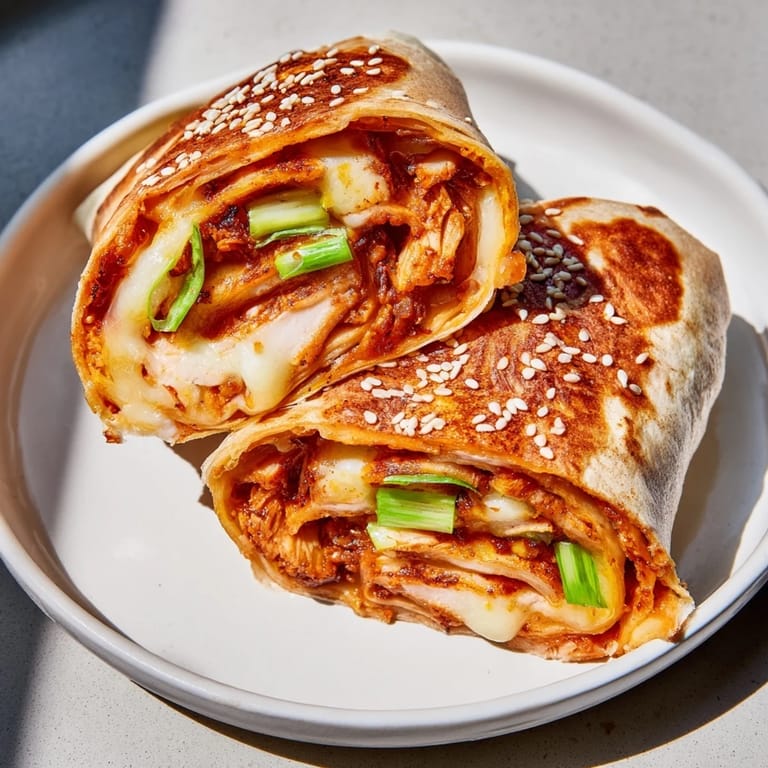
- Let each wrap sit for just 1 minute after you pull it off the heat so the cheese sets and won't slide out, then slice diagonally and serve while it's still hot enough that the cheese pulls in long, melty strands.
 Pin it
 There was a night when my partner came home exhausted from work and I had these ready, still warm, and they said it was the best thing they'd tasted in weeks, which I know sounds like I'm overselling grilled cheese, but something about that exact combination of crispy and melty and spicy and fresh just hit differently that night. Now whenever they've had a rough day, this is what they ask for before anything else.
Why the Fusion Works
Most fusion dishes fail because they're trying too hard to be clever, throwing together ingredients that sound good on paper but taste confused when they actually meet in your mouth. This one works because Korean BBQ and grilled cheese aren't that far apart conceptually; they're both about bold flavors meeting comfort and warmth, about char and umami and cheese doing exactly what they were designed to do. The gochujang brings spice and depth that regular BBQ sauce never could, while the sesame and scallions keep everything tasting authentic rather than like you took a shortcut.
Making It Your Own
Once you understand how these elements work together, you can start playing around. Some nights I add thinly sliced fresh chilies for extra heat, or a tiny drizzle of sriracha inside the wrap if I'm feeling aggressive about spice. Other times, especially when someone's coming over for lunch, I swap the cheddar for provolone because it tastes sharper and more elegant somehow. The beauty of this recipe is that it's flexible enough to bend to your mood without falling apart.
- Serve it with kimchi on the side if you want to double down on the Korean flavors, or a simple cabbage slaw if you want something cooler and fresher.
- If anyone at your table needs gluten-free versions, just use gluten-free wraps and swap tamari in for the soy sauce, and it works exactly the same.
- Make the marinade in the morning and store it with the chicken so everything is ready the moment you get home and want dinner in 20 minutes.
Timing and Practicality
The whole thing takes about 35 minutes from start to finish, and most of that is just sitting around waiting for marinade to do its thing and for the pan to get hot. The actual hands-on time is maybe 10 minutes if you've prepped your ingredients, which is honestly less time than scrolling through delivery apps and definitely cheaper. I've made these on weeknights when I have zero energy, weekend mornings when I'm trying to impress brunch guests, and late nights when a friend shows up hungry.
 Pin it
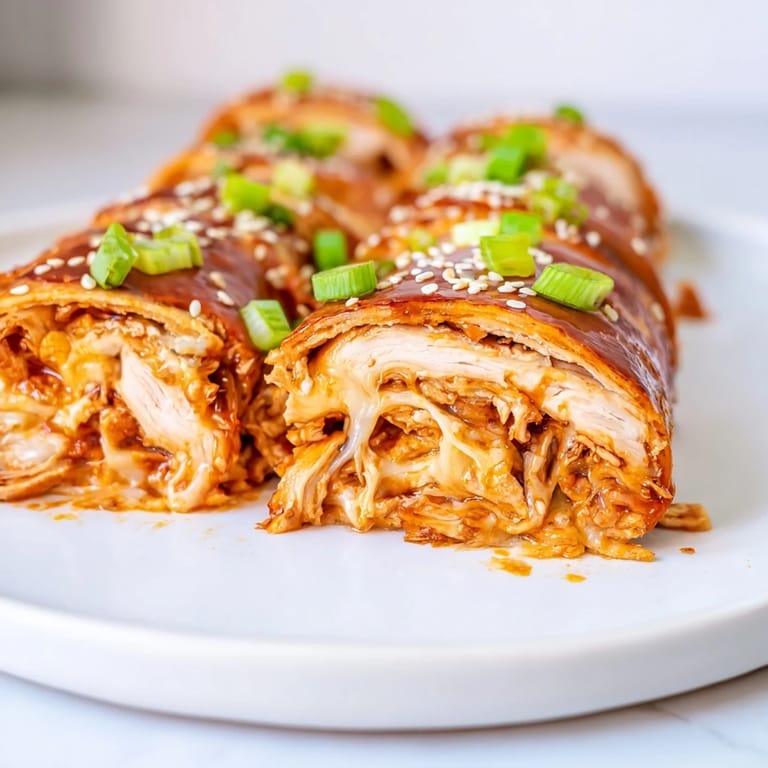
 These wraps are the kind of food that bridges the gap between weeknight dinner and something you'd actually feel good serving when people come over. They're reliable, they taste way more impressive than they have any right to be, and somehow they always make everyone happy.
Recipe FAQ
- → How should the chicken be prepared for the best flavor?
Thinly slice boneless chicken breasts and marinate them in a mixture of soy sauce, gochujang, honey, sesame oil, garlic, ginger, and rice vinegar for at least 15 minutes to infuse bold flavors.
- → What cheeses work well in this grilled wrap?
A blend of shredded mozzarella and cheddar cheeses melts beautifully, balancing creaminess with sharpness. Provolone can be substituted for a different taste.
- → How do you achieve a crispy wrap exterior?
Brush the outside of the filled tortillas with softened butter and grill on medium heat for a couple of minutes per side until golden and crisp.
- → Can this dish be adjusted for gluten-free diets?
Yes, by using gluten-free wraps and tamari in place of soy sauce, you can easily adapt the dish for gluten sensitivities.
- → What additional toppings complement this dish?
Extra scallions, toasted sesame seeds, and a side of kimchi or cabbage slaw enhance flavor and provide textural contrast.