 Pin it
 I discovered honey mustard salmon by accident on a Tuesday evening when I'd forgotten to plan dinner. My partner had just brought home a beautiful salmon fillet, and I was standing at the pantry door wondering what I could do with it quickly. I grabbed a jar of Dijon mustard, squeezed some honey into a bowl, and mixed them together almost without thinking. Twenty minutes later, the kitchen smelled like something had been simmering in someone's home for hours, and that first bite completely changed how I cook fish.
The first time I made this for friends, I was genuinely nervous because I'd only attempted it once before. But watching everyone's faces as they tasted it, seeing them ask for the recipe before they'd even finished their first bite—that's when I realized this wasn't just easy, it was the kind of dish people actually remember. Someone said it tasted like something you'd get at a nice restaurant, and I didn't tell them how little effort it really took.
Ingredients
- Salmon fillets (4 pieces, 6 oz each): Look for fillets with a gentle sheen and firm flesh—they should smell like the ocean, not fishy. Pat them completely dry before the sauce goes on, which helps everything stick properly.
- Dijon mustard (3 tbsp): This is your savory anchor, the thing that keeps the honey from being too sweet and gives the sauce real backbone.
- Whole grain mustard (2 tbsp): Those little seeds add texture and a gentle crunch that feels intentional, plus they distribute the mustard flavor more evenly than smooth mustard alone.
- Honey (3 tbsp): The sweetness should balance the mustard's tang, so taste as you go if you're adjusting—some honey tastes stronger than others depending on the variety.
- Olive oil (1 tbsp): This keeps the sauce from breaking and helps it coat the salmon like a proper glaze instead of pooling at the bottom of the pan.
- Lemon juice (1 tbsp): Fresh lemon makes the whole thing brighter and cuts through the richness so it doesn't feel heavy, no matter how much sauce you use.
- Garlic (2 cloves, minced): Raw garlic gets mellow as it bakes, adding depth without screaming at you—this is the secret that makes people ask what's in it.
- Salt and black pepper: Season the sauce properly; underseasoning it means the salmon will taste flat no matter how beautiful it looks.
Tired of Takeout? 🥡
Get 10 meals you can make faster than delivery arrives. Seriously.
One email. No spam. Unsubscribe anytime.
Instructions
- Get your oven ready and prep your pan:
- Preheat to 400°F and line your baking sheet with parchment paper—this isn't just for easy cleanup, it keeps the salmon from sticking and lets you transfer the whole thing without breaking it apart. If you don't have parchment, a light coating of oil works fine.
- Make the sauce:
- Whisk the mustards, honey, olive oil, lemon juice, garlic, salt, and pepper in a small bowl until everything is combined and looks smooth. The sauce should smell tangy and sweet at the same time, with no dry streaks of mustard hiding in the corners.
- Arrange and dry the salmon:
- Lay your salmon fillets on the prepared sheet and pat them completely dry with paper towels—this one step changes everything because moisture is the enemy of a good glaze. Leave a little space between each fillet so the heat can move around them.
- Coat generously with sauce:
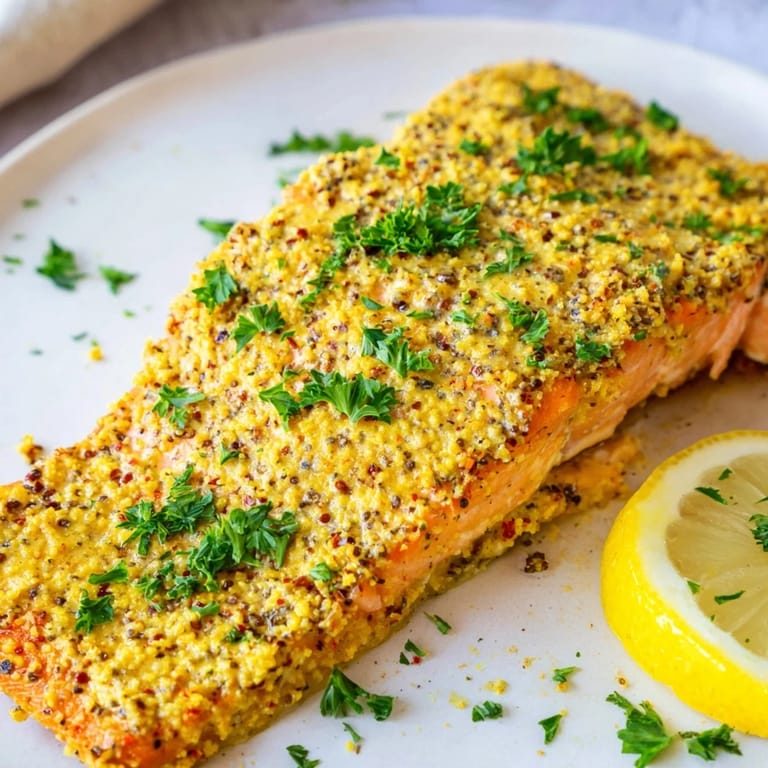
- Spoon the honey mustard mixture over each fillet, spreading it evenly across the top and down the sides. Don't be shy; this becomes the glaze, and more surface area means more caramelization.
- Bake until the flesh is opaque:
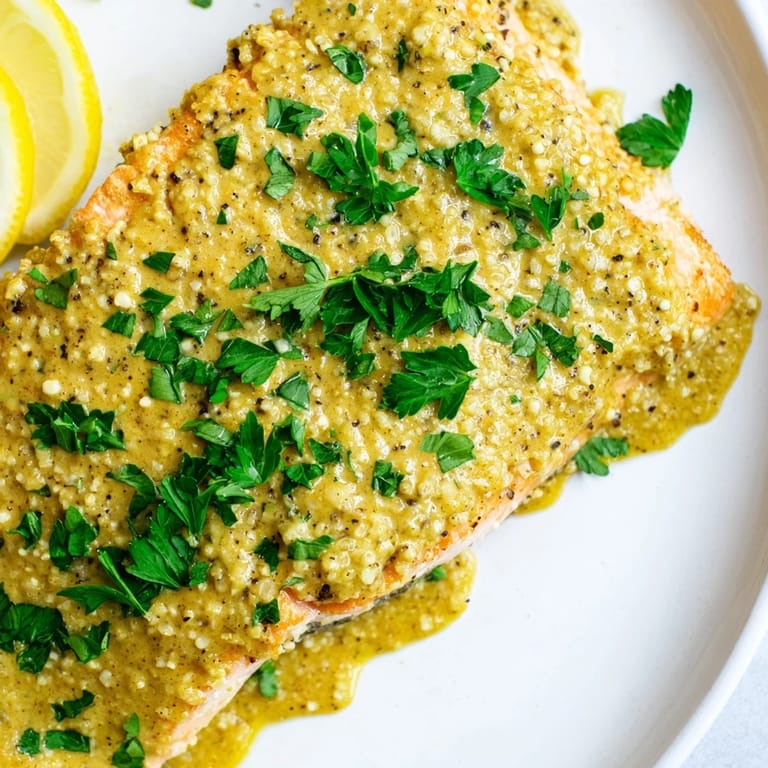
- Slide the pan into the oven and bake for 15 to 20 minutes, depending on how thick your fillets are. The salmon is done when you can flake it gently with a fork and the flesh has turned from translucent to an opaque peachy-orange, with no raw-looking center.
- Finish and serve:
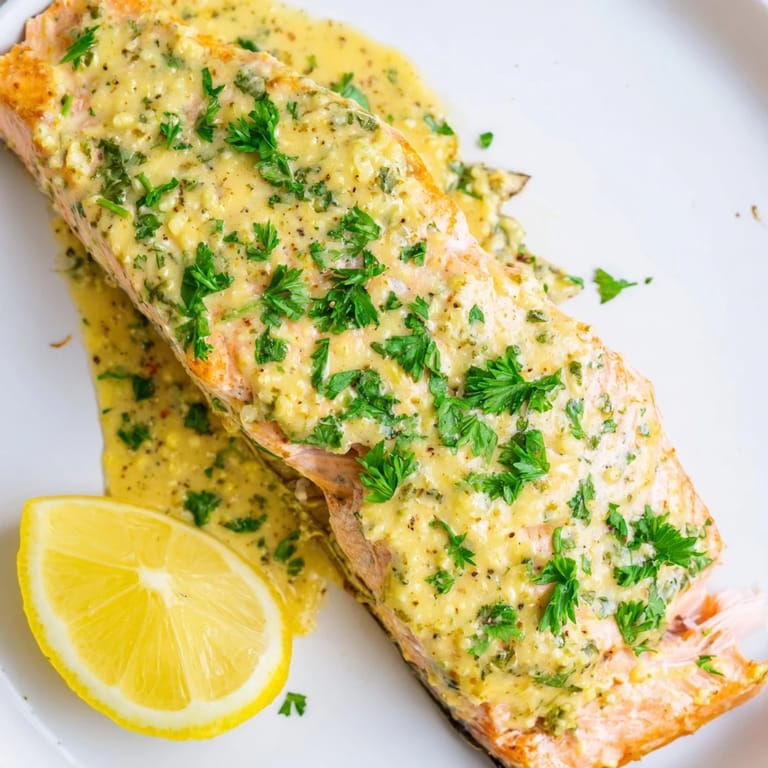
- Pull the pan from the oven, garnish with fresh parsley if you have it, and serve immediately with lemon wedges so people can add brightness if they want. The sauce will still be warm and slightly sticky, which is exactly what you're after.
 Pin it
 There's something about watching someone take that first bite of something you've made, seeing them pause and actually taste it instead of just eating, that reminds you why cooking matters. This dish has that effect on people, even though it's simple enough that you start wondering if you're getting credit for something that shouldn't be this easy.
The Secret to Restaurant-Quality Glaze
The reason this sauce feels so special is because honey and mustard together create what's called the Maillard reaction when they hit the heat—basically, they caramelize and deepen in flavor without any real work from you. The key is using both Dijon and whole grain mustard because they contribute different things: the Dijon adds smoothness and sophistication, while the whole grain brings texture and keeps it from feeling like a single-note sauce. The olive oil is what stops this from becoming too acidic or harsh, and the lemon juice at the end is what makes people's eyes light up without knowing why.
Building Your Own Variations
Once you've made this a few times, you'll realize the sauce is flexible enough to play with. I've swapped in whole grain Creole mustard when I wanted something spicier, added a tablespoon of maple syrup instead of straight honey for an earthier sweetness, and even mixed in a tiny bit of soy sauce when I wanted umami depth. The formula stays the same—three parts mustard, some sweetness, some acid, some oil—but what you swap in and out is yours to decide.
Sides That Actually Matter
Salmon with this sauce tastes best when it's not fighting with complicated sides, so I usually go simple: a bowl of white rice to catch the extra sauce, some roasted asparagus or green beans for crunch, or a fresh salad with lemon vinaigrette if I'm trying to keep things light. The glaze is the main event, and everything else should know that and step back gracefully. If you're feeling ambitious, roasted baby potatoes work beautifully because they soak up any sauce that drips, and nobody complains about that.
- Rice works especially well because the honey mustard glaze gets better every time you mix it with the rice on your plate.
- If you broil for those last two minutes, watch it carefully because the glaze can go from caramelized to burnt in 90 seconds.
- Leftovers are surprisingly good cold the next day, flaked into salads or over grain bowls.
 Pin it
 This recipe has quietly become one of those dishes I make without much thought anymore, which is funny because it started as an accident. It's the kind of thing that makes you look like you tried harder than you actually did, which is really the best kind of recipe to have.
Recipe FAQ
- → What temperature is best for baking salmon?
Preheat your oven to 400°F (200°C) for a perfectly baked, flaky salmon.
- → How can I enhance the glaze on the salmon?
Broil the salmon for the last 2 minutes to deepen caramelization and intensify flavor.
- → Can I use different mustards in the glaze?
Yes, substituting Dijon with yellow mustard offers a milder, less pungent taste.
- → What sides pair well with honey mustard salmon?
Serve with rice, quinoa, roasted vegetables, or a fresh salad for a balanced meal.
- → Is this dish suitable for gluten-free diets?
Yes, all ingredients are naturally gluten-free, making it safe for gluten-sensitive diets.