 Pin it
 I was caught in a thunderstorm walking home from the farmers market last autumn, arms loaded with seasonal produce and no umbrella in sight. Soaked to the bone with slightly muddy vegetables, I decided the only solution was a steaming pot of minestrone soup. The rhythmic chopping became a meditation as rain tapped against the windows, and the fragrance of herbs and sautéing vegetables gradually replaced the damp chill in my bones. That impromptu decision sparked what became my most reliable comfort recipe.
Last winter when my cousin was going through a difficult time, I packed a container of this minestrone and drove it to her place without calling first. We ended up sitting at her kitchen table for hours, refilling our bowls as evening turned to night. The soup became less about the food and more about the comfort it provided, warming hands around steaming bowls as stories flowed between us.
Ingredients
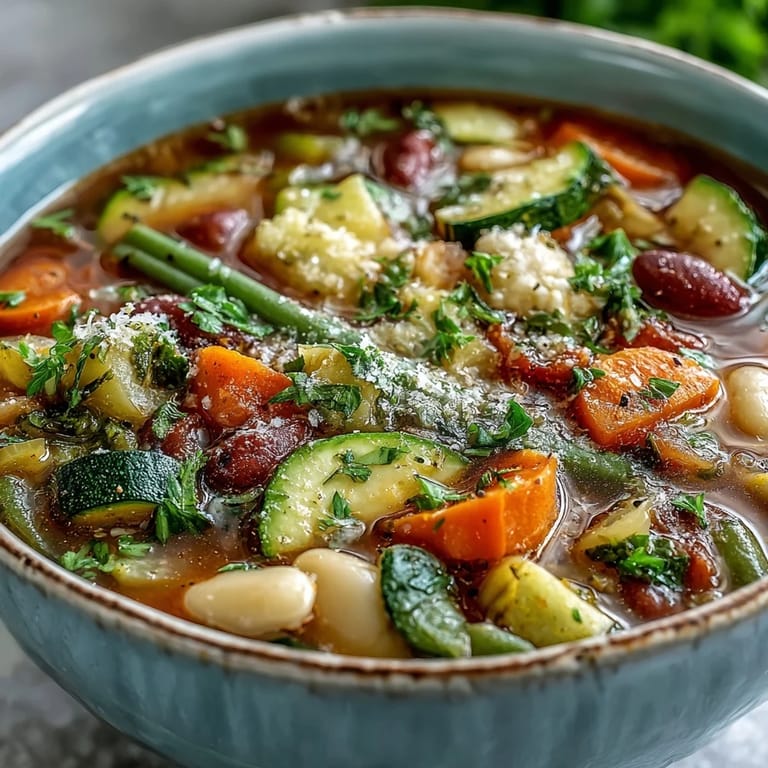
- Mirepoix: The humble trinity of diced onions, carrots, and celery creates the foundational flavor that makes or breaks this soup, so take your time sautéing them until they soften and release their aromatic qualities.
- Two types of beans: The combination of creamy cannellini and heartier kidney beans provides textural contrast that keeps each spoonful interesting.
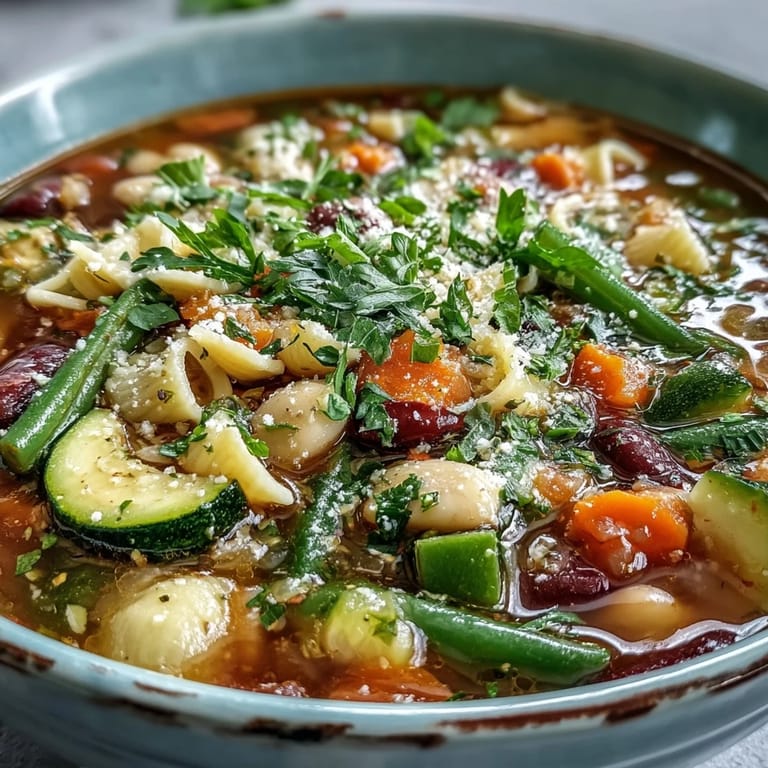
- Small pasta: Tiny pasta shapes like ditalini or small shells cook right in the broth, absorbing flavor while releasing just enough starch to give the soup a slight body without making it heavy.
- Leafy greens: Adding spinach or kale at the very end preserves their vibrant color and nutritional value while gently wilting into the hot soup.
Tired of Takeout? 🥡
Get 10 meals you can make faster than delivery arrives. Seriously.
One email. No spam. Unsubscribe anytime.
Instructions
- Build your flavor base:
- Heat olive oil in a large pot until it shimmers, then add your diced onion, carrots, and celery. Youll know theyre ready when they soften and the kitchen fills with that irresistible savory aroma, about 5-6 minutes.
- Layer in the vegetables:
- Add garlic, zucchini, and green beans, stirring occasionally to coat them in the oils and aromatics. The vegetables should begin to brighten in color but maintain some firmness.
- Create the broth:
- Pour in diced tomatoes, vegetable broth, and all your dried herbs, watching as the liquid turns a gorgeous rust-red color. Let this come to a gentle boil, then reduce to a simmer that softly bubbles around the edges.
- Add substance:
- After about 15 minutes of simmering, stir in your pasta and beans. The soup will begin to take on body and heartiness as the pasta cooks directly in the flavorful broth.
- Finish with freshness:
- Just before serving, fold in the leafy greens and watch them collapse into silky ribbons. Fish out the bay leaf, then taste and adjust seasoning, adding a pinch more salt or pepper if needed.
 Pin it
 The first time I served this minestrone to my mother-in-law, I was terrified she would compare it unfavorably to her Italian family recipe. Instead, she grew quiet after the first spoonful, set down her spoon, and asked if I had been speaking with her grandmother. Apparently, the balance of herbs and the texture of the vegetables mirrored a soup shed grown up eating but hadnt tasted in decades.
Seasonal Adaptations
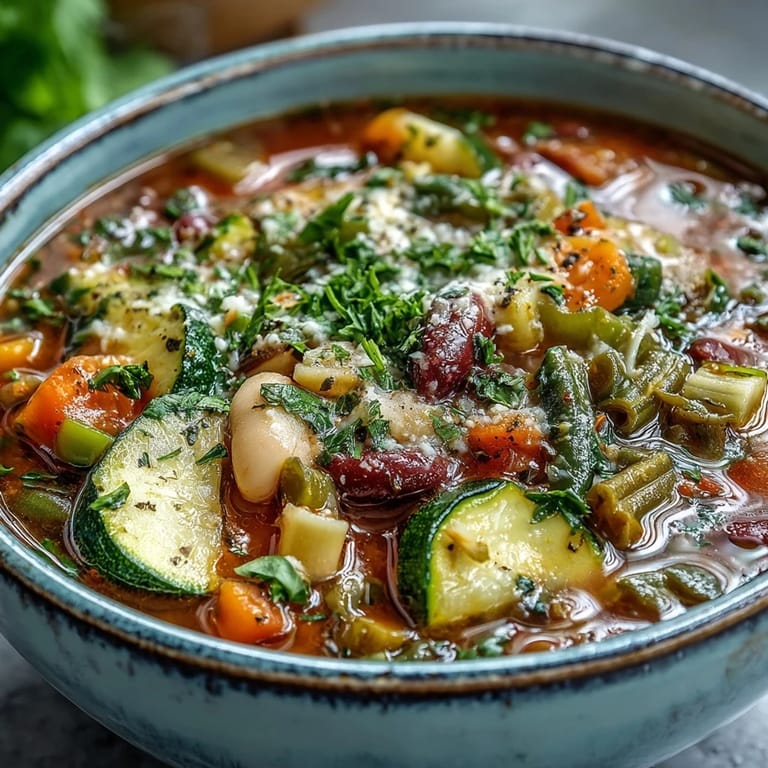
My summer version swaps winter squash for zucchini and adds fresh corn kernels cut straight from the cob. Spring welcomes tender asparagus tips and fresh peas, while autumn calls for chunks of butternut squash and hearty kale. Winter versions in my kitchen often include root vegetables like turnips or parsnips, which mellow beautifully in the long simmer.
Serving Suggestions
Though perfectly satisfying on its own, this soup reaches new heights with accompaniments. A piece of crusty sourdough brushed with garlic-infused olive oil makes for ideal broth-sopping, while a small side salad of bitter greens dressed simply with lemon and olive oil provides perfect contrast. For special occasions, I serve small cups as a starter before a main course of roast chicken or grilled fish.
Storage and Reheating
If youre planning for leftovers, consider cooking and storing the pasta separately, adding it only to portions being served immediately. The flavor deepens overnight as the ingredients mingle in the refrigerator, making this possibly even better on day two.
- Refrigerate cooled soup in airtight containers for up to 4 days, keeping pasta separate if possible.
- Freeze in individual portions for up to 3 months, thawing overnight in the refrigerator before gently reheating.
- When reheating, add a splash of fresh broth or water if the soup has thickened too much.
 Pin it
 This minestrone has become my edible love language, the recipe I turn to when words fail but care needs expressing. Somehow, a simple vegetable soup manages to communicate everything I wish I could say.
Recipe FAQ
- → What vegetables work best in minestrone?
Onions, carrots, celery, zucchini, green beans, and leafy greens like spinach or kale create the classic vegetable base. You can also add potatoes, cabbage, or peas based on seasonal availability and personal preference.
- → Can I make this soup gluten-free?
Absolutely. Simply substitute the regular pasta with gluten-free pasta shapes like corn or rice-based varieties. Ensure all other ingredients, particularly canned goods and seasonings, are certified gluten-free.
- → How should I store leftovers?
Store cooled soup in airtight containers in the refrigerator for up to 4 days. For longer storage, freeze individual portions for up to 3 months. Note that pasta may soften when reheated—consider adding fresh pasta when reheating leftovers.
- → What type of pasta is traditional?
Small pasta shapes like ditalini, elbow macaroni, or small shells work beautifully as they fit perfectly on the spoon and absorb the flavorful broth. Larger shapes can overpower the delicate vegetable balance.
- → Can I use dried beans instead of canned?
Yes, soak and cook dried beans separately until tender before adding them to the soup. One can of beans equals about 1.5 cups of cooked dried beans. This method requires additional planning time but offers excellent texture.
- → How do I enhance the flavor?
Finish each bowl with freshly grated Parmesan cheese, chopped parsley, and a generous drizzle of extra virgin olive oil. These garnishes add richness, brightness, and authentic Italian restaurant quality to every serving.