 Pin it
 My aunt's kitchen in Manila smelled like a thousand dinners at once—vinegar and soy sauce cutting through the heat, garlic browning in hot oil. She taught me adobo the way she learned it, never from a recipe, just watching her hands move and tasting as she went. Years later, I made it in my own kitchen with bone-in thighs that crisped up golden, and suddenly I understood why this dish has survived centuries of family tables. It's not fancy or complicated, but it has a way of feeling like home in a single bowl.
I remember bringing this to a potluck once, nervous because everyone else had fancy sides and colorful plating. By the time people finished eating, the bowl was scraped clean and someone asked for the recipe written out because they wanted to make it that same week. That's when I realized adobo doesn't need to be fussy—it just needs to taste like it matters.
Ingredients
- Bone-in, skin-on chicken thighs and drumsticks (1.5 lbs): The bones add flavor and the skin crisps up beautifully; this is not the time to go skinless.
- Soy sauce (1/3 cup): Use regular soy sauce unless you need gluten-free; it's the backbone of the sauce.
- Cane vinegar or white vinegar (1/3 cup): The vinegar is what makes adobo sing—it should taste tangy and slightly sharp.
- Garlic cloves (6), peeled and smashed: Smashing them releases more flavor than mincing; they'll soften into the sauce.
- Bay leaves (2): They flavor the braise but must be removed before serving.
- Black peppercorns (1 teaspoon whole): Whole peppercorns stay toasty and fragrant; ground pepper works too if that's what you have.
- Brown sugar (1 tablespoon, optional): A tiny bit of sweetness balances the vinegar and soy without making it dessert.
- Water (1/2 cup): Keeps the sauce from reducing too fast and helps cook the chicken through.
- Cooking oil (2 tablespoons): Any neutral oil works—you need it hot enough to brown the chicken skin.
Tired of Takeout? 🥡
Get 10 meals you can make faster than delivery arrives. Seriously.
One email. No spam. Unsubscribe anytime.
Instructions
- Combine and marinate the chicken:
- In a large bowl, toss the chicken with soy sauce, vinegar, smashed garlic, bay leaves, peppercorns, and brown sugar if using. Make sure every piece gets coated with that marinade. Let it sit for at least 30 minutes—even overnight if you have time, because the flavors deepen as they sit.
- Brown the chicken:
- Heat oil in a large skillet or Dutch oven over medium-high heat until it shimmers. Remove chicken from the marinade (save that liquid!) and pat it dry—this helps the skin crisp. Lay the chicken skin-side down and let it sit for 3–4 minutes without moving it, then flip and brown the other side.
- Add the braise:
- Pour the reserved marinade and water into the skillet with the chicken. Let it come to a boil, then turn the heat down to low, cover it, and let everything simmer gently for 25 minutes. Turn the chicken once halfway through so it cooks evenly.
- Reduce and finish:
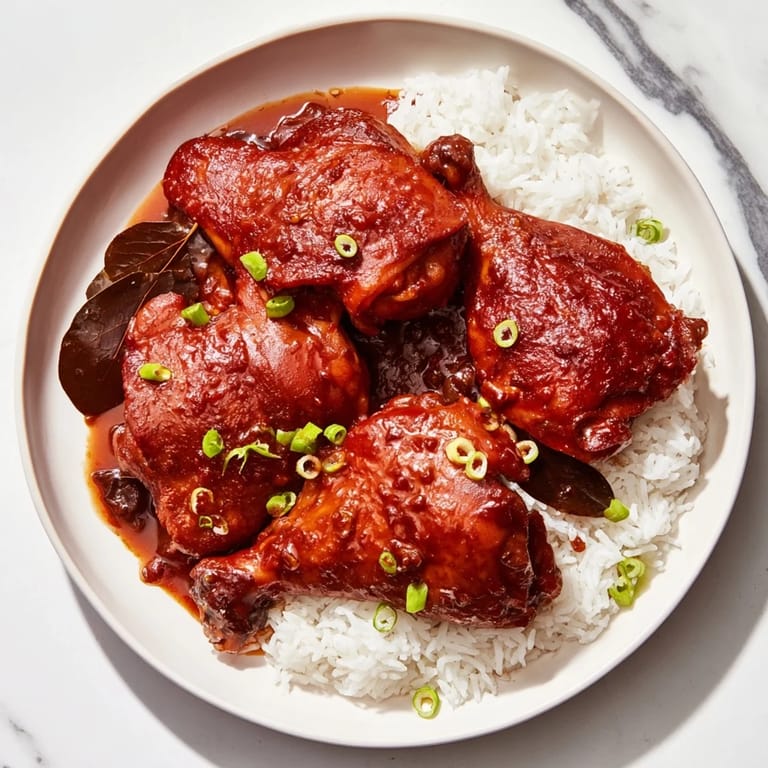
- After 25 minutes, uncover the pan and let it bubble away for another 10–15 minutes. The sauce will get thicker and darker, coating the chicken like a glaze. If there's a greasy layer on top, skim some of it off—the sauce should taste rich but not oily.
- Taste and serve:
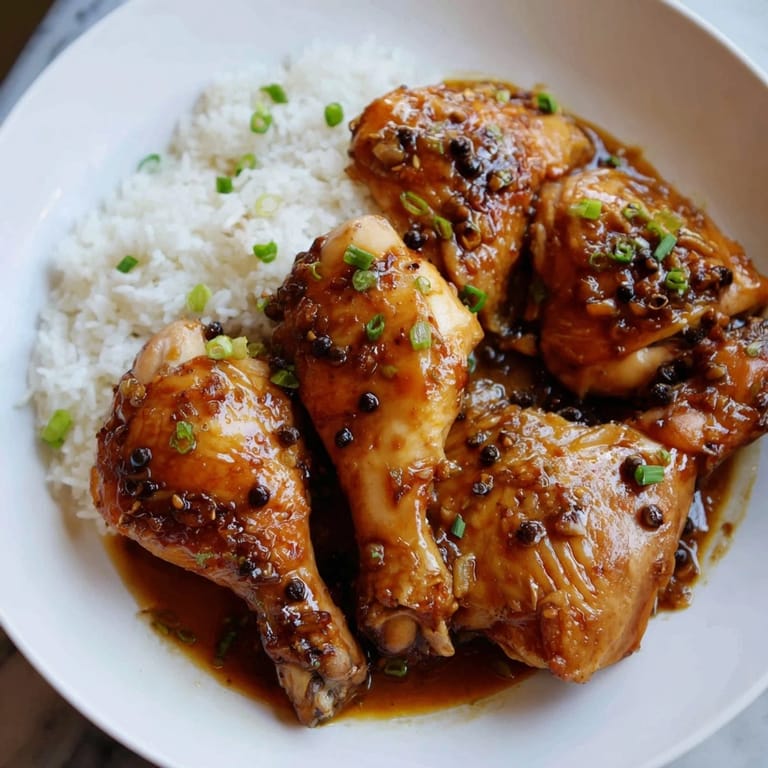
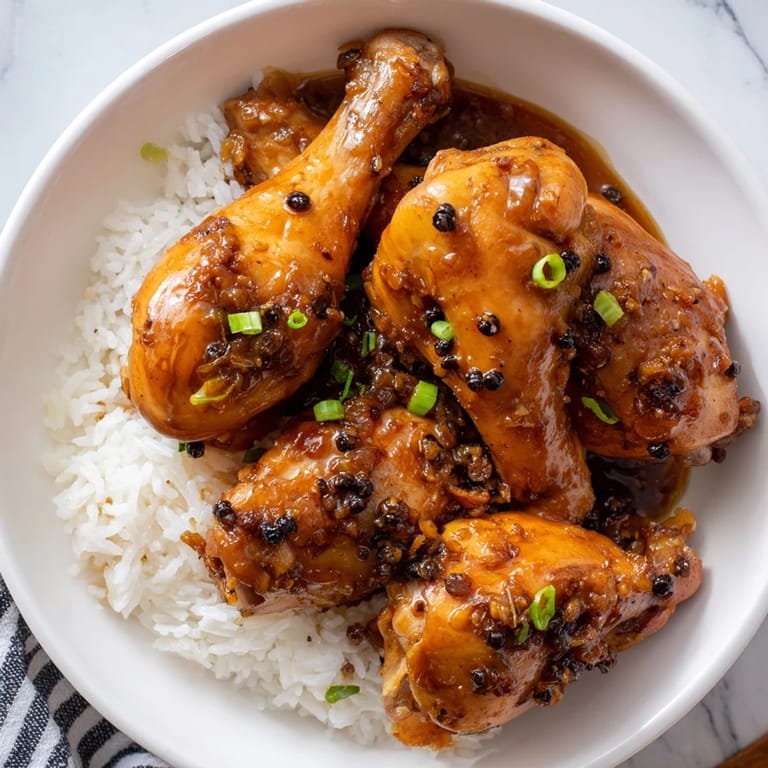
- Before you plate anything, taste a spoonful of sauce and adjust if needed—maybe a pinch more salt, or a splash more vinegar if it's too sweet. Fish out those bay leaves, then serve the chicken hot over steamed rice with a scatter of chopped scallions.
 Pin it
 I made this once when a friend was going through a rough patch, and she sat at my kitchen counter while I cooked, just talking and watching the steam rise. When we ate, she actually smiled—not because the food was fancy, but because it tasted like someone cared enough to spend time on it. That's what adobo does best.
Why This Dish Matters
Adobo is Filipino comfort food at its core, a dish that shows up at family gatherings, weeknight dinners, and celebrations. It's humble enough to make on a Tuesday but elegant enough to serve when people matter. The combination of soy sauce and vinegar—umami and acid—creates a sauce that somehow tastes old and new at the same time, like it's been cooked a thousand times and also like you're discovering it for the first time.
Making It Your Own
The beauty of adobo is that it welcomes changes without breaking. Some cooks add coconut milk for richness, others throw in dried chilies for heat, and a few people make it with pork instead of chicken. I've added a splash of lime juice at the end, which brightens the whole thing, and I've left it plain because sometimes simple is exactly what you need. The sauce is forgiving—it teaches you what you like by letting you taste and adjust.
Serving and Storing
Adobo is best served hot with plain steamed rice to soak up the sauce—nothing fancy needed. It also gets better the next day, when the flavors have merged and deepened, so don't hesitate to make it ahead. Store leftovers in an airtight container in the fridge for up to four days, and it reheats perfectly in a low oven or gently on the stovetop.
- Serve with crispy fried shallots or chopped scallions if you want a little texture contrast.
- A side of pickled vegetables or a simple salad cuts through the richness if you're serving a big meal.
- Brown sugar is optional but worth the teaspoon if you like sweet and savory together.
 Pin it
 This is the kind of recipe that gets passed down because it works, not because it's complicated. Make it once and you'll know why.
Recipe FAQ
- → What cut of chicken is best for this dish?
Bone-in, skin-on chicken thighs and drumsticks work best to keep the meat tender and flavorful during braising.
- → Can I marinate the chicken overnight?
Yes, marinating for up to 8 hours enhances the flavor absorption and tenderizes the chicken further.
- → Is it possible to substitute vinegar types?
Cane vinegar is traditional, but white vinegar can be used as a substitute without greatly altering the dish’s signature tang.
- → How should the sauce be finished for the best texture?
After simmering, uncover the pot and let the sauce reduce to a thicker consistency, enhancing its flavor concentration.
- → What side pairs well with this dish?
Steamed white rice is the classic accompaniment, helping balance the rich and tangy flavors of the chicken.