 Pin it
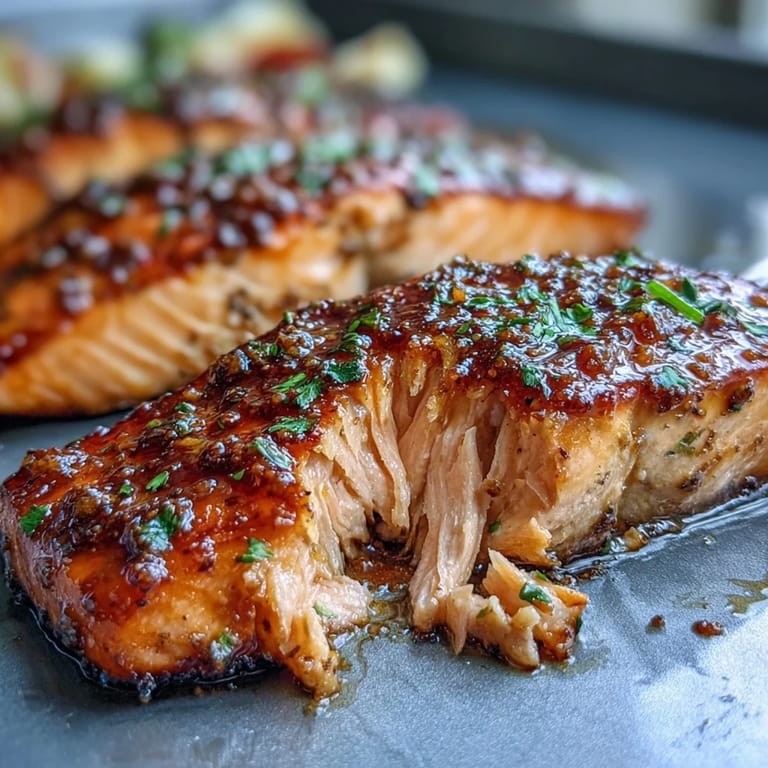
 There's something almost meditative about sliding a sheet pan into the oven and knowing dinner will be ready in under thirty minutes. I discovered this Dijon salmon recipe on a Wednesday when I had everything but patience, standing in front of an open fridge with salmon thawing and whatever vegetables I could find. The mustard glaze caught my eye because it promised tang without fussiness, and the roasted vegetables meant no extra pots to wash. What I didn't expect was how the kitchen would smell like caramelized sweetness and bright lemon, or how my family would actually finish their plates without negotiation.
I'll never forget serving this to my friend Sarah, who'd just started trying to eat fish regularly but was convinced she'd mess it up. Watching her cut into the salmon and see how it flaked perfectly, how she scooped up those charred cherry tomatoes with genuine delight—that's when I realized this recipe works because it doesn't overcomplicate things. Sometimes the simplest meals are the ones people actually remember.
Ingredients
- Salmon fillets (4 pieces, about 170g each): Look for bright color and a mild smell at the fish counter; skin-on keeps them moist, but skinless works just fine if that's what you prefer.
- Dijon mustard (2 tablespoons): Don't reach for the yellow stuff—whole grain or regular Dijon has a sophistication that transforms the glaze into something restaurant-worthy.
- Olive oil (3 tablespoons total): Use a decent quality oil you actually like; it's one of the few ingredients you really taste here.
- Lemon juice (1 tablespoon): Fresh is non-negotiable because bottled juice tastes tinny against the fish.
- Honey (1 teaspoon): A tiny amount balances the mustard's sharpness and helps everything caramelize beautifully.
- Garlic (1 clove, minced): Mince it fine so it melts into the glaze rather than sitting in chunks.
- Broccoli florets (2 cups): Cut them roughly the same size so they cook evenly; smaller pieces get crispier, which I actually prefer.
- Cherry tomatoes (2 cups, halved): Halving them prevents them from rolling around and helps them caramelize faster.
- Red bell pepper (1 large, sliced): The sweetness balances everything else on the pan.
- Red onion (1 medium, cut into wedges): Wedges don't fall apart during roasting and become almost candy-like when caramelized.
- Dried Italian herbs (1 teaspoon): These add earthiness; herbes de Provence works beautifully too if that's what you have.
- Salt and pepper: Season generously at every step rather than once at the end.
Tired of Takeout? 🥡
Get 10 meals you can make faster than delivery arrives. Seriously.
One email. No spam. Unsubscribe anytime.
Instructions
- Get your oven ready:
- Preheat to 220°C (425°F) and line your sheet pan with parchment paper if you have it, though greasing works fine too. A hot oven is what turns everything golden and coaxes out those caramelized flavors.
- Mix the glaze:
- Whisk together Dijon mustard, olive oil, lemon juice, honey, minced garlic, salt, and pepper in a small bowl until it's smooth and glossy. Taste it—it should make your mouth water a little from the tanginess.
- Prep the vegetables:
- Spread broccoli, tomatoes, bell pepper, and onion on your sheet pan, then drizzle with olive oil and toss gently with the Italian herbs, salt, and pepper until everything is coated. Arrange them in a single layer, leaving pockets of space where the salmon will nestle in.
- Add the salmon:
- Place each fillet skin-side down among the vegetables, then brush each piece generously with your Dijon glaze until it's coating the fish evenly. Don't be shy with it; that's where the flavor lives.
- Let it all come together:
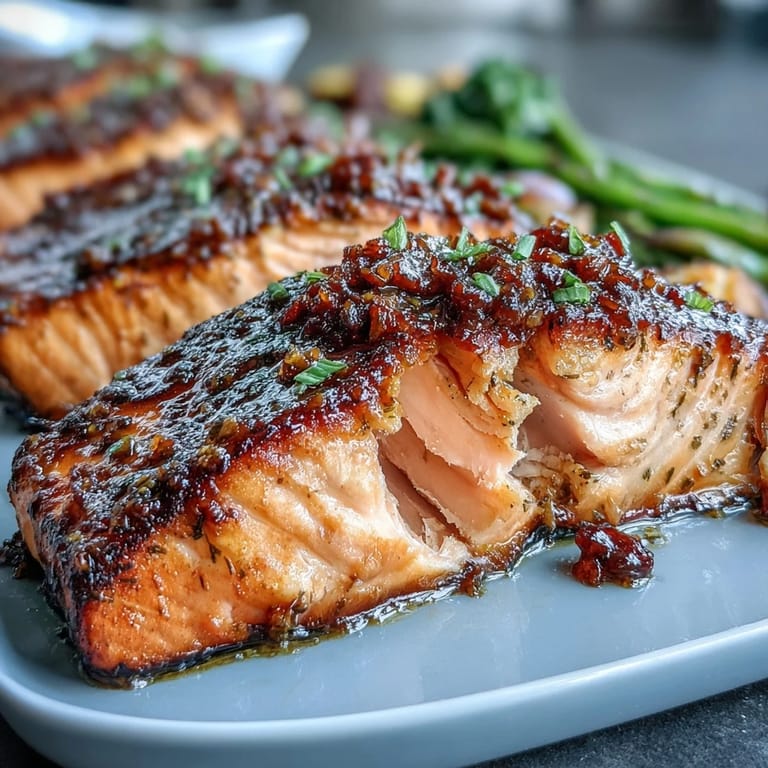
- Slide the pan into the oven and roast for 20 to 25 minutes, until the salmon is opaque and flakes easily when you press it with a fork and the vegetables are tender with caramelized edges. You'll smell when it's nearly done—that's your signal to peek.
- Finish and serve:
- Pull everything from the oven, squeeze fresh lemon wedges over top, scatter parsley if you're using it, and bring it straight to the table. There's no better moment than when it's still steaming.
 Pin it
 My daughter once asked why this dish tasted different from the salmon I'd made in a pan, and I realized it's because the oven does all the work without you hovering. There's trust involved—you set it and walk away, and it rewards you with something that tastes like you've been cooking all afternoon.
The Magic of Sheet Pan Cooking
Sheet pan meals taught me that you don't need complicated technique to eat well on a weeknight. The oven's dry heat caramelizes vegetables while gently cooking the fish, and everything tastes more like itself because nothing's drowning in liquid. It's the opposite of fussy, which is exactly when food tastes best.
Swapping and Customizing
This recipe adapts beautifully depending on what's in your kitchen or what's in season. I've made it with asparagus in spring, thick-cut zucchini in summer, and Brussels sprouts shredded thin when fall arrives. The Dijon glaze stays constant, which is the real backbone here—everything else is flexible.
Finishing Touches That Matter
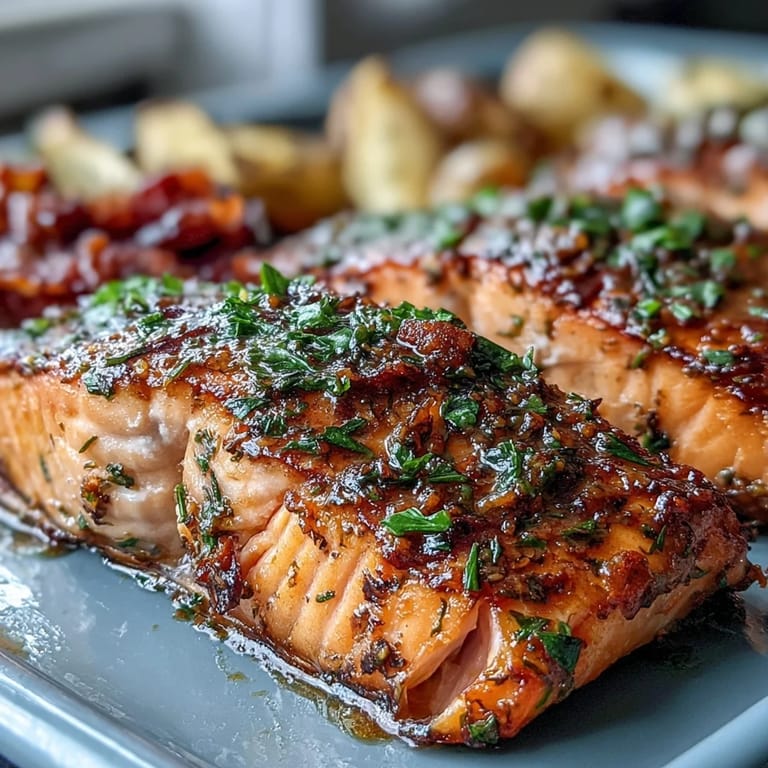
The small details between ordinary and memorable happen in the last minute. Lemon wedges aren't just garnish—they're there because a squeeze of fresh juice brightens everything you've just roasted. Fresh parsley adds a green freshness that cuts through the richness, and if you have lemon zest, scatter it over the salmon before roasting for a burst of citrus that gets into every bite.
- Grate lemon zest directly over the salmon before it goes into the oven for flavor that penetrates the fish.
- Serve immediately while everything is still warm and the vegetables are at their crispiest.
- Pair with a crisp Sauvignon Blanc or light Chardonnay if you're in the mood to celebrate a simple dinner done right.
 Pin it
 This meal exists in that sweet spot where healthy eating doesn't feel like work. It's become my answer to the question of what to make when you want something that tastes good, feels good to eat, and doesn't demand anything of you except showing up with good ingredients and twenty-five minutes.
Recipe FAQ
- → What kind of salmon suits this dish best?
Both skin-on and skinless salmon fillets work well; skin-on helps keep the fish moist and intact while roasting.
- → Can I substitute the vegetables?
Yes, broccoli can be swapped for asparagus or green beans depending on preference and seasonality.
- → How should I tell when the salmon is cooked?
The salmon is done when it becomes opaque and flakes easily with a fork, typically after 20-25 minutes roasting.
- → Is the Dijon glaze spicy or mild?
The Dijon mustard provides a tangy, mildly sharp flavor that adds a subtle kick without overwhelming the salmon.
- → Can I prepare this dish in advance?
It’s best enjoyed freshly cooked, but you can prep the glaze and chop vegetables ahead to save time before roasting.