 Pin it
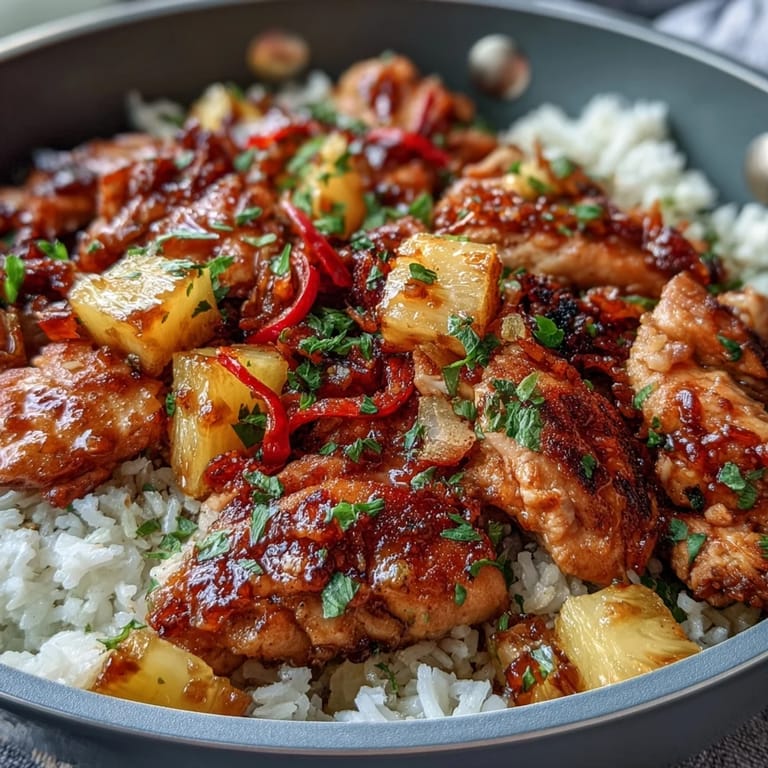
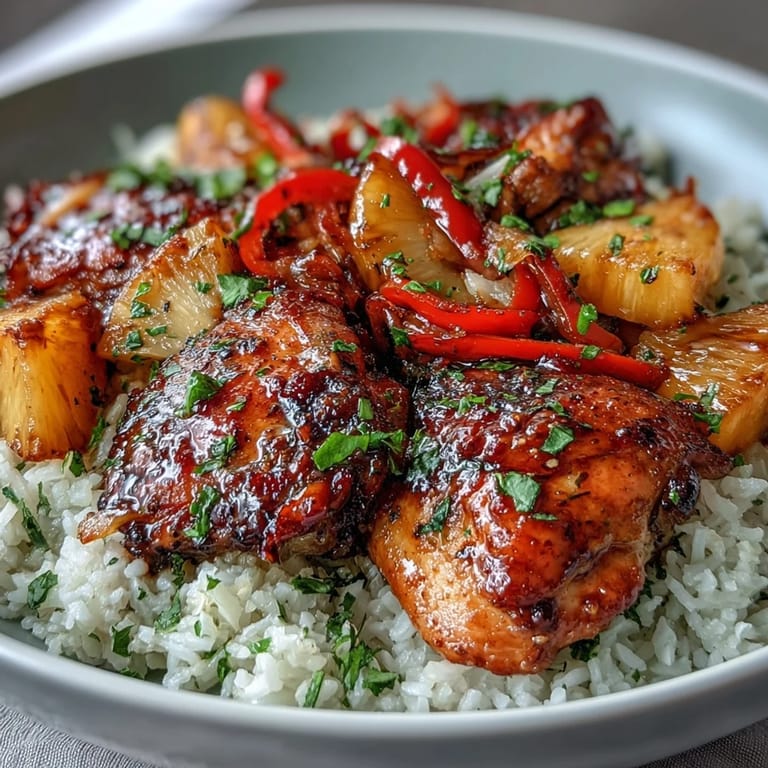
 My kitchen smelled like caramelizing onions and tropical fruit the afternoon I first threw this skillet together, mostly out of desperation and whatever was in my crisper drawer. I had chicken thawing on the counter, half a fresh pineapple sitting there, and this stubborn idea that sweet and savory could actually work in the same bite. Thirty minutes later, my partner walked in to golden rice studded with pineapple chunks and couldn't stop asking what was in it. That one-pan magic hooked me immediately.
I made this for a weeknight dinner when my neighbor stopped by unexpectedly, and watching her face light up at that first forkful of tender chicken in pineapple sauce felt like I'd uncovered some secret. She kept saying it tasted too good to be weeknight food, and honestly, that's the whole point—this dish walks that perfect line between impressive and completely achievable. Now it's the one thing her family requests when they hear I'm cooking.
Ingredients
- Boneless, skinless chicken breast or thighs (1 lb): Thighs stay more tender during the simmer, but breasts work beautifully if you avoid overcooking them—cut everything into even 1-inch pieces so they cook uniformly.
- Long-grain white rice (1 cup): Rinsing it first keeps the grains separate and fluffy; this step genuinely changes the texture.
- Red and yellow bell peppers (1 each): The color matters here not just visually but for flavor—each color has its own subtle sweetness that plays differently with the pineapple.
- Fresh pineapple chunks (1 cup): If using canned, drain them thoroughly and reserve the juice for the sauce; fresh fruit adds a brightness that canned sometimes softens.
- Yellow onion and garlic (1 small onion, 2 cloves): These aromatics build the foundation before everything else joins the party—don't skip the toasting step, it matters.
- Low-sodium soy sauce (1/4 cup): Using low-sodium gives you control over saltiness since the chicken broth contributes its own sodium.
- Pineapple juice (1/4 cup): This is the sweet anchor that balances the soy sauce's umami punch.
- Honey or brown sugar (2 tbsp): Honey dissolves more smoothly, but brown sugar adds subtle molasses depth if that's what you prefer.
- Rice vinegar (1 tbsp): The acid cuts through richness and brightens everything—regular vinegar works but rice vinegar's gentleness is ideal.
- Sesame oil (1 tsp): A small amount adds nuttiness without overwhelming; more isn't better here.
- Vegetable oil (2 tbsp total): Separate this into two portions: one for searing chicken, one for building the base.
- Chicken broth (2 cups): Low-sodium is genuinely better so the sauce doesn't become too salty as it reduces.
- Cornstarch slurry (1 tbsp cornstarch plus 2 tbsp water, optional): Only use this if you want a glossy, thickened sauce; it's not essential but changes the presentation.
- Green onions (2 stalks, for garnish): Add these at the very end so they stay bright and crisp rather than wilting into the hot rice.
Tired of Takeout? 🥡
Get 10 meals you can make faster than delivery arrives. Seriously.
One email. No spam. Unsubscribe anytime.
Instructions
- Sear the chicken until golden:
- Heat 1 tablespoon of oil in your large skillet over medium-high heat until it shimmers—this moment matters because it's when things will actually brown rather than steam. Once the chicken hits the pan, resist the urge to move it around constantly; let each side develop that caramelized crust for about 90 seconds before flipping, which should take roughly 5 minutes total.
- Build the aromatic base:
- Add the remaining oil, then immediately add your diced onion and minced garlic, letting them sizzle for exactly 2 minutes until the kitchen smells incredible and the garlic loses its raw bite. The bell peppers go in next for another 3 to 4 minutes, just until they soften slightly but still have some texture.
- Toast the rice to unlock its nuttiness:
- Stir the rinsed rice into the pan with the vegetables and chicken, cooking for just 1 minute while it absorbs the oil and heat—you'll hear a gentle crackling sound, which tells you it's toasting properly. This step builds flavor that boiling alone never achieves.
- Mix and pour the magic sauce:
- In a separate bowl, whisk together the soy sauce, pineapple juice, honey, rice vinegar, sesame oil, and black pepper until the honey dissolves completely. Pour this combination over everything in the pan, stirring gently so the sauce coats the rice and chicken evenly.
- Simmer until the rice absorbs all the flavor:
- Add the broth and fresh pineapple chunks, then bring everything to a boil—watch for that rolling bubble action. Immediately reduce the heat to low, cover the skillet, and let it simmer undisturbed for 18 to 20 minutes, during which the rice will absorb the liquid and become fluffy while soaking up all those sweet and savory flavors.
- Thicken if desired, then finish:
- If the sauce looks too thin and you want something glossier, stir in the cornstarch slurry and let it cook for 1 to 2 minutes until it thickens visibly. Remove from heat, fluff the rice gently with a fork to separate the grains, scatter green onions across the top, and serve immediately while everything is hot.
 Pin it
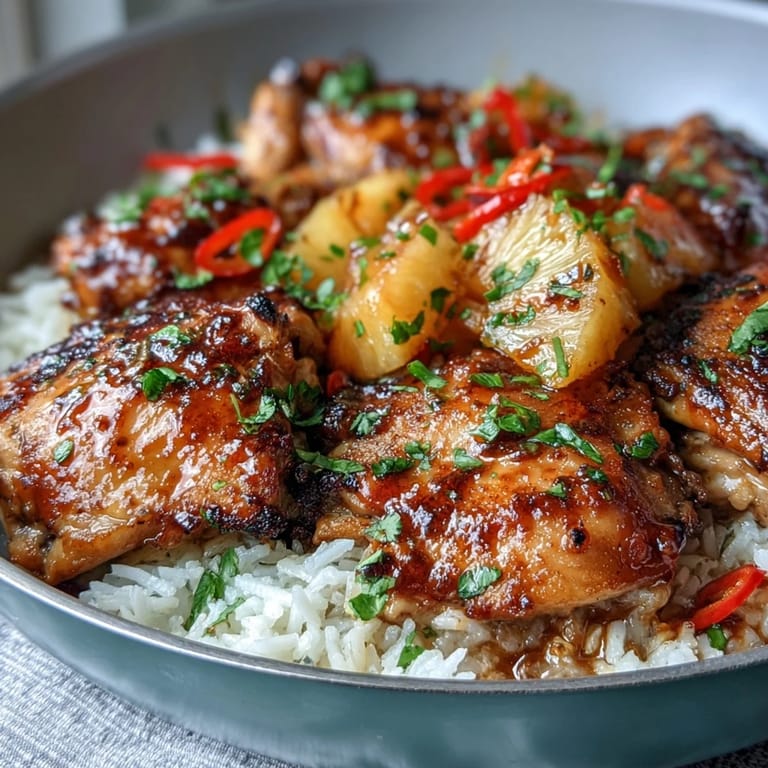
 There's a moment near the end of cooking when you lift the lid and the aroma hits you—pineapple and garlic and sesame oil mingling with the steam—and you suddenly understand why people get excited about weeknight dinners. My daughter, who normally turns her nose up at vegetables, actually asked for seconds because she couldn't distinguish the peppers from the sweet pineapple pieces. Those little wins in the kitchen, where something actually works out and people enjoy it, are what keep me coming back to recipes like this one.
Adjusting Heat and Spice Levels
The base recipe is naturally mild and friendly to most palates, but if you're someone who likes heat, add crushed red pepper flakes directly into the sauce when you whisk it together—start with 1/4 teaspoon and taste as you go. Alternatively, slice a fresh chili pepper and add it with the garlic so the heat builds gradually and isn't jarring. I've learned through trial and error that the sweet pineapple actually complements spice really beautifully, creating this interesting tension on your tongue.
Vegetable Variations and Substitutions
While the bell peppers and onion form the core vegetable trio, I've experimented with adding snap peas, carrots, broccoli, or even baby bok choy—the key is cutting everything to roughly the same size so it cooks evenly. Carrots take slightly longer, so I usually add them when the onion goes in, while tender greens like bok choy wait until the last 5 minutes of simmering. The beautiful part is how adaptable this dish is; it works with whatever vegetables are in season or what you happen to have on hand.
Rice Alternatives and Wine Pairing
Brown rice absolutely works here, though it requires about 5 extra minutes of simmering time and slightly more broth to account for its nuttier, chewier texture—I personally find it adds an earthy complexity that complements the tropical fruit. If you're serving this to guests, pair it with a crisp white wine like Riesling or Sauvignon Blanc; the acidity cuts through the sweetness and refreshes your palate between bites.
- Jasmine rice creates a more delicate, aromatic version that some prefer over standard white rice.
- Cauliflower rice transforms this into a lower-carb option, though you'd reduce the liquid and shorten the cooking time significantly.
- Quinoa offers a protein boost and nutty flavor, requiring similar cooking adjustments as brown rice.
 Pin it
 This skillet has become one of those recipes I turn to when I want to feel like I'm cooking something special without the stress, and somehow it always delivers. The fact that it comes together in 45 minutes total yet tastes like you spent hours in the kitchen is its real magic.
Recipe FAQ
- → Can I use brown rice instead of white rice?
Yes, brown rice can be used but requires more broth and a longer simmering time to become tender.
- → How can I thicken the sauce?
Mix cornstarch with water and stir it in near the end of cooking, then cook until the sauce thickens.
- → What can I add for extra vegetables?
Snap peas, carrots, or broccoli make great additions and complement the flavors well.
- → Can I make this dish spicy?
Add crushed red pepper flakes or sliced chili with the garlic to introduce some heat.
- → What oil works best for sautéing?
Vegetable oil is recommended, but canola or light olive oil can be used as alternatives.
- → Is there a suggested beverage pairing?
This dish pairs nicely with a light white wine such as Riesling or Sauvignon Blanc.