 Pin it
 The first time I made mapo tofu at home, I was standing in my tiny kitchen at midnight, craving something bold and comforting after a long day. I'd watched my aunt make it years ago, mesmerized by how the sauce turned that deep crimson red, and how the tofu softened into pillows that absorbed every spicy, numbing flavor. That night, with my wok popping and hissing over the flame, I understood why this dish has been beloved for generations—it's chaos and harmony on one plate.
I made this for my roommate on a rainy Thursday when she was feeling homesick, and watching her close her eyes after the first bite, transported somewhere warm and familiar, reminded me that food is really just an act of showing someone you care. The way she scraped every bit of sauce from her bowl told me everything I needed to know.
Ingredients
- Silken tofu (400g): Buy the softest block you can find, and drain it well on paper towels; it'll thank you by staying tender rather than turning rubbery.
- Sichuan doubanjiang (2 tbsp): This fermented chili bean paste is non-negotiable—it's what gives mapo tofu its soul, that funky-spicy-umami depth you can't replicate.
- Ground pork or beef (150g): Adds richness and texture, but the dish works beautifully vegetarian if you skip it.
- Sichuan peppercorns (1 tbsp): Toast these yourself and grind them fresh; the numbing, citrusy bite is where the magic lives.
- Shaoxing wine (1 tbsp): Don't skip this—it rounds out the sauce with a subtle sweetness that balances the heat.
- Soy sauce (1 tbsp): Adds saltiness and depth; use low-sodium so you can control the seasoning.
- Garlic and ginger (3 cloves and 2 tsp): Mince these fine and let them sizzle until your kitchen smells like a Sichuan restaurant.
- Scallions (2 stalks): Keep whites and greens separate; the whites flavor the sauce while the greens finish with brightness.
- Vegetable broth (1/2 cup): Use chicken broth if you're not vegetarian, or vegetable if you are; either works beautifully.
- Cornstarch slurry (1 tbsp cornstarch + 2 tbsp water): This is your secret to a silky, coating sauce that clings to every tofu cube.
Tired of Takeout? 🥡
Get 10 meals you can make faster than delivery arrives. Seriously.
One email. No spam. Unsubscribe anytime.
Instructions
- Prep everything first:
- Drain your tofu block on paper towels for a few minutes while you mince the aromatics and separate the scallion whites from greens. This mise en place moment—having everything ready before the heat starts—will keep you calm and your tofu intact.
- Toast and grind the Sichuan peppercorns:
- In a dry wok or skillet over medium heat, toast the peppercorns for 1-2 minutes until they're fragrant and starting to pop slightly. Grind them in a mortar and pestle until coarse—you want texture, not powder.
- Build your aromatics:
- Heat 3 tablespoons of oil in your wok over medium-high heat, then add the scallion whites, garlic, and ginger. Listen for the sizzle and watch until the kitchen smells incredible—about 1 minute—then you'll know they're perfectly fragrant.
- Brown the meat (if using):
- If you're using ground pork or beef, add it now and break it apart with your spatula as it cooks, about 3-4 minutes. The browning adds depth that makes vegetarians pause and ask for your secret.
- Let the paste bloom:
- Stir in your doubanjiang and any dried chilies, cooking for 1-2 minutes until the oil turns a deep red. This is the moment your dish gets its identity—don't rush it.
- Build the sauce:
- Add the Shaoxing wine, soy sauce, sugar, and broth, stirring to combine. Bring everything to a gentle simmer and taste; adjust soy sauce or chili paste now if you need more seasoning.
- Introduce the tofu with care:
- Gently slide your tofu cubes into the simmering sauce, trying not to break them. Spoon the sauce over them for about 5 minutes—they'll soften as they absorb all those flavors.
- Thicken the sauce to velvet:
- Give your cornstarch slurry a quick stir, then drizzle it slowly into the pan while stirring gently. The sauce will thicken into something silky that coats the tofu beautifully, usually within 1-2 minutes.
- Finish with aromatics:
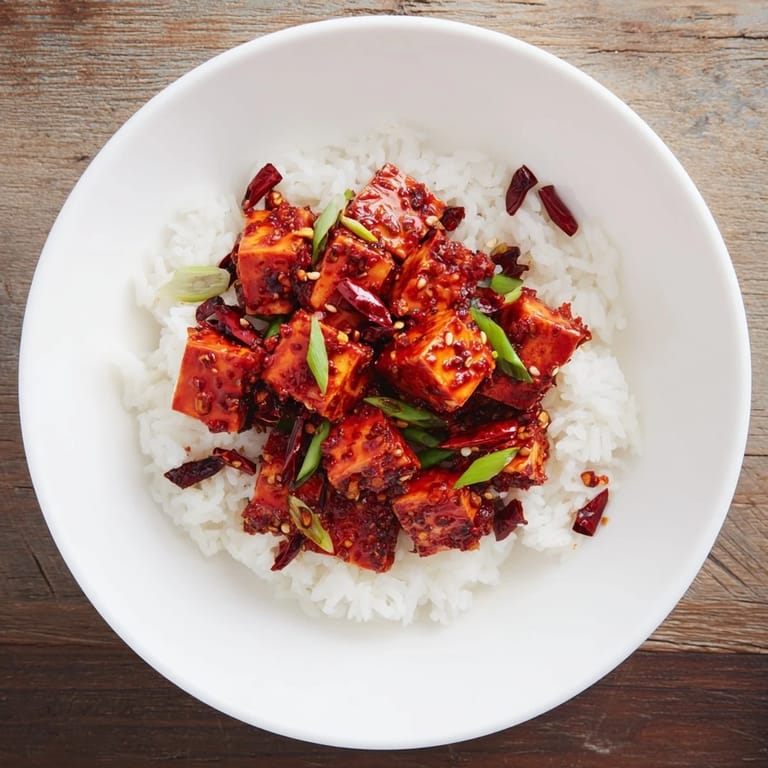
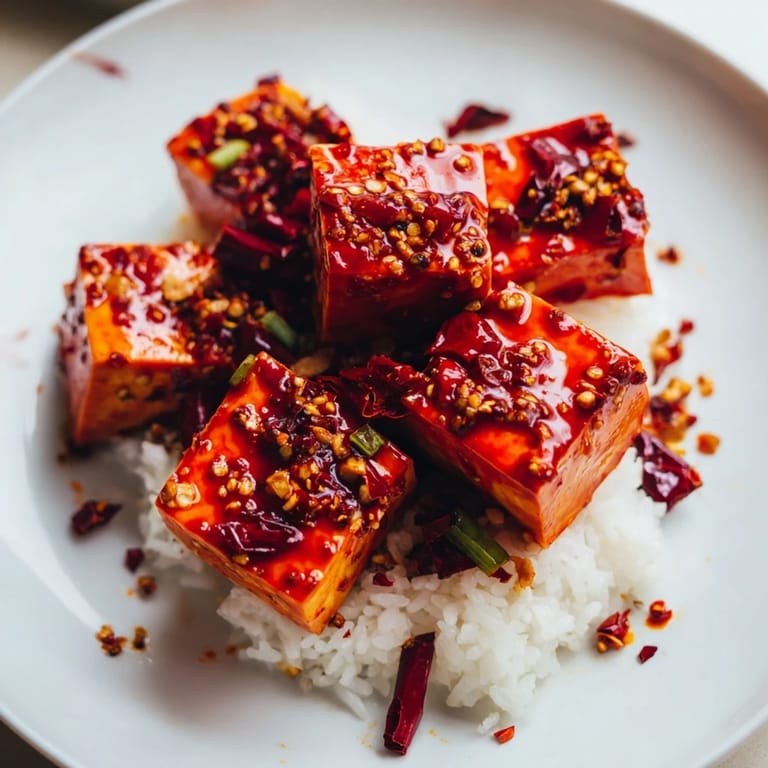
- Remove from heat, then sprinkle with your freshly ground Sichuan peppercorns and the scallion greens. That final step brings everything alive with color and that tingly, numbing sensation.
 Pin it
 I learned the real meaning of mapo tofu one afternoon when my partner's grandmother watched me cook and nodded silently, then asked for seconds without a word. In that gesture, I understood that sometimes the best compliment isn't praise—it's hunger for more.
The Story of Sichuan Heat
Mapo tofu isn't just spicy; it's a whole philosophy of flavor that plays tricks on your senses. The Sichuan peppercorns bring that numbing, tingling sensation called málà that's completely different from chile heat—it's like your mouth is buzzing with electricity in the most delightful way. When you combine that tingle with the deep, fermented heat from the doubanjiang, you get something that feels almost alive on your tongue, making you reach for more rice to cool things down, only to dive back in for another spoonful.
Vegetarian and Dietary Variations
This dish transforms beautifully without the meat if you simply skip it and use vegetable broth instead. The tofu becomes the star, and honestly, I've had vegetarian versions that rival any with pork because the sauce is so compelling. You can also double down on umami by adding a teaspoon of sesame oil at the end, or stir in a splash of mushroom broth for earthiness that makes vegetarians and meat-eaters alike forget what they're missing.
Serving and Pairing Wisdom
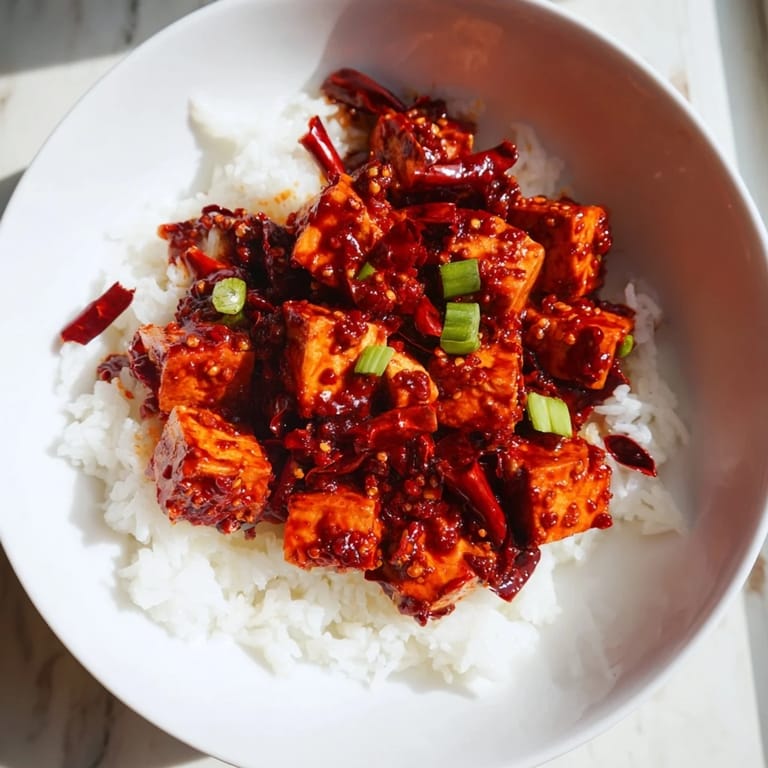
This dish demands steamed jasmine rice—not just because it cools your mouth, but because the delicate floral notes of jasmine rice play beautifully against the bold, aggressive sauce. Serve it family-style and watch people immediately crack open cold beer or reach for that off-dry Riesling, which cuts through the heat while its slight sweetness echoes the sugar in the sauce. If you want to be that person everyone remembers, drizzle a little chili oil over the top right before serving—it adds a sheen and an extra dimension of heat that feels luxurious.
- Always serve immediately while the sauce is still glossy and the tofu is at its most tender.
- Keep extra scallions and chili oil on the table so people can customize their heat level.
- This dish feeds four as a main course, but pairs beautifully with other Sichuan dishes like mapo eggplant or crispy tofu.
 Pin it
 This is the kind of dish that builds confidence in the kitchen because it rewards you with restaurant-quality results in 30 minutes. Every time you make it, you'll discover something new—maybe a different level of heat, or the exact moment when the tofu is perfect, or how the sauce sticks to rice in just the right way.
Recipe FAQ
- → What type of tofu is best for Mapo Tofu?
Silken or soft tofu is preferred for its smooth texture, but firm tofu can be used if you want it to hold shape better while cooking.
- → Can this dish be made vegetarian?
Yes, simply omit the meat and use vegetarian chili bean paste along with vegetable broth for a delicious vegetarian variation.
- → What gives Mapo Tofu its numbing spice?
Toasted and ground Sichuan peppercorns provide the characteristic numbing sensation complemented by the chili bean paste’s heat.
- → How should I adjust the spice level?
Vary the amount of fermented chili bean paste and dried chilies according to your tolerance for heat.
- → What is the best way to serve Mapo Tofu?
Serve hot over steamed jasmine rice and garnish with extra scallions and optional chili oil for added flavor.
- → What cooking tools are recommended?
A wok or large nonstick skillet works well, along with a mortar and pestle for grinding peppercorns, and basic utensils like a spatula and knife.