 Pin it
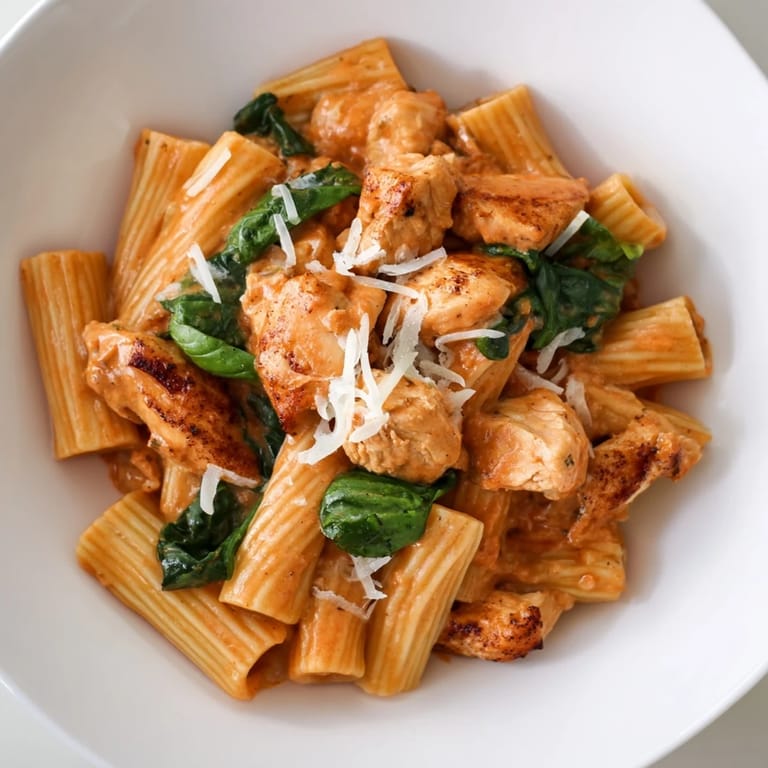
 I stumbled onto this pasta on a Tuesday night when my grocery budget was nearly tapped out, but I had hungry people coming over. A quick glance at the pantry—canned tomatoes, cream, some chicken—and I remembered seeing that viral recipe everywhere. Why not make my own affordable version? What emerged was so creamy, so satisfying, that nobody asked what shortcuts I'd taken. Now it's my go-to when I need something that feels indulgent but won't break the bank.
My friend Sarah showed up stressed about a work presentation, and I had this simmering on the stove. The kitchen smelled like garlic and herbs, and by the time she twirled her first forkful, her shoulders had dropped about three inches. That's when I realized this wasn't just dinner—it was the thing that says, 'I've got you,' without saying anything at all.
Ingredients
- Boneless, skinless chicken breasts: Cut into bite-sized pieces so they cook fast and distribute evenly through the pasta; don't skip the seasoning step, it's where the flavor starts.
- Penne or rigatoni pasta: The tubes catch the sauce beautifully, so avoid thin spaghetti or you'll lose half the creamy goodness.
- Olive oil: Use regular, not extra-virgin, since you're cooking at higher heat.
- Garlic and dried Italian herbs: These three minutes of sautéing are non-negotiable; they wake up the entire dish.
- Red pepper flakes: Optional but worth it—a tiny pinch adds intrigue without heat.
- Canned diced tomatoes: The secret to affordable indulgence; drain them well so the sauce doesn't get watery.
- Chicken broth: Adds body without fancy stock; low-sodium lets you control the salt.
- Heavy cream: This is where the 'marry me' magic lives; don't substitute until you've tried it as written.
- Parmesan cheese: Freshly grated if you can manage it, but pre-grated works in a pinch.
- Fresh spinach: Wilts in seconds and adds a whisper of green; completely optional but recommended.
- Fresh basil: Scattered at the end, it reminds you this is both humble and elegant.
Tired of Takeout? 🥡
Get 10 meals you can make faster than delivery arrives. Seriously.
One email. No spam. Unsubscribe anytime.
Instructions
- Start the pasta first:
- Bring salted water to a rolling boil and cook your pasta just shy of tender, so it has room to finish cooking in the sauce later. Reserve that pasta water like it's liquid gold—you'll need it.
- Cook the chicken until golden:
- In a large skillet over medium-high heat, let the olive oil shimmer before adding the chicken pieces. You want them to turn golden on the edges before they're fully cooked through, about 5–6 minutes, which builds flavor and keeps them tender when they finish in the sauce.
- Build the flavor base:
- Lower the heat to medium, then add garlic, herbs, and pepper flakes to the empty skillet. Let them sizzle for just a minute until your kitchen smells incredible; this blooms the flavors so they're not raw and flat.
- Simmer tomatoes and broth:
- Pour in the drained tomatoes and chicken broth, stirring gently. Let it bubble softly for 3–4 minutes so the flavors marry together.
- Cream and cheese:
- Stir in the heavy cream and Parmesan, then reduce the heat so the sauce doesn't boil—you're gently thickening it, not breaking it apart. This takes 2–3 minutes and smells absolutely divine.
- Bring it together:
- Return the chicken to the skillet, add spinach if using, then toss in the pasta. If the sauce seems thick, splash in reserved pasta water until it clings to the noodles without pooling. Taste and adjust salt and pepper.
- Finish and serve:
- Scatter fresh basil over the top and serve immediately while everything is creamy and warm.
 Pin it
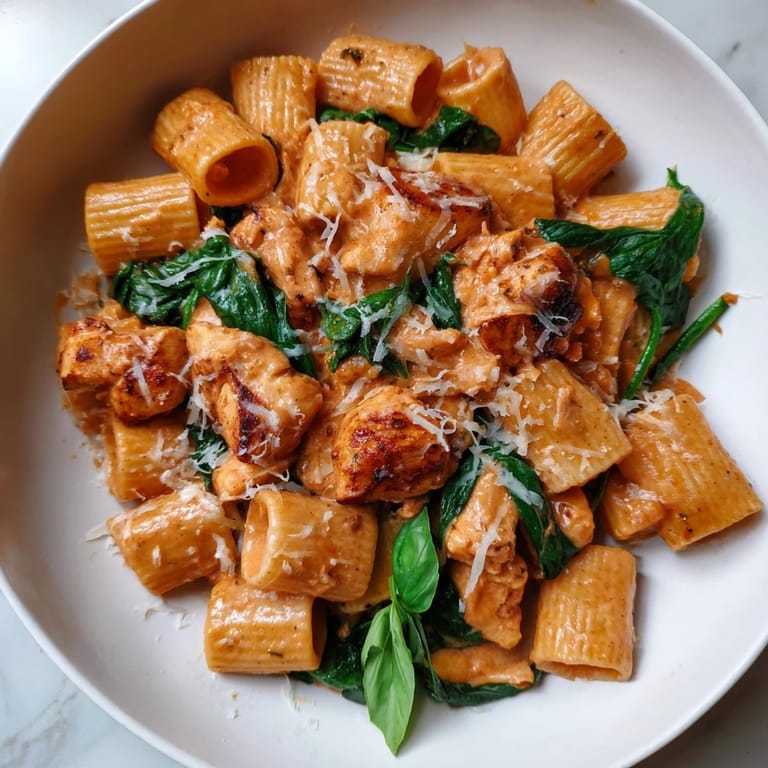
 The first time I made this for a dinner party, I was nervous it wouldn't impress. Instead, someone asked for the recipe before dessert arrived. That's when it hit me that 'impressive' doesn't always mean complicated—sometimes it just means honest, creamy, and ready in 40 minutes.
Simple Swaps That Actually Work
Rotisserie chicken shaves off 10 minutes and tastes just as good—I use it when I'm tired but still want to look like I tried. Chicken thighs are juicier than breasts if you don't mind a tiny bit more fat. For a lighter version, use half-and-half instead of heavy cream, though you'll notice the sauce is thinner and less luxurious. Arugula wilts faster than spinach if you forget and add it late, and sun-dried tomatoes add richness without extra cooking.
Why Canned Tomatoes Win Here
Fresh tomatoes sound noble, but they'd taste sharp and watery in this sauce. Canned tomatoes are picked ripe and crushed at peak flavor, then drained, so you get depth without the liquid that would break your creamy sauce. Plus, they cost less and work the same way year-round—no seasons, no apologies.
The Pasta Water Trick and Other Small Victories
That starchy pasta water isn't just for emergencies; it's how you adjust the sauce to coat each piece of pasta perfectly. A splash or two transforms the consistency from thick to silky without watering down the flavor. The same trick works for almost any pasta dish once you understand why it matters.
- Save at least half a cup of pasta water before draining—it's your final adjustment tool.
- Add it slowly and taste as you go; you can always add more but you can't take it back.
- A well-sauced pasta clings together in the bowl and tastes finished, not dry or swimming.
 Pin it
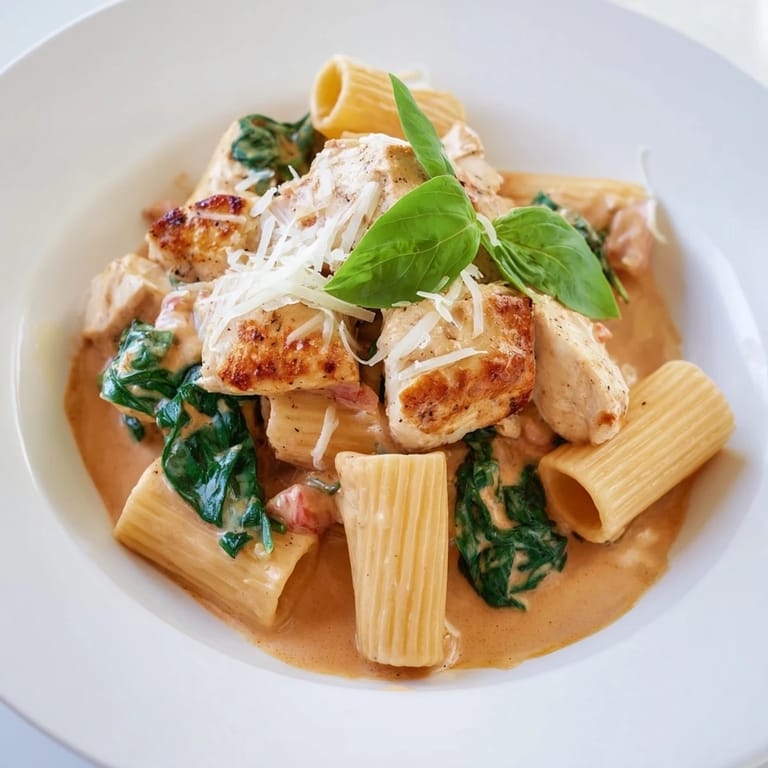
 This pasta reminds me that the best meals don't require a long ingredient list or fancy techniques—just a few good things, a little attention, and someone to share it with. It's proof that budget-friendly can taste like a celebration.
Recipe FAQ
- → Can I use chicken thighs instead of breasts?
Yes, chicken thighs offer a juicier texture and deeper flavor. Adjust cooking time to ensure they are fully cooked.
- → Is fresh spinach necessary in the dish?
Spinach adds freshness and color but can be omitted or replaced with arugula for a different flavor profile.
- → How do I achieve the right sauce consistency?
Use reserved pasta water a little at a time to loosen the sauce until it coats the pasta smoothly without being too thin.
- → Can I prepare this dish ahead of time?
Yes, the flavors meld well after resting. Reheat gently on the stove, adding a splash of broth or cream to revive the sauce.
- → What pasta types work best?
Penne or rigatoni hold the creamy sauce well, but any medium-sized tubular pasta can be used for a similar effect.