 Pin it
 The first time I tasted mango sticky rice, I was sitting on a plastic stool outside a night market in Bangkok, watching the vendor's hands move with practiced ease as she assembled each plate. There was something almost meditative about how she pressed the warm rice into a neat mound, how the golden mango slices caught the lantern light. When I finally took a bite, the creamy sweetness of the coconut-soaked rice against the bright tartness of the perfectly ripe mango felt like a revelation—simple, yet somehow greater than the sum of its parts.
Years later, I made this for my roommate on a sweltering summer evening when the kitchen felt too hot to cook anything serious. We sat on the fire escape with our plates balanced on our laps, the mango juice dripping down our fingers, and neither of us said much—we didn't need to. That's when I realized this dessert has a quiet way of turning an ordinary night into something you remember.
Ingredients
- Glutinous (sweet) rice, 1 cup: This isn't regular rice—the high starch content is what creates that signature sticky, almost stretchy texture that clings to itself. Soaking it overnight matters more than you'd think; it ensures even cooking and that luxurious mouthfeel.
- Coconut milk (full fat), 1 cup: Never use light coconut milk here; you need that rich, creamy version that coats your mouth. It's the soul of the dish, so don't skimp.
- Granulated sugar, 1/4 cup: This sweetens both the rice and the sauce, but the real magic happens when it dissolves into the warm coconut milk, creating a silky glaze.
- Salt, 1/4 tsp: Just a pinch, but it awakens all the other flavors and prevents the dish from tasting one-dimensional.
- Large ripe mangoes, 2: Choose mangoes that yield slightly to pressure and smell fragrant at the stem—overripe will fall apart, underripe will taste mealy and disappointing.
- Coconut cream and toasted sesame seeds or mung beans (optional): These are the finishing flourishes that make people think you really know what you're doing.
Tired of Takeout? 🥡
Get 10 meals you can make faster than delivery arrives. Seriously.
One email. No spam. Unsubscribe anytime.
Instructions
- Prepare the rice:
- Rinse the glutinous rice under cold running water, stirring gently with your fingers, until the water runs almost clear—this removes excess starch that would make it gluey rather than sticky. Soak it in fresh water for at least 4 hours, or ideally overnight; I usually do this in the morning so it's ready by evening.
- Steam until tender:
- Drain the rice and place it in a cheesecloth-lined steamer basket, spreading it in an even layer. Steam over boiling water for 25–30 minutes until the grains are soft and translucent, with no chalky center when you bite one. You'll know it's done when a grain doesn't resist your teeth.
- Make the coconut sauce:
- While the rice steams, pour the full-fat coconut milk into a saucepan with the sugar and salt, heating gently over medium heat. Stir occasionally until the sugar dissolves completely, but never let it come to a boil—boiling will separate the coconut cream from the liquid, and you want that silky emulsion.
- Infuse the rice:
- Transfer the steamed rice to a mixing bowl and immediately pour in about 3/4 of the warm coconut sauce, stirring very gently with a wooden spoon or paddle so you don't break the grains. Cover the bowl and let it sit for 10–15 minutes, allowing the rice to drink in all that coconut sweetness.
- Slice the mangoes:
- While the rice absorbs the sauce, peel your ripe mangoes and slice them into long, elegant pieces. If the mangoes are perfectly ripe, the knife should glide through with barely any resistance.
- Plate and serve:
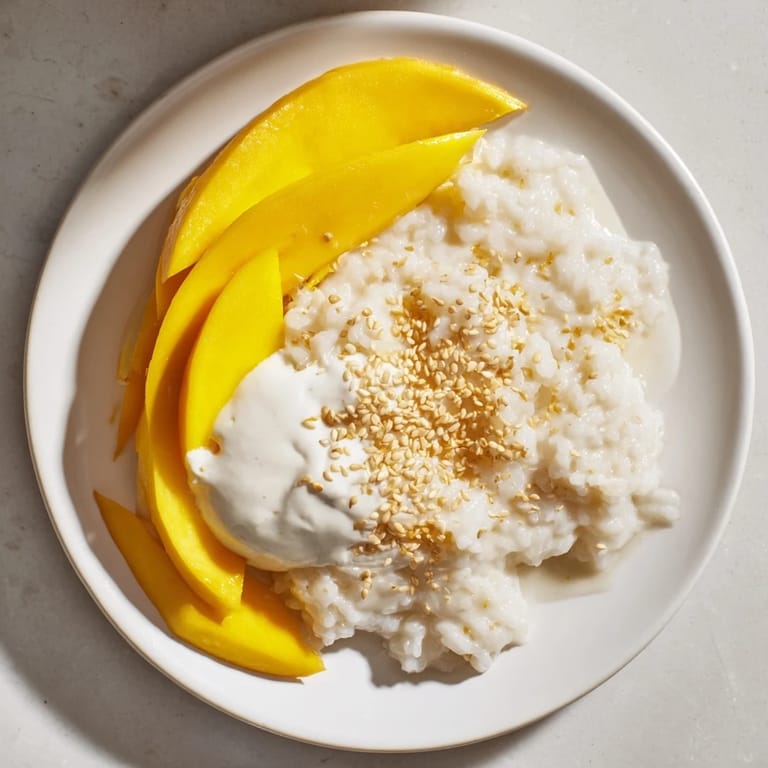
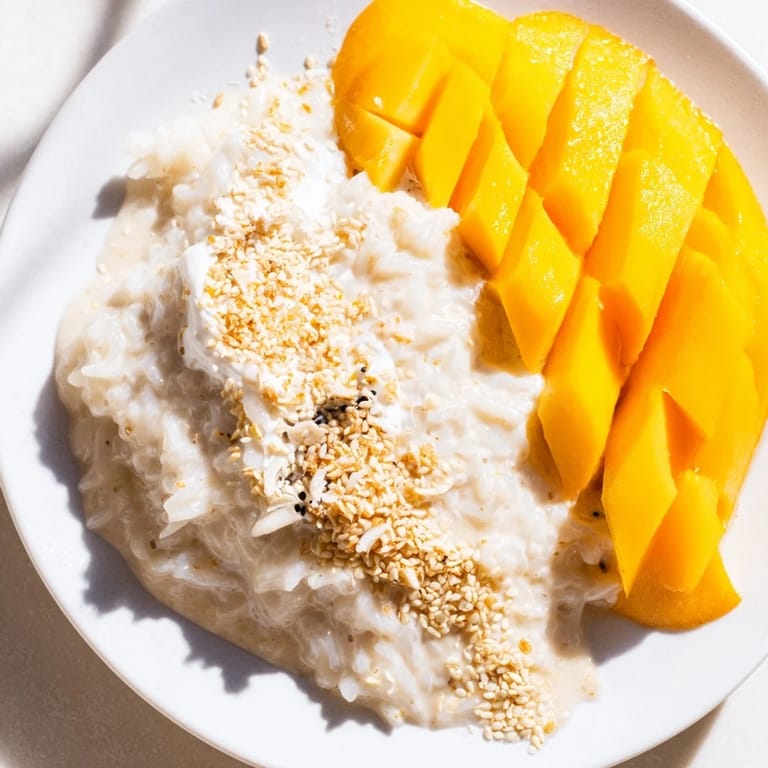
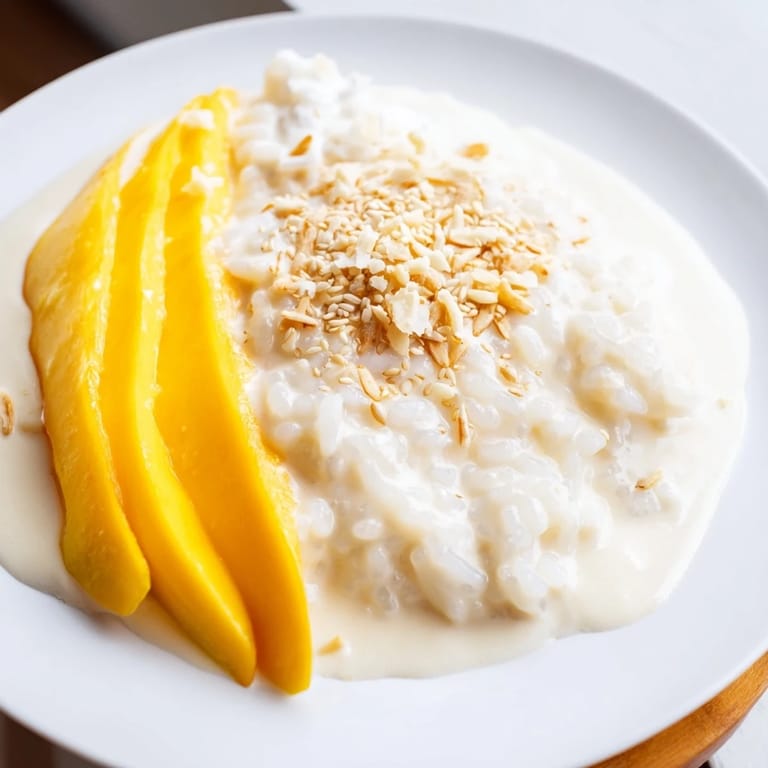
- Mound the sticky rice on each plate in a neat, warm heap, then fan the mango slices alongside it. Drizzle the remaining coconut sauce over everything, and if you're using them, add a sprinkle of toasted sesame seeds or mung beans and a small dollop of coconut cream for richness and visual appeal.
 Pin it
 I once made this for a dinner party and a guest who claimed to dislike desserts asked for seconds—and then thirds. Watching someone's face when they taste something they weren't expecting to love is its own kind of sweetness.
Choosing Your Mangoes Matters
Not all mangoes are created equal, and this dessert showcases whatever fruit you choose with unforgiving honesty. A truly ripe mango smells fragrant and sweet at the stem end, feels slightly yielding when you press it gently, and will have skin that's mostly yellow or blushed with red, depending on the variety. If you're buying mangoes several days before you plan to cook, choose ones that are still slightly firm and let them sit on your counter to ripen gradually—they'll develop better flavor than ones forced to ripen in the refrigerator. When you slice into a perfect mango, you'll taste the difference immediately.
The Steaming Technique That Changes Everything
I've learned that how you steam the rice makes the difference between a sticky rice that's tender and one that's gluey or still slightly firm. Using a cheesecloth-lined basket keeps the rice from sticking to the steamer while allowing steam to circulate evenly. The rice should be spread in a single layer, not packed tightly—give the heat room to reach every grain. If you don't have a traditional steamer, you can use a bamboo steamer, a metal vegetable basket lined with cheesecloth, or even place a heatproof bowl of rice inside a covered pot with a little simmering water below it. The key is gentle, consistent heat and checking after about 25 minutes to see if the grains have turned translucent.
Beyond the Basics: Flavor Variations That Work
Once you understand how this dessert works, you can play with it in subtle ways that respect the original while making it your own. Some cooks use palm sugar instead of granulated sugar, which gives the sauce a deeper, almost caramel-like flavor that pairs beautifully with mango. A few cardamom pods or a small piece of pandan leaf added to the coconut sauce infuses it with unexpected fragrance. I've also served this with a drizzle of condensed milk instead of coconut cream for a different kind of richness, or topped it with a scatter of toasted sesame seeds for texture.
- Try adding a small stick of cinnamon or a few cardamom pods to the coconut sauce while it heats for a subtle warm spice that won't overpower the mango.
- If you can find pandan extract or frozen pandan leaves, add a tiny amount to the sauce or use pandan-infused sticky rice for a more complex flavor profile.
- Keep your garnish simple and balanced—a little coconut cream and a sprinkle of seeds is enough; too many toppings distract from the elegance of the dish.
 Pin it
 This dessert feels like proof that the most beautiful meals don't require complicated techniques or long ingredient lists—just respect for each element and a moment to let everything come together exactly as it should. Make this for someone you want to impress, or make it for yourself on an evening when you deserve something special.
Recipe FAQ
- → How should the sticky rice be prepared?
Rinse the glutinous rice until water runs clear, soak it for at least four hours, then steam in a cheesecloth-lined basket for 25–30 minutes until tender.
- → What is the purpose of the coconut sauce?
The coconut sauce infused with sugar and salt coats the cooked rice, lending a rich, creamy, and slightly sweet flavor that complements the mango.
- → Can I use a substitute for granulated sugar in the sauce?
Palm sugar can be used as a substitute for a deeper, caramel-like sweetness that enhances the sauce’s flavor.
- → How should the mango be selected for best results?
Choose large, ripe mangoes that are sweet and fragrant to ensure a juicy and flavorful accompaniment to the sticky rice.
- → Are there any optional garnishes to enhance this dish?
Toasted sesame seeds or mung beans and a drizzle of coconut cream can add extra texture and richness when sprinkled on top.