 Pin it
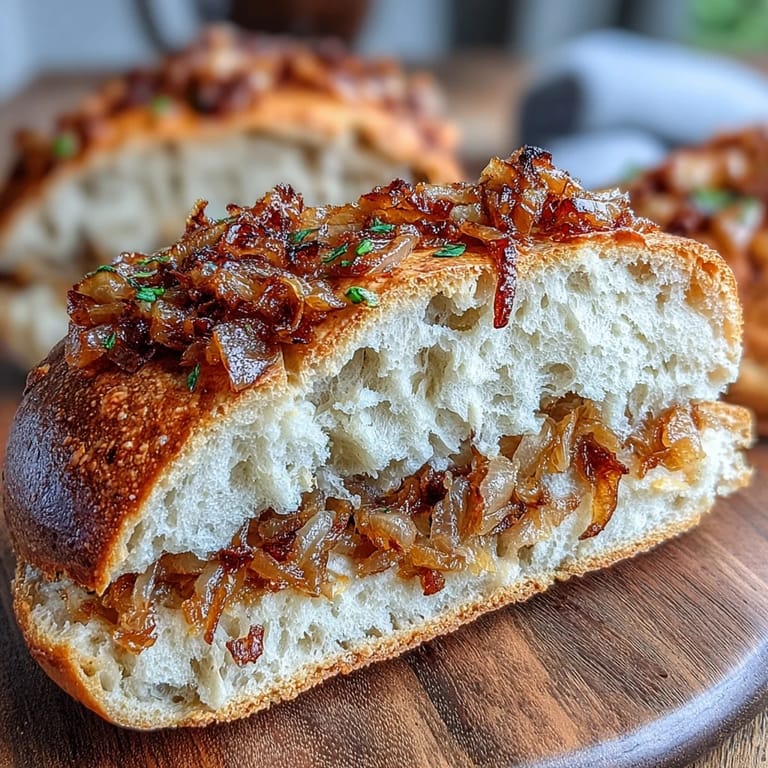
 There's something about the smell of caramelized onions hitting you the moment you crack open a warm bagel that makes you understand why people get obsessed with New York bakeries. My first attempt at sourdough bagels happened on a random Tuesday when I had leftover starter and a craving for something chewy that couldn't be ignored. The tanginess of the sourdough combined with those sweet, golden onions creates this perfect balance that tastes nothing like the sad grocery store versions. It took a few tries to get the boiling time right and figure out when to add the onions, but once I nailed it, these became my go-to breakfast when I wanted to feel like I'd actually accomplished something before 8 a.m.
I made these for my sister's book club once and watched her take one bite, close her eyes, and just nod slowly. No words needed, but she did ask for the recipe before leaving. That's when I realized these bagels weren't just bread, they were the kind of thing that makes people feel noticed when you hand them one fresh from the oven.
Ingredients
- Active sourdough starter (100 g, 100% hydration): This is where all the tangy magic lives, so make sure yours is fed and bubbly before you start or the flavor falls flat.
- Bread flour (400 g): Don't skip this for all-purpose unless you genuinely have nothing else, because it's what gives bagels their signature chew that makes them worth eating.
- Whole wheat flour (50 g): Just enough to add depth and keep things interesting without making them dense.
- Sea salt (10 g): The salt in the dough is crucial, not optional, so measure it properly.
- Granulated sugar (25 g): Feeds the yeast and balances the tang of the sourdough without making them sweet.
- Lukewarm water (240 ml): Temperature matters here, so use water that feels warm to your wrist but not hot enough to hurt.
- Large yellow onion (1): Yellow onions caramelize beautifully and become almost creamy, which is exactly what you want on top.
- Olive oil or unsalted butter (1 tbsp): Either works, but butter gives a slightly richer flavor if you have it on hand.
- Sea salt for onions (1/2 tsp): The salt draws out the onion's moisture and speeds up the caramelization process.
- Water for boiling (2 L): Don't get creative here, plain water is what you need.
- Barley malt syrup or honey (1 tbsp): Barley malt syrup is the traditional choice and tastes like bagel nostalgia, but honestly, honey works in a pinch.
- Baking soda (1 tsp): This changes the pH of the boiling water so the bagels develop that dark, glossy exterior.
Tired of Takeout? 🥡
Get 10 meals you can make faster than delivery arrives. Seriously.
One email. No spam. Unsubscribe anytime.
Instructions
- Sauté the onions first:
- Heat oil or butter in a skillet over medium heat, add your chopped onions with salt, and let them sit for a good 8–10 minutes, stirring occasionally. They should turn soft and golden brown, smelling like they're worth all the hype.
- Combine your sourdough base:
- In a large bowl, mix your fed starter, both flours, salt, sugar, and lukewarm water together until everything is just combined into a shaggy mess. Don't worry if it looks rough right now.
- Knead into smooth dough:
- Spend 8–10 minutes kneading by hand or machine until the dough feels smooth and elastic, like you could stretch it without it tearing immediately. This develops the gluten that makes bagels chewy.
- Let it rest and fold:
- Cover the bowl and let it sit at room temperature for 4 hours, doing two stretch-and-fold motions in the first 2 hours (roughly every 30 minutes). This builds structure and flavor without aggressive kneading.
- Cold ferment overnight:
- Cover and refrigerate for 8–12 hours, and yes, this step is non-negotiable if you want that real sourdough tang to shine through.
- Shape into bagels:
- Divide the cold dough into 8 equal pieces, roll each into a ball, then poke a hole in the center and stretch it gently to form a bagel shape with about a 2-inch hole. The dough should feel a bit firm from the cold, which makes shaping easier.
- Proof until puffy:
- Arrange shaped bagels on parchment paper, cover loosely, and let them rise at room temperature for 1–2 hours until they look slightly puffy and spring back slowly when you poke them. They shouldn't double in size, just gain a little confidence.
- Boil to perfection:
- Preheat your oven to 220°C (425°F). Bring a large pot of water to a boil with barley malt syrup and baking soda, then carefully boil 1–2 bagels at a time for exactly 1 minute per side. The water should bubble around them gently, and they'll float when they're ready to flip.
- Top while still wet:
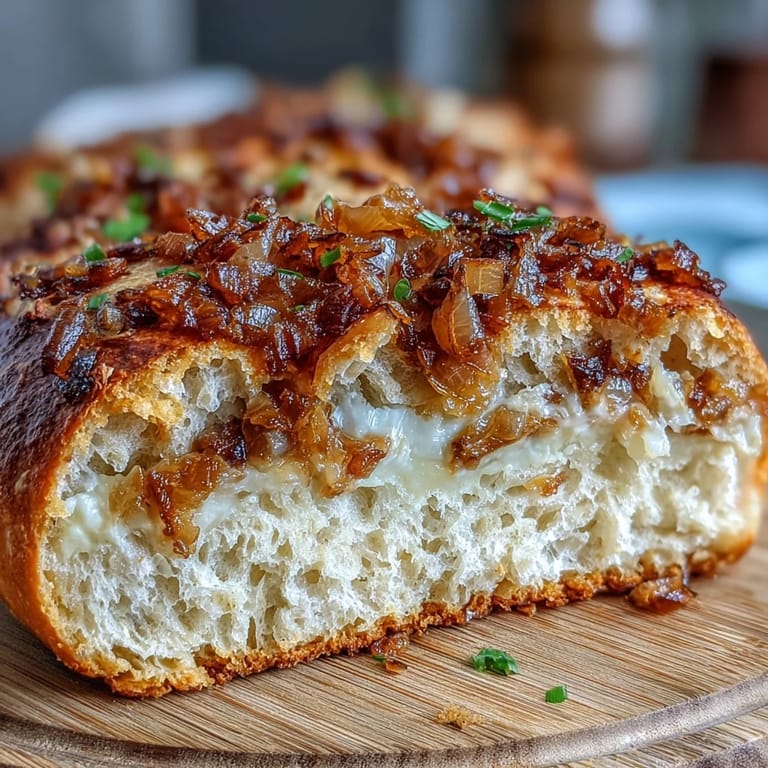
- Remove boiled bagels with a slotted spoon back to the baking sheet, and while they're still damp, press those caramelized onions generously onto the tops. The moisture helps them stick.
- Bake until golden:
- Bake for 20–25 minutes until the bagels are golden brown on top and sound hollow when you tap the bottom. Your kitchen will smell incredible.
- Cool before slicing:
- Transfer to a wire rack to cool for at least 10 minutes before slicing, or the interior will be gummy and fall apart.
 Pin it
 One morning I realized my teenage nephew had eaten three of these bagels before noon without complaining about anything, which felt like winning the parenting lottery. That's when I understood these bagels had crossed over from being something I made to being something people actually wanted to eat.
Getting the Onions Right
The difference between caramelized onions and just softened onions is about patience and medium heat. I learned this the hard way by cranking the heat to high, thinking I'd save time, and ended up with onions that were burnt on the edges and still crunchy in the middle. Now I set a timer for 8–10 minutes, stir occasionally, and let the salt do the heavy lifting by drawing out moisture. When they're done, they should be golden, soft enough to spread, and smell so good you're tempted to eat them straight from the pan.
Mastering the Sourdough Timing
Sourdough fermentation isn't about following a clock, it's about reading your dough. Mine lives in a cool kitchen, so overnight fermentation takes a full 8–12 hours, but if your kitchen runs warm, 6–8 hours might be enough. The signal to move forward is when the dough looks slightly risen, has visible bubbles underneath, and tastes noticeably tangy when you pinch off a tiny piece. If it's still flat and bland, give it more time in the fridge.
The Boiling Water Secret
That barley malt syrup and baking soda combination in the boiling water isn't decoration, it's what makes bagels look like bagels instead of bread rolls. The baking soda raises the pH so the outside develops that dark, slightly chewy crust, and the malt adds a subtle sweetness that feels nostalgic. I've tried skipping it, and the bagels turned out pale and soft instead of glossy and proper.
- Keep a slotted spoon nearby because fishing bagels out of boiling water gets easier with practice, and you'll do it a lot once people taste these.
- Don't let them boil longer than a minute per side or they'll become dense and cakelike instead of chewy.
- If you want to add sesame or poppy seeds, press them on right after boiling while the bagels are still damp and slightly sticky.
 Pin it
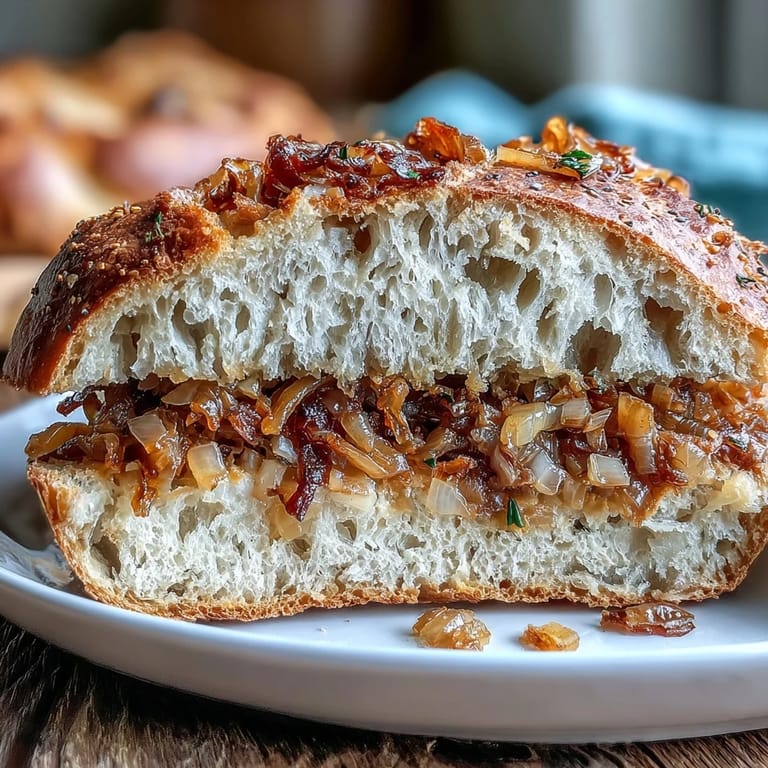
 These bagels remind me that good bread takes time, but the payoff is worth every minute of waiting and planning. Slice one open warm, maybe add cream cheese, and taste the difference between something you made yourself and everything else.
Recipe FAQ
- → What makes the bagels chewy?
The combination of bread flour and sourdough fermentation develops gluten, resulting in a chewy texture.
- → Why boil the bagels before baking?
Boiling creates a glossy crust and helps set the shape, giving the bagels their characteristic texture.
- → Can I substitute barley malt syrup in the boiling water?
Yes, honey can be used as a natural sweetener alternative in the boiling water.
- → How long should the dough ferment for best flavor?
Fermenting the dough 8–12 hours in the refrigerator enhances the tangy flavor and texture.
- → What is the purpose of sautéing the onions?
Sautéed onions add a sweet, golden topping that complements the tangy dough and enriches the flavor profile.