 Pin it
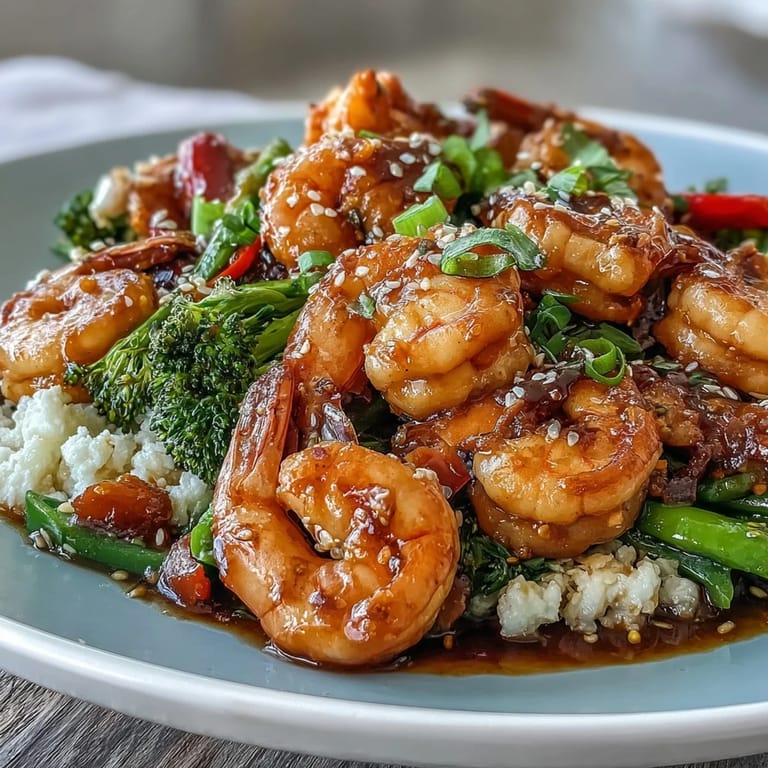
 Tuesday nights used to mean takeout containers and chopstick fumbling until I realized how simple it is to make stir-fry at home in less time than delivery takes to arrive. There's something almost meditative about the quick sizzle of shrimp hitting a hot pan, the way the kitchen fills with ginger and garlic steam before you even finish chopping. This particular version came together one evening when I wanted something light but satisfying, and cauliflower rice felt like the perfect canvas for all those vibrant vegetables and that glossy, tangy sauce.
I made this for my neighbor who'd just started a low-carb experiment and was visibly exhausted by salads. Watching her dig into the bowls with actual enthusiasm, not resignation, made me realize how much better food tastes when it doesn't feel like punishment. She asked for the recipe three times that night, which felt like the highest compliment.
Ingredients
- Large shrimp, peeled and deveined: Buy them this way if your budget allows—it saves precious minutes and they cook so quickly you'll wonder why you ever stressed about seafood.
- Red and yellow bell peppers: The colors matter here not just for looks but because they each bring slightly different sweetness; together they're more interesting than one alone.
- Sugar snap peas and broccoli florets: These two together create textural contrast, one tender-snappy and one more substantial.
- Carrots, julienned: Thin cuts mean they'll cook in the time it takes the peppers to soften, keeping everything on the same timeline.
- Fresh garlic and ginger: Mince these finely so they distribute their flavor instantly rather than sitting in chunks; this is where the aroma comes from.
- Low-sodium soy sauce or tamari: This is your umami backbone, and the low-sodium version lets you taste the other ingredients instead of just salt.
- Toasted sesame oil: Use the real stuff with actual toasted sesame seeds inside—the difference between this and the pale kind is like night and day.
- Rice vinegar and honey: These two create balance, cutting through the richness with brightness while adding subtle sweetness.
- Cauliflower rice: Either pulse your own or grab the pre-riced bags; both work, though fresh feels slightly fluffier when cooked quickly.
- Sesame seeds for garnish: Toast them yourself if you have time—they add a nuttiness that plain ones don't.
Tired of Takeout? 🥡
Get 10 meals you can make faster than delivery arrives. Seriously.
One email. No spam. Unsubscribe anytime.
Instructions
- Make your cauliflower rice:
- Chop the cauliflower into florets and pulse in a food processor until the pieces are rice-grain sized—don't over-process or you'll end up with cauliflower mush instead of texture. If you're using store-bought, skip straight to cooking.
- Cook and set aside the rice base:
- Heat oil in your largest skillet over medium heat and add the cauliflower rice with a small pinch of salt and pepper, stirring occasionally for about four to five minutes until it's tender but still has some bite. Transfer it to your serving bowls and cover with foil to keep warm while you build the rest.
- Build your sauce while the pan is empty:
- Whisk soy sauce, sesame oil, rice vinegar, honey, and water in a small bowl; if you want a thicker sauce that clings better, add the cornstarch and stir until smooth. Taste it—this is your chance to adjust sweetness or saltiness before everything hits the heat.
- Sear the shrimp quickly:
- Turn your skillet or wok to medium-high heat and let it get properly hot before adding the shrimp, which should hit the pan with an immediate sizzle. They'll turn pink in two to three minutes per side, and the moment they're opaque all the way through, pull them out onto a plate.
- Build flavor with aromatics:
- Add a touch more oil if the pan looks dry, then add your minced garlic and ginger, stirring constantly for about thirty seconds until your kitchen smells incredible and the raw edge is gone. Don't let them burn or they'll turn bitter.
- Stir-fry your vegetables to crisp-tender:
- Add the bell peppers, carrots, broccoli, and sugar snap peas in that order, starting with what takes longest and finishing with the quickest, stirring constantly for three to four minutes total. Everything should still have some resistance when you bite it, not soft.
- Bring it all together:
- Return the shrimp to the pan, pour in that glossy sauce, and toss everything for a minute or two until the sauce coats everything and heats through, then taste and adjust seasoning if needed. The cornstarch (if you used it) will thicken the sauce slightly and make it coat better.
- Plate and finish:
- Spoon the hot stir-fry generously over your warm cauliflower rice, scatter green onions and sesame seeds on top, and serve immediately while everything's still hot.
 Pin it
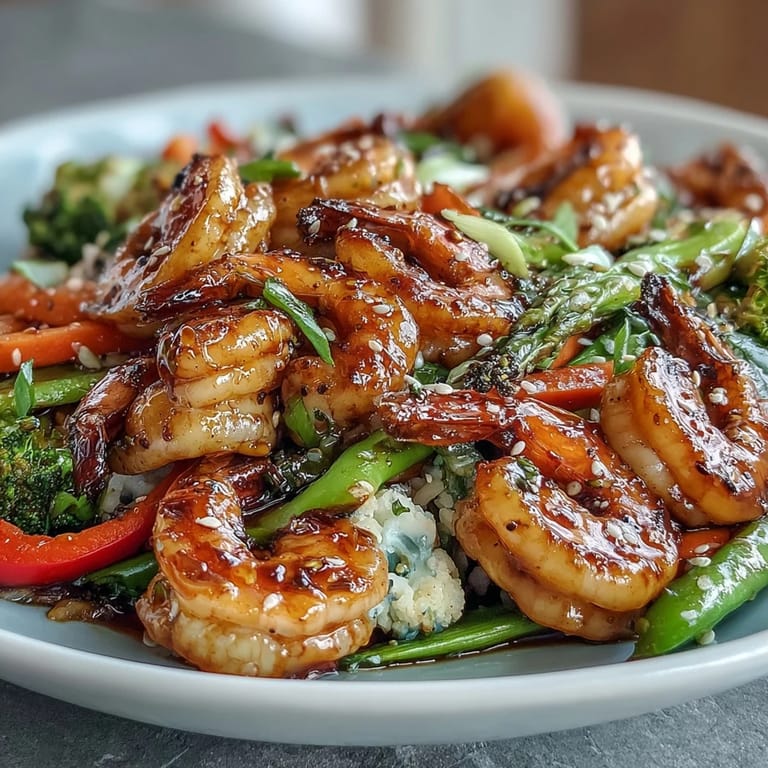
 My friend who usually avoids cooking came over while I was making this and asked if she could help—we spent twenty minutes moving around the kitchen with actual choreography, her chopping while I stirred, and by the end she felt like she'd actually done something. That's when this dish became less about feeding ourselves and more about the simple joy of making something good together in a short amount of time.
Why Cauliflower Rice Works Here
Cauliflower rice isn't trying to fool you into thinking it's actually rice, and that's its strength in a dish like this. It absorbs the savory quality of the stir-fry, stays light enough that you don't feel heavy afterward, and cooks quickly enough to hit the table while everything else is still warm. Plus it genuinely tastes better when it's freshly cooked rather than sitting around, so the whole meal stays bright and slightly crisp rather than soggy.
The Sauce Philosophy
This sauce walks a tightrope between being interesting enough to make you pause between bites and simple enough to execute without fussing. The soy sauce brings umami depth, sesame oil adds nutty richness, rice vinegar cuts through with brightness, and honey rounds everything out with just enough sweetness to make it craveable. It's the kind of sauce that works equally well with shrimp, chicken, or tofu because it complements rather than overwhelms.
Making It Your Own
This recipe is forgiving enough to swap proteins or vegetables depending on what you have on hand or what you're craving. Chicken breast cooks at about the same pace, tofu adds earthiness, and you can substitute any vegetables that fit your timeline and taste. The bones of the dish—the aromatics, the sauce, the method—stay the same, so you're never really starting from scratch even when improvising.
- Add chili flakes, sriracha, or fresh Thai chilies if heat is your thing.
- Squeeze lime juice over everything just before eating for brightness that feels restaurant-quality.
- Use pre-riced cauliflower if saving those ten minutes means you'll actually cook instead of ordering out.
 Pin it
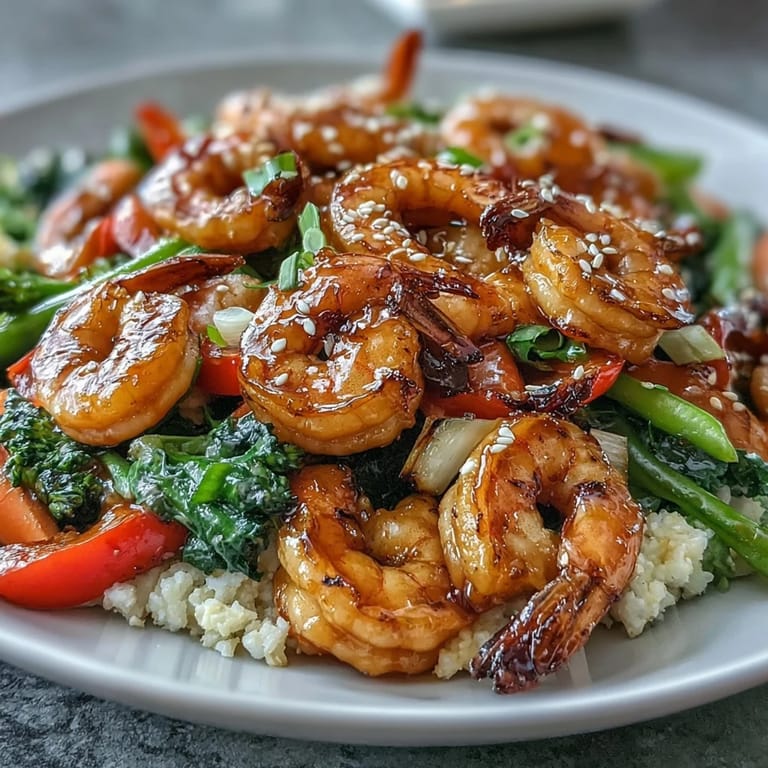
 This is the kind of meal that proves healthy eating doesn't mean sacrifice or boring evenings in the kitchen. The whole thing fits into your actual weeknight schedule while tasting like you planned something special.
Recipe FAQ
- → Can I substitute shrimp with other proteins?
Yes, chicken breast, firm tofu, or tempeh work well as alternatives while keeping the same cooking method.
- → What’s the best way to prepare cauliflower rice?
Pulse cauliflower florets in a food processor until rice-sized, then sauté briefly with olive oil for a tender, fluffy texture.
- → How can I add more spice to this dish?
Incorporate chili flakes or a splash of sriracha to enhance the heat without overpowering the fresh flavors.
- → Is there a gluten-free sauce option?
Use tamari or coconut aminos in place of regular soy sauce to keep the stir-fry gluten-free.
- → What kitchen tools are needed for this dish?
A food processor or box grater for the cauliflower rice, plus a large skillet or wok for sautéing, are essential.