 Pin it
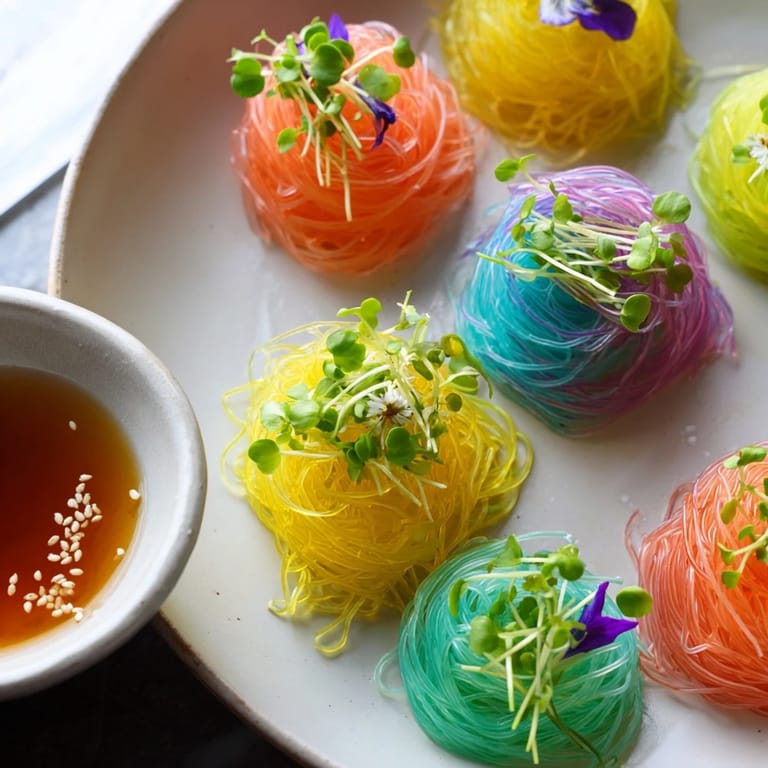
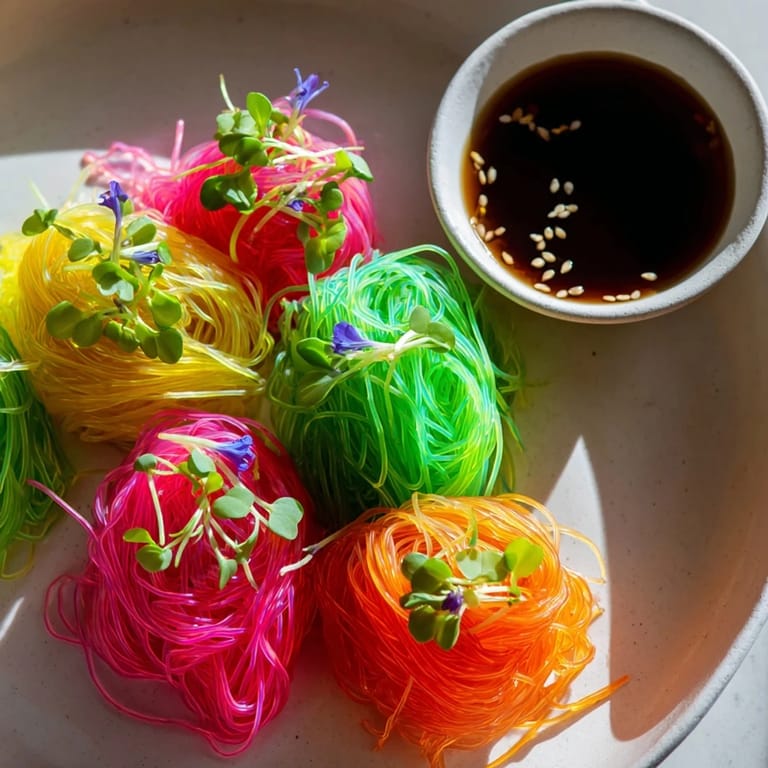
 I stumbled onto agar-agar while scrolling through videos at midnight, captivated by these luminous noodles that jiggled like tiny clouds. My friends had just started a monthly dinner club, and I wanted to bring something unexpected—something that would make them pause mid-conversation and say, what is this? These Neon Noodle Clouds landed on my table as the answer, and the room went quiet the moment they caught the light.
My partner watched me pipe those first strands into ice water like I was performing surgery. One squirt came out sideways, and we both laughed at the chaos—then I realized the wobbly ones tasted just as good. That's when it clicked: perfection wasn't the point; surprise was.
Ingredients
- Water: The foundation for your agar base; use filtered if you want the colors to stay true and vibrant.
- Agar-agar powder: This is the magic—it sets without refrigeration and gives you that signature bouncy texture that regular noodles can't match.
- Sugar: Balances the subtle earthiness of agar and keeps the noodles from tasting medicinal.
- Food coloring (neon shades): Gel colors are more forgiving than liquid; they won't dilute the agar mixture as much.
- Soy sauce or tamari: The umami backbone of your dipping sauce; tamari keeps it gluten-free if that matters to your table.
- Rice vinegar: Adds a gentle brightness that cuts through the richness without overwhelming.
- Mirin: A touch of sweetness that rounds out the sauce and makes it feel complete.
- Sesame oil: Use just a teaspoon; it's potent and transforms the whole experience.
- Fresh ginger: Grate it just before mixing so the flavor stays sharp and alive.
- Scallion: Sliced thin for texture and a hint of onion that people won't quite identify.
- Toasted sesame seeds: Optional but worth it; they add a nutty dimension.
- Microgreens or edible flowers: The final flourish that says you care about how this looks.
Tired of Takeout? 🥡
Get 10 meals you can make faster than delivery arrives. Seriously.
One email. No spam. Unsubscribe anytime.
Instructions
- Wake the agar awake:
- Combine water, agar powder, and sugar in a saucepan and bring to a boil, stirring constantly so nothing settles on the bottom. You'll know it's ready when the powder fully dissolves—about 2 to 3 minutes—and the mixture looks clear instead of cloudy.
- Paint your noodles:
- Pour the hot liquid into separate bowls and drop in food coloring one or two drops at a time, stirring until the color spreads evenly. Start light; you can always add more, but you can't take it back.
- Shape the magic:
- Fill a syringe or squeeze bottle with colored agar and pipe thin strands into a bowl of ice water, where they'll set in about a minute. If you prefer simplicity, pour into a flat tray, let it cool and set, then slice into thin noodles with a sharp knife.
- Chill and rest:
- Rinse the finished noodles gently under cold water to remove any tackiness, then refrigerate until you're ready to serve. They can sit in the fridge for a few hours without losing their bounce.
- Balance the sauce:
- Whisk soy sauce, rice vinegar, mirin, sesame oil, ginger, and sugar in a small bowl until the sugar disappears completely. Fold in scallion and sesame seeds at the very end so they stay crisp and visible.
- Bring it together:
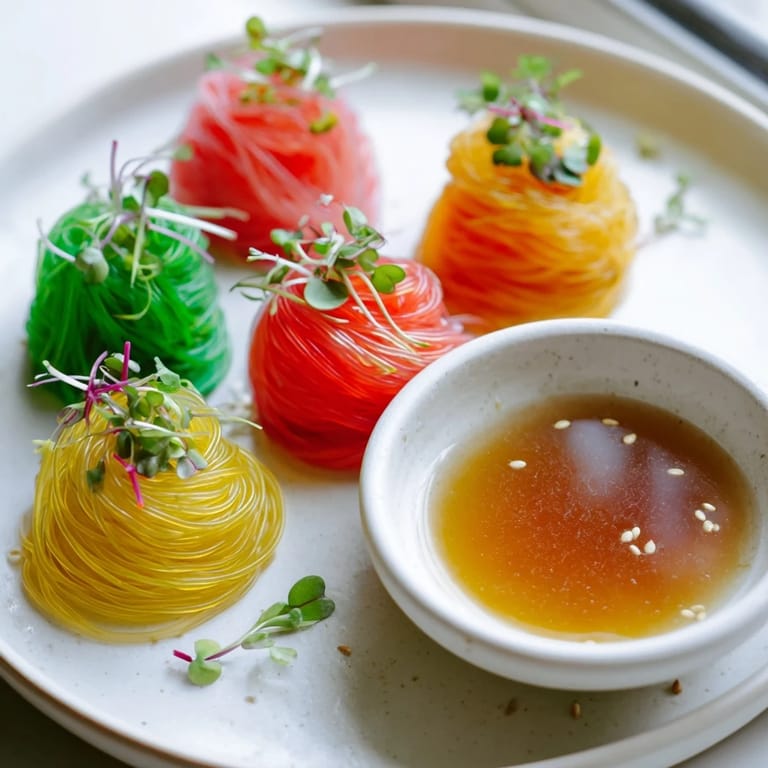
- Arrange chilled noodles in small, delicate bundles on serving bowls, top with microgreens or flowers if you have them, and pour or set the sauce alongside for dipping.
 Pin it
 I served these at a dinner where one guest was recovering from surgery and couldn't eat much. She ate a whole bowl and asked for the recipe with a smile on her face—the first real one I'd seen from her in weeks. These noodles became more than a dish that night; they became proof that food can be both playful and healing.
Natural Colors You Can Use Instead
If you want to skip synthetic dyes, spirulina gives you a deep green, butterfly pea flower creates a brilliant blue that shifts purple with acid, and beet juice delivers a stunning magenta. The flavors shift slightly, so taste your sauce as you go and adjust the ginger or vinegar to balance any earthiness.
The Sauce Variations That Changed Everything
Once I nailed the base sauce, I started playing. A drop of yuzu juice adds brightness that feels almost citrus-forward, while chili oil brings heat and a glossy finish that coats the noodles. My favorite discovery was adding a teaspoon of white miso to the sauce; it deepens the umami and gives the dipping experience an almost creamy quality. The noodles become the canvas, and the sauce becomes the statement.
Timing and Storage Tips
Prep the noodles up to 4 hours ahead and keep them in the fridge in an airtight container; they stay bouncy and don't dry out. Make the sauce no more than an hour before serving so the ginger flavor stays assertive and the scallion doesn't wilt into the liquid. If you're entertaining, you can have the noodles ready and the sauce sitting in a small bowl, and the whole assembly takes maybe two minutes in front of your guests—which honestly adds to the theater of it all.
- Keep a damp paper towel nearby when you're piping noodles; it prevents the syringe from drying and clogging.
- If your noodles stick together after rinsing, toss them gently with a tiny drizzle of sesame oil to separate them without breaking.
- Serve the sauce cold so it feels refreshing alongside the chilled noodles, not warm and heavy.
 Pin it
 These noodles remind me that the best dishes are often the ones that make people say yes before they even taste them. Once you master the basics, you've got a conversation starter that works year-round.
Recipe FAQ
- → What gives the noodles their vibrant neon colors?
The vibrant colors come from food-safe neon gel or liquid food coloring added to the agar-agar mixture before it sets.
- → How is the bouncy texture of the noodles achieved?
The chewy texture results from boiling agar-agar powder with water and sugar, then allowing it to set and chill, creating firm, elastic strands.
- → Can the soy sauce be substituted for dietary restrictions?
Yes. Using tamari instead of soy sauce makes the dish gluten-free without compromising flavor.
- → What tools are needed to shape the noodles?
A syringe or squeeze bottle is used to pipe the agar-agar liquid into strands, but pouring into a tray and slicing thinly also works.
- → How can the dipping sauce’s flavor be enhanced?
Adding yuzu juice or chili oil to the soy-based dipping sauce introduces an extra layer of brightness or heat.
- → Are there natural alternatives to artificial food coloring?
Yes, natural dyes like spirulina, butterfly pea, or beet juice can be used to achieve colorful noodles.