 Pin it
 There's something about the smell of celery and ham sautéing together that pulls me back to my grandmother's kitchen on a cold Tuesday afternoon. She'd barely measure anything, just toss vegetables into a pot with the confidence of someone who'd made this chowder a hundred times. I watched her work that day, and what struck me wasn't the recipe itself but how she'd pause between steps to taste the broth, adjusting salt with the tip of a finger. That patience, that willingness to let flavors develop at their own pace, became the foundation of how I make this now.
My daughter came home from school one October asking if we could make something warm that didn't involve tomatoes. This chowder became our answer, and now I associate it with that particular season when sweaters come out and the kitchen becomes the warmest room in the house. She'd sit at the counter dicing potatoes alongside me, and we'd talk about everything and nothing while the broth simmered. Food, it turns out, is one of the best excuses to just be together.
Ingredients
- Yukon Gold potatoes (2 cups, peeled and diced): These hold their shape beautifully instead of turning to mush, and their buttery flavor is essential to the chowder's character.
- Celery (1 cup, diced): It's the quiet backbone here, adding a subtle earthiness that deepens without shouting for attention.
- Sweet corn (1 cup): Frozen works just as well as fresh, and honestly sometimes better because it's picked at peak sweetness and locked in immediately.
- Onion (1 small, finely chopped): Keep it small and chop it fine so it melts into the base rather than appearing as chunks.
- Garlic (2 cloves, minced): Mince it fresh and add it after the softer vegetables, or it'll turn bitter and mean.
- Lean cooked ham (1 cup, diced): Quality matters here, so don't grab the thinnest slices from the deli counter if you can help it.
- Low-fat milk (1 cup): This keeps the chowder light, which I've come to prefer over the heavy versions I grew up eating.
- Half-and-half or light cream (1/2 cup): Just enough richness to make you feel taken care of without derailing anyone's health goals.
- Low-sodium chicken broth (3 cups): Use homemade if you have it, but a good store-bought version does the job beautifully.
- Olive oil (2 tbsp): A neutral canvas for the vegetables to develop their sweetness.
- Cornstarch (2 tbsp, optional): Only use this if you like your chowder thickened; I skip it some days and prefer the brothier version.
- Dried thyme (1/2 tsp): It brings a whisper of the garden, particularly welcome in colder months.
- Fresh parsley (2 tbsp, plus more for garnish): Stir it in at the very end so it stays bright green and vibrant.
- Salt and black pepper: Taste as you go, remembering that the ham and broth already carry their own salinity.
Tired of Takeout? 🥡
Get 10 meals you can make faster than delivery arrives. Seriously.
One email. No spam. Unsubscribe anytime.
Instructions
- Build the flavor foundation:
- Heat your olive oil in a large pot over medium heat, then add the onion and celery together. Let them soften for about four to five minutes, stirring occasionally until they're fragrant and the onion turns translucent. This is where patience pays off, because you're developing sweetness that no amount of added sugar could replicate.
- Wake up the aromatics:
- Stir in your minced garlic and diced ham, cooking for just two minutes until the kitchen smells like something special. The garlic will soften quickly, so keep the heat honest and don't walk away.
- Let it simmer:
- Add your potatoes, corn, thyme, and chicken broth, then bring everything to a gentle simmer. Cover the pot and let it cook for fifteen to twenty minutes, until the potatoes are fork-tender but not falling apart.
- Thicken if you'd like:
- If you want a thicker chowder, whisk your cornstarch with cold water in a small bowl first, then stir it into the pot and simmer for another two to three minutes. Skip this entirely if you prefer something more brothlike.
- Finish gently:
- Reduce the heat to low before you add the milk and half-and-half, stirring gently to combine. Never let it boil once the dairy goes in, or you'll end up with a broken, grainy texture that can't be fixed.
- Taste and serve:
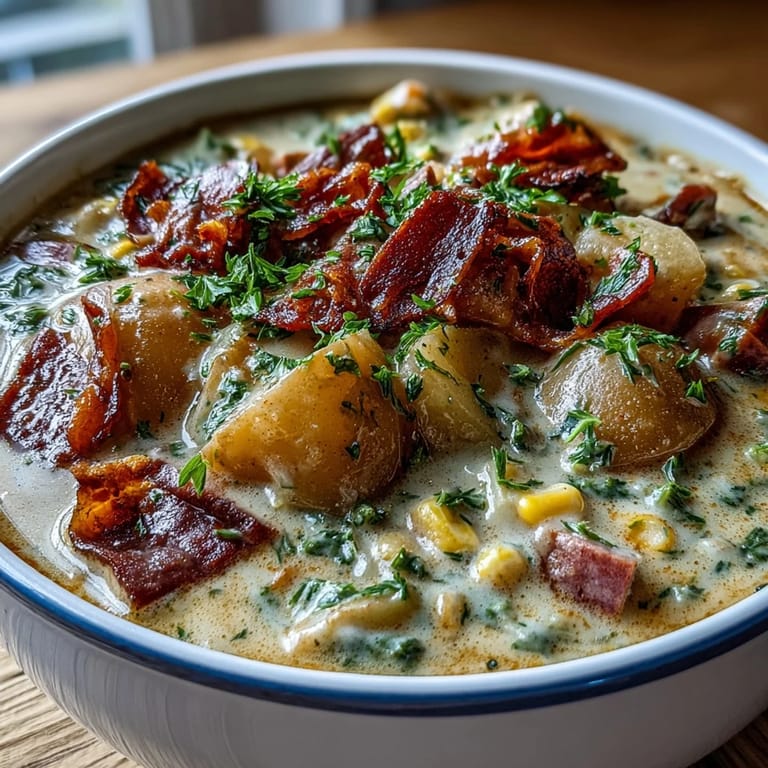
- Stir in your fresh parsley, then taste and adjust the salt and pepper as needed. Ladle into bowls and finish with a little more parsley for color.
 Pin it
 There was an evening when I made this chowder for someone going through a difficult time, and they ate three bowls in silence. Afterward, they said it reminded them of feeling safe, and I realized that the best recipes aren't the ones with the most complicated techniques or exotic ingredients. They're the ones that remind people they're being cared for.
The Magic of Light Broths
For years I made chowder the traditional way, with cream and butter and bacon fat in quantities that made it feel more like a dessert. Then one winter I decided to experiment with a lighter hand, and something unexpected happened: the individual flavors became clearer. The sweetness of the corn, the earthiness of the celery, the subtle salt from the ham all came through more honestly. Light doesn't mean flavorless if you build your foundation carefully.
When to Use Fresh Versus Frozen Corn
If you can find corn at the farmer's market in late summer, buy it and use it. But don't feel guilty about frozen corn in January, because honestly it's often superior to fresh corn that's traveled three thousand miles. I've learned to stop thinking of frozen as a compromise and instead as a different tool that sometimes works better. The kernels stay sweeter because they're frozen at peak ripeness, and they cook evenly without the risk of becoming tough.
Building Flavor Without Extra Fat
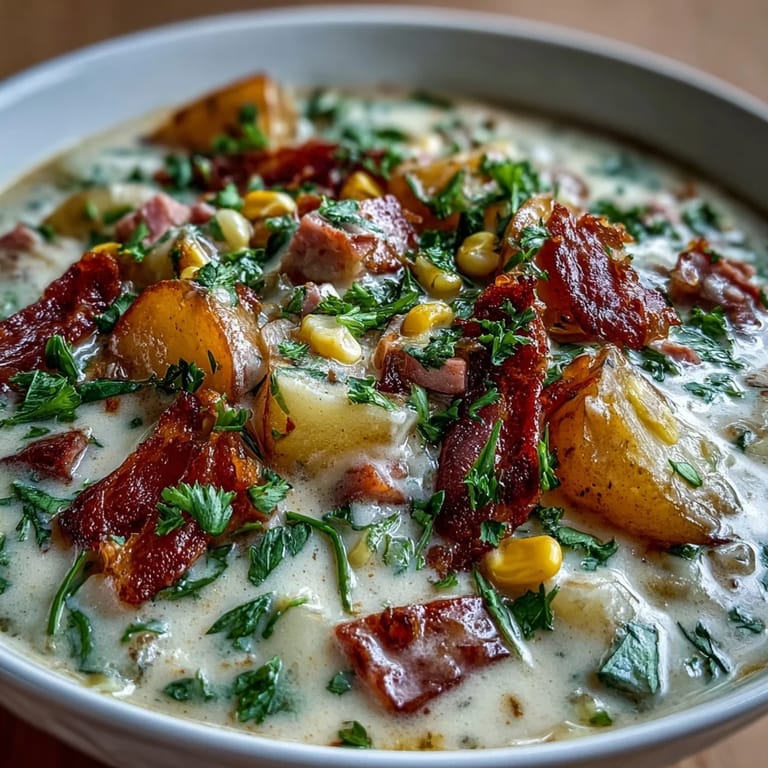
The real secret to making a light chowder that doesn't taste light is understanding that flavor comes from technique, not just ingredients. Sautéing your vegetables properly, giving them time to develop sweetness, tasting and adjusting as you go—these are what make a difference. You don't miss the cream because you've built something satisfying from the beginning.
- Start with a hot pan and let your vegetables caramelize slightly before adding liquid.
- Taste at every stage and adjust your seasonings incrementally so you're not scrambling at the end.
- Remember that salt draws out flavors, so a light hand with seasoning at the right moments is better than a heavy hand at the end.
 Pin it
 This chowder has taught me that comfort food doesn't have to be heavy, and that sometimes the most nourishing meals are the ones made with attention rather than indulgence. Make it once, and I think it'll become part of your rotation the way it's become part of mine.
Recipe FAQ
- → Can I use turkey ham instead of ham?
Yes, turkey ham works well as a leaner alternative, maintaining the savory flavor without altering the texture significantly.
- → What thickening options are available for this chowder?
Cornstarch slurry is optional for thickening but can be omitted if a lighter consistency is preferred.
- → Can fresh and frozen corn both be used?
Both fresh and frozen sweet corn kernels are suitable and will provide a sweet, crisp bite in the chowder.
- → Is it possible to make a vegetarian version?
Yes, replace the ham with extra vegetables and use vegetable broth for a satisfying vegetarian variant.
- → How should I avoid curdling when adding milk and cream?
Gently warm the dairy mixture over low heat without boiling to keep the chowder smooth and creamy.