 Pin it
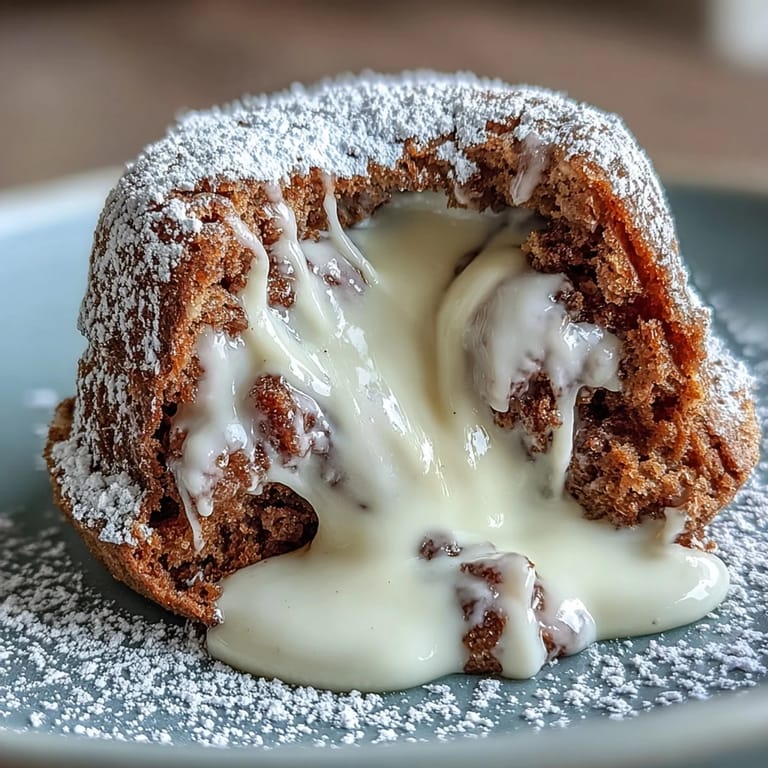
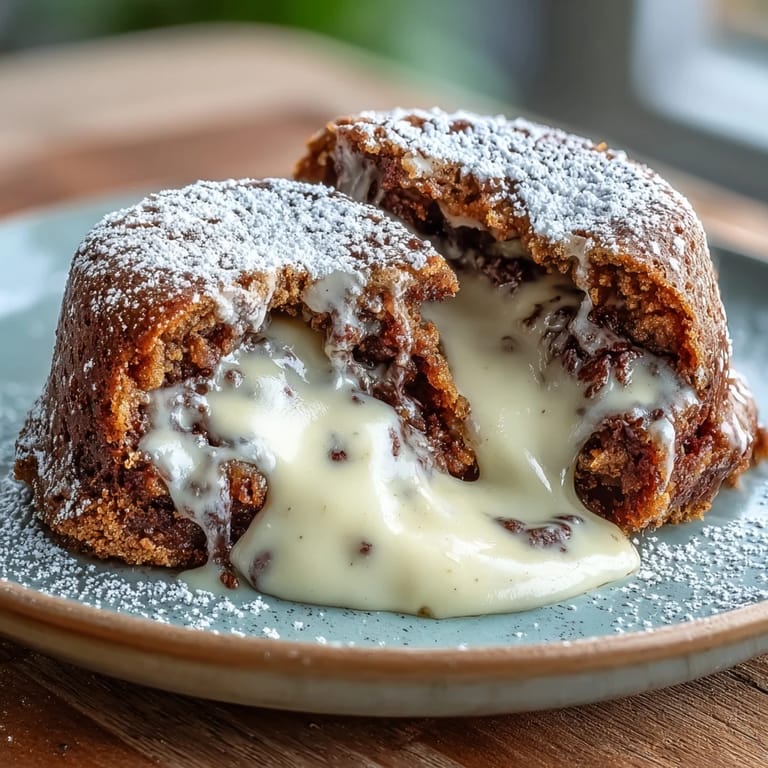
 There's a particular quiet that settles into the kitchen around 9 PM when everyone's asleep, and that's when I first experimented with hojicha in a lava cake. I'd been sipping hojicha tea all week, struck by how it tasted like autumn in a cup—toasty, grounding, almost smoky—and wondered what would happen if that earthiness met white chocolate's soft sweetness. The first attempt was clumsy; I overmixed and lost the molten center entirely. But the second time, when that knife slid through the warm cake and liquid white chocolate pooled onto the plate like silk, I knew I'd discovered something special.
I made these for my parents last spring when they visited unexpectedly, and my mom's expression when she tasted the hojicha-white chocolate combination was worth every second of prep. She set down her fork midway and said, "This tastes like you finally understand what you're doing in the kitchen," which made me laugh because honestly, I still felt like I was guessing half the time. But that's the magic of this cake—it makes you feel more competent than you actually are.
Ingredients
- White chocolate, chopped (80 g): This is your molten heart, so quality matters more than you'd think; cheaper chocolate tends to seize and separate, while good white chocolate stays silky and luxurious.
- Unsalted butter (60 g plus extra for greasing): The butter carries the hojicha flavor beautifully and creates that tender crumb, so don't skip it for alternatives.
- Eggs (2 large plus 1 large yolk): These eggs are what give the cake its cloud-like texture and help achieve that coveted jiggly center; room temperature eggs incorporate air more efficiently.
- Granulated sugar (60 g): The sugar stabilizes your egg foam and sweetens without overpowering the subtle hojicha notes.
- All-purpose flour (30 g): Just enough flour to give structure without making the cake dense; sifting prevents lumps that could disrupt the silky texture.
- Hojicha powder (2 tbsp): This roasted green tea powder is the soul of the recipe, bringing that nutty, toasted complexity that makes people ask what the secret ingredient is.
- Salt (pinch): A tiny pinch highlights the hojicha's depth and balances the sweetness perfectly.
Tired of Takeout? 🥡
Get 10 meals you can make faster than delivery arrives. Seriously.
One email. No spam. Unsubscribe anytime.
Instructions
- Prepare your ramekins:
- Butter each ramekin generously, getting into the corners and up the sides, then dust with flour and tap out the excess so the cake releases cleanly. This step feels fussy but saves you heartbreak later.
- Melt white chocolate and butter together:
- Set a heatproof bowl over barely simmering water—key word barely, because one splash of water will seize your chocolate into grainy sadness. Stir gently until melted and smooth, then remove from heat and let cool for a minute or two.
- Whisk eggs with sugar:
- In a clean bowl, whisk the eggs, yolk, and sugar until the mixture is pale, slightly fluffy, and falls from the whisk in ribbons; this usually takes 2-3 minutes by hand and creates the structure that traps air.
- Sift dry ingredients and fold in:
- Sift the flour, hojicha powder, and salt together over the egg mixture, then use a spatula to gently fold just until combined; stop the moment you don't see streaks of flour because overmixing deflates all that beautiful air you just whisked in.
- Fold in melted chocolate:
- Pour the cooled chocolate mixture into the egg mixture and fold with patience and a light hand until no white streaks remain; this is where your restraint pays off, keeping the batter airy and the center molten.
- Divide and bake:
- Pour the batter equally into your prepared ramekins until about three-quarters full, place them on a baking tray, and slide into a 200°C oven for exactly 12 minutes. The edges will look set and slightly risen while the centers jiggle like they're not quite done—that's exactly what you want.
- Rest and release:
- Let the cakes sit for 1-2 minutes straight out of the oven so they firm up just enough to handle, then run a thin knife around the edge of each cake and invert onto your serving plate in one confident motion.
- Finish and serve:
- Dust with powdered sugar while the cake is still warm, top with berries or whipped cream if you like, and serve immediately while the center is still flowing.
 Pin it
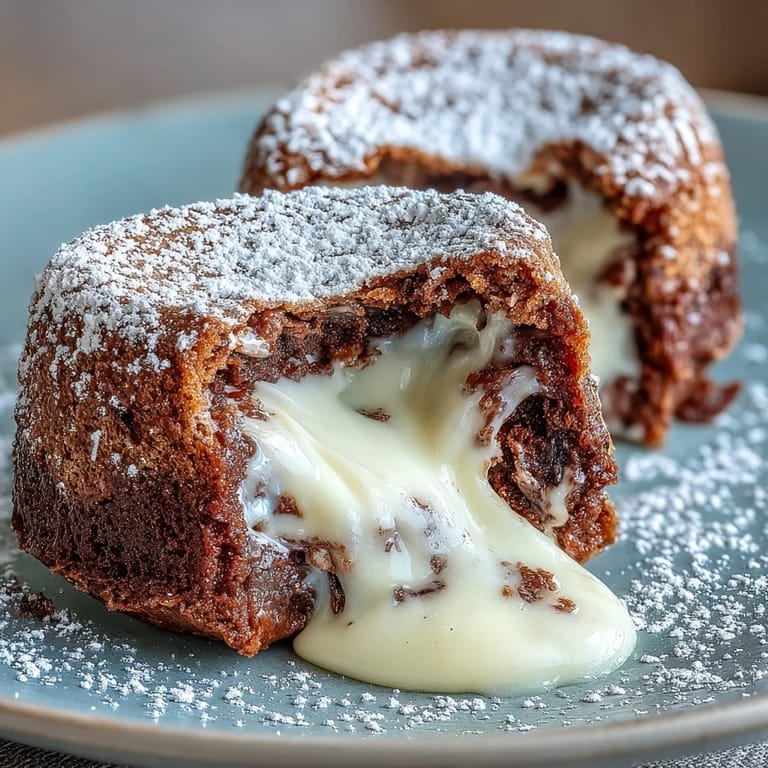
 There was a moment during a dinner party last month when one of my guests cut into their cake and the center spilled out, and the whole table went quiet—not in a disappointed way, but in that hushed way people get when something small and delicious surprises them. That's when I realized this recipe had become one of my favorites not because it's flashy, but because it consistently delivers a moment of genuine joy.
Why Hojicha Works Here
Hojicha's roasted, almost smoky flavor is what makes white chocolate shine instead of cloy; the earthiness cuts through the sweetness and gives the whole cake a sophisticated edge. I used to think white chocolate desserts were one-note, but hojicha taught me that the right pairing can transform an ingredient completely. The powder also blends seamlessly into the batter without leaving grits, so you get that smooth, integrated flavor rather than a chalky texture.
Timing and Temperature Matter
The temperature of your ingredients affects how the batter behaves; cold eggs don't incorporate air as efficiently, and cold chocolate can seize if it hits the warm egg mixture unevenly. Room temperature eggs whisk into clouds, and slightly cooled chocolate folds in without shocking the batter into deflation. I learned this the hard way after one batch came out dense and close-textured, and I realized my eggs had been straight from the fridge.
Serving and Storage Secrets
These cakes are best served immediately after inverting, while the center is still molten and the cake is warm enough that the white chocolate coating is soft on your tongue. You can prepare the batter up to 2 hours ahead and refrigerate it in the ramekins, then bake when guests arrive for that restaurant-quality effect of fresh-baked dessert. If somehow you have leftovers, store them covered in the fridge and briefly warm them in a 150°C oven for 3-4 minutes to revive the molten center.
- Serve with ice-cold milk or a shot of espresso to cut through the richness.
- Dust the plate with extra powdered sugar for visual impact that feels elegant without being fussy.
- Fresh berries or a quenelle of whipped cream adds lightness and prevents the plate from feeling heavy.
 Pin it
 This cake has become my answer to "I want something impressive but manageable," and it's taught me that the best desserts aren't always the most complicated—sometimes they're just the ones that balance flavors and textures in a way that makes people pause and actually taste what's in front of them. That quiet moment when someone experiences the hojicha-white chocolate center for the first time never gets old.
Recipe FAQ
- → What makes hojicha different from matcha in baking?
Hojicha is roasted green tea with a nutty, caramel-like profile that's less grassy than matcha. Its earthy notes complement white chocolate beautifully, creating depth without the bitter edge some green teas can impart.
- → How do I know when the lava cakes are done baking?
The edges should appear set and firm while the center remains soft and jiggly when gently shaken. This contrast ensures the molten center flows when you cut into the cake. For an extra molten texture, reduce baking time by one minute.
- → Can I make the batter ahead of time?
Prepare the batter up to 4 hours in advance and store covered in the refrigerator. Bring to room temperature for 10 minutes before baking, adding 1-2 extra minutes to the baking time if chilled. For best results, bake immediately after mixing.
- → What if I don't have ramekins?
A standard muffin tin works well—fill each cup about three-quarters full. Alternatively, use small oven-safe bowls or ceramic teacups of similar 6-8 oz capacity. Adjust baking time slightly for different vessel sizes.
- → How should I store and reheat leftovers?
These treats are best enjoyed immediately while warm. If needed, store at room temperature for up to 6 hours. To reheat, place in a 160°C (320°F) oven for 4-5 minutes. The microwave works but may affect the molten texture.
- → Can I use regular chocolate instead of white chocolate?
Milk or dark chocolate works, though the flavor profile shifts dramatically. White chocolate's subtle sweetness perfectly balances hojicha's roasted notes. If using dark chocolate, consider reducing the tea powder slightly to avoid bitterness.