 Pin it
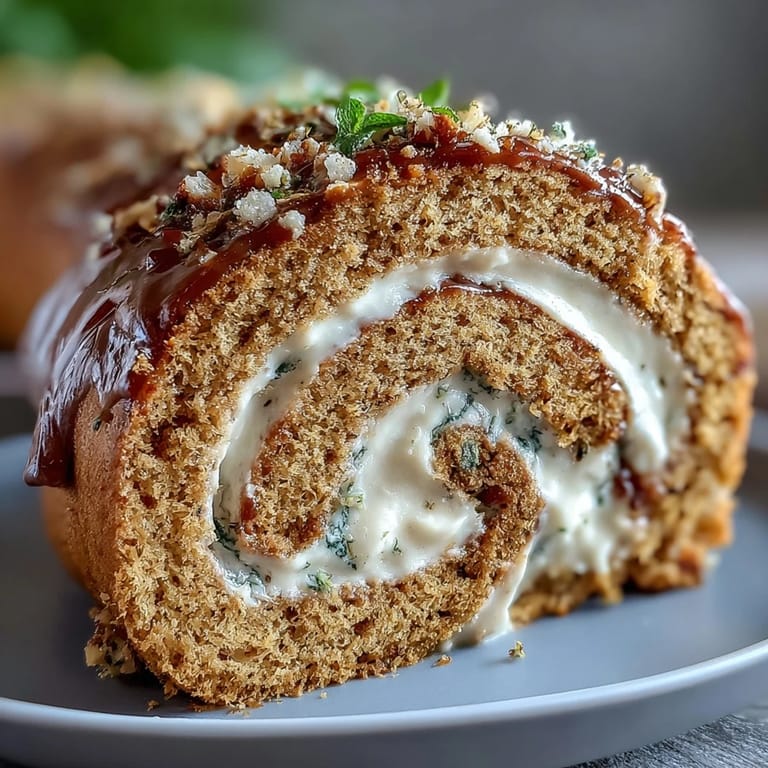
 The first time I made a hojicha roll cake, I was chasing that specific moment when afternoon light hits a cup of roasted green tea just right—golden and warm. My grandmother had sent me a tin of hojicha powder from Japan, and it sat on my shelf for weeks while I debated what to do with it. Then one quiet Sunday, I decided to transform it into something soft and unexpected: a sponge that tastes like toasted tea leaves with a whisper of fresh mango running through it. That cake taught me that the best desserts aren't always the loudest; sometimes they're the ones that make you pause mid-bite.
I baked this for a friend who'd just moved into a tiny apartment and was nervous about entertaining. We made the roll together in her cramped kitchen, laughing when the parchment paper stuck to everything, and by the time we sliced it an hour later, she'd already invited three neighbors over. Watching them taste that hojicha cream made me realize that sometimes the smallest, most thoughtful desserts create the biggest moments.
Ingredients
- Eggs (4 large, separated): The separation is non-negotiable here—your egg whites are what gives this cake its cloudlike texture, so don't skip that step or use a yolk-stained bowl.
- Granulated sugar (80 g total, divided): Split between the yolks and whites intentionally; the yolks get 40 g for richness, the whites get 40 g to stabilize into meringue.
- Whole milk (60 ml) and vegetable oil (50 ml): These keep the sponge tender and moist—don't swap them for butter or you'll lose that delicate crumb.
- Cake flour (70 g, sifted) and cornstarch (10 g): The combination is deliberate; cornstarch reduces gluten development so your cake stays soft rather than springy.
- Hojicha powder (1 tbsp in cake, 2 tsp in cream): This is the soul of the recipe—buy it from a Japanese grocer if you can, as quality varies wildly, and always sift it to avoid bitter clumps.
- Salt (1/4 tsp): A whisper of salt brings out the tea's toasted, almost caramel-like notes.
- Heavy cream (200 ml, 35% fat minimum, chilled): Cold cream whips faster and holds peaks better; if yours is room temperature, chill your bowl too.
- Powdered sugar (2 tbsp): Dissolves instantly in the cream, unlike granulated sugar which can feel grainy.
- Mango (1 ripe): Choose one that yields slightly to pressure—overripe becomes mushy when rolled, underripe tastes mealy.
Tired of Takeout? 🥡
Get 10 meals you can make faster than delivery arrives. Seriously.
One email. No spam. Unsubscribe anytime.
Instructions
- Set your stage:
- Preheat to 170°C and line your 23 x 33 cm tray with parchment that climbs the sides—this prevents sticking and makes flipping easier later. Separate your eggs when they're cold; the yolks slip away cleanly and the whites whip faster.
- Build the yolk base:
- Whisk the yolks with 40 g sugar until they're pale and thick enough that the whisk leaves a trail—this takes about three minutes and matters more than you'd think. Add milk and oil and stir until smooth and glossy, then fold in your sifted dry ingredients gently, just until no flour streaks remain.
- Create the magic (meringue):
- In a scrupulously clean bowl, beat the egg whites from foamy to stiff peaks, adding the remaining 40 g sugar slowly so it dissolves completely. The whites should look shiny and hold peaks that don't flop over—overbeat and they become grainy.
- Fold with intention:
- Add the meringue in three additions, folding each one in with a spatula using a gentle bottom-to-top motion, rotating the bowl as you go. You're looking to keep the airiness while fully combining; rushed folding means a dense cake.
- Bake until just set:
- Pour into your tray and smooth the top, then tap the tray gently on the counter a few times to pop surface bubbles. At 13–15 minutes, the top should spring back when pressed lightly and smell like toasted tea and honey.
- The critical invert:
- While warm, place a fresh sheet of parchment on top and flip the whole tray so the cake lands parchment-side-down. Peel away the original baking paper slowly and carefully—if it sticks, let it cool another minute and try again.
- Cool completely:
- Drape a clean kitchen towel loosely over the cake and let it come to room temperature; warm sponge tears easily, but cool sponge rolls beautifully.
- Whip the hojicha cream:
- Pour chilled heavy cream into a cold bowl, add powdered sugar and hojicha powder, and whip until medium-stiff peaks form—it should look like soft, fragrant clouds. Stop before it turns to butter; overwhipping means grainy cream.
- Assemble with care:
- Spread the hojicha cream evenly over the cooled sponge, then lay mango strips along one short edge in a neat line. The fruit becomes the anchor point for rolling.
- Roll and chill:
- Using the parchment beneath, gently and steadily roll the cake away from you, starting from the mango edge and keeping tension even as you go. Wrap in parchment, seam-side down, and refrigerate for at least thirty minutes—this sets the cream and makes slicing clean and neat.
- Finish and serve:
- Trim a thin slice from each end for a tidy appearance, then slice with a warm, damp knife (wipe between cuts) for smooth edges.
 Pin it
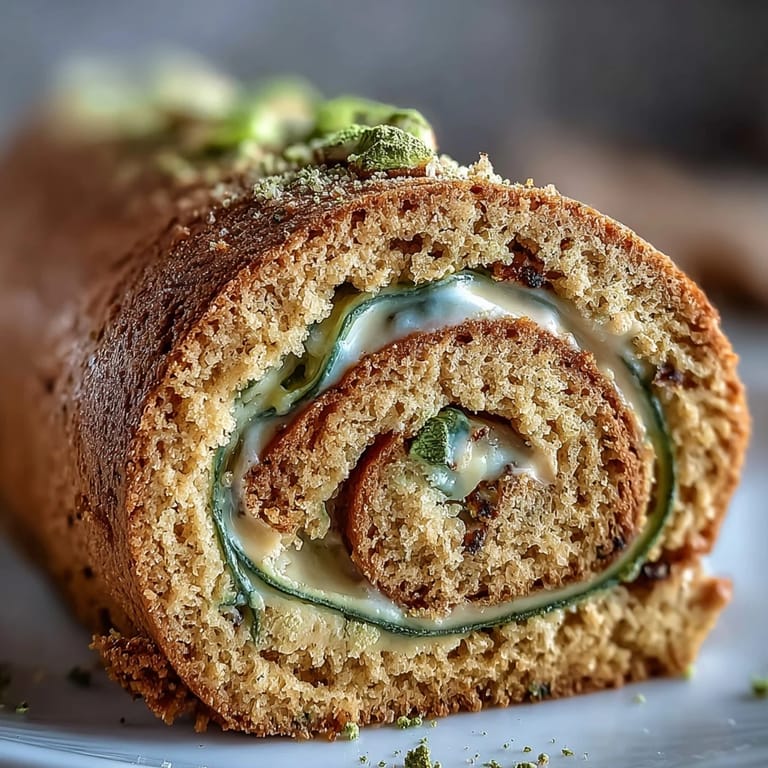
 The moment that stays with me is when a friend who claimed she didn't like green tea tried a slice and went quiet, then asked for the recipe. She wasn't quiet because it was perfect—it wasn't—but because something about the combination of roasted tea and soft mango made her taste her childhood differently. That's when I understood that hojicha roll cake isn't really about technique; it's about creating space for people to feel something unexpected.
Why Hojicha Works in Dessert
Hojicha is roasted green tea, which means it's already been heated until it loses most of its grass-like brightness and becomes something warmer—almost toasty, with hints of caramel and nuttiness. In a sponge cake, this roasted character doesn't compete with sweetness; it deepens it, the way a pinch of coffee can make chocolate taste more chocolate. The flavor is gentle enough that it doesn't scare people who think they dislike green tea, but distinct enough that anyone paying attention will taste something distinctly Japanese in every bite.
The Mango Question
Fresh mango is optional, but I've never skipped it once I discovered how well the bright, tropical sweetness plays against the earthy roasted tea. The fruit also provides a visual anchor when rolling—you know exactly where to start and how tight to make each turn. If mango isn't available or you want something different, ripe strawberries or peaches work beautifully; just slice them thin so they don't create a lumpy roll.
Storage and Make-Ahead Tips
This cake keeps well in the refrigerator for up to three days, wrapped tightly in parchment and then plastic wrap to prevent the cream from absorbing other flavors. You can also bake the sponge a day ahead and assemble it the morning of serving—the cake actually benefits from a day's rest, becoming slightly more tender. Just before serving, you can dust the top with a light sprinkle of hojicha powder or powdered sugar for a finishing touch that looks effortless.
- Chill your mixing bowl for the cream: Cold equipment whips cream faster and more efficiently.
- Use a warm, wet knife for slicing: This prevents the cream from dragging and tearing as you cut.
- Slice with a gentle sawing motion rather than pushing straight down: You want to guide the knife, not force it through the delicate cake.
 Pin it
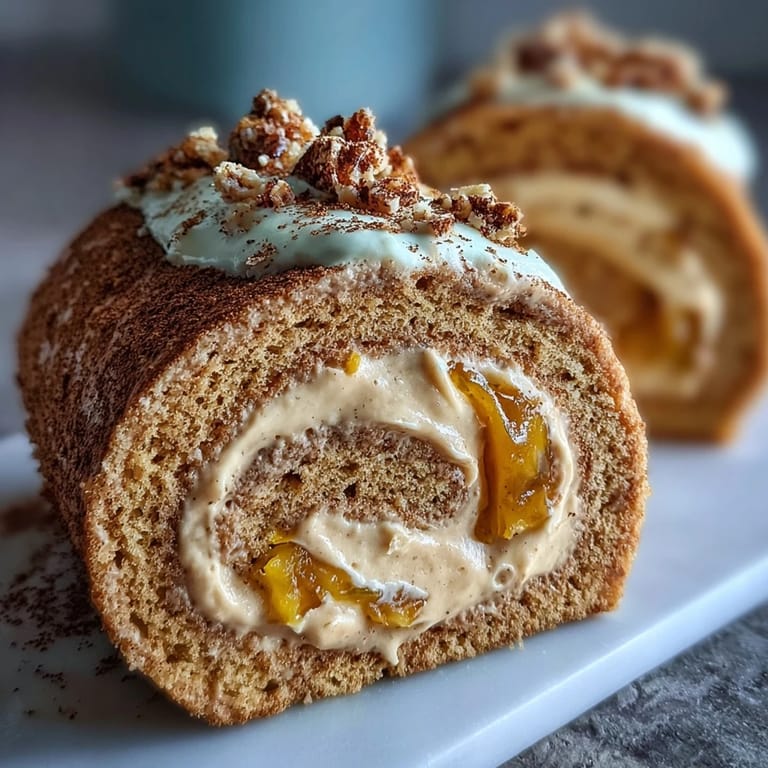
 There's something deeply satisfying about a cake that looks simple but tastes like you've traveled somewhere. This hojicha roll, with its whisper of roasted tea and burst of mango, gives you that feeling every single time.
Recipe FAQ
- → What is hojicha?
Hojicha is a Japanese green tea that has been roasted over charcoal, giving it a deep, earthy flavor with lower caffeine content compared to other green teas. The roasting process creates reddish-brown leaves and a warm, nutty taste that pairs beautifully with cream and sweet desserts.
- → Can I make this ahead of time?
Yes, this roll tastes even better when made a day ahead. Wrap the chilled roll tightly in plastic and store in the refrigerator for up to 2 days. The flavors meld together beautifully, and the texture remains moist and fresh.
- → Why did my sponge crack when rolling?
Cracking usually occurs when the sponge is too cold or has been overbaked. Roll the cake while it's still slightly warm, and be gentle when folding the meringue into the batter. Using the parchment paper to guide the roll helps maintain even pressure.
- → Can I use other fruits besides mango?
Absolutely. Strawberries, peaches, or even thinly sliced persimmons work wonderfully. You can also skip the fruit entirely for a pure hojicha cream experience, or add chopped roasted nuts for texture variation.
- → How do I store leftovers?
Wrap individual slices or the entire roll in plastic wrap and refrigerate. The roll keeps well for 2-3 days. Avoid freezing as the cream texture may become grainy when thawed. Bring to room temperature 15 minutes before serving.
- → Can I make this gluten-free?
Yes, replace the cake flour with a gluten-free flour blend containing xanthan gum. Ensure your hojicha powder is certified gluten-free as some tea blends may include barley or other gluten-containing ingredients.