 Pin it
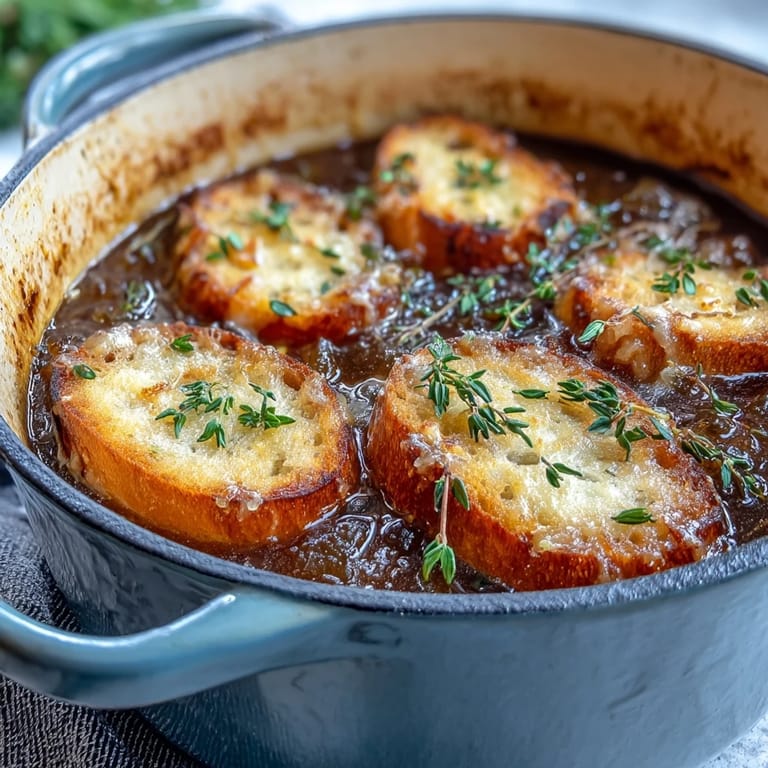
 The steady rain against my kitchen window created the perfect backdrop for French onion soup that autumn evening. I'd just returned from a trip to Paris where the taste of real French onion soup lingered in my memory. Standing over my trusty Dutch oven, watching paper-thin onion slices transform from sharp and bright to deeply caramelized, I realized some foods simply can't be rushed. The apartment gradually filled with an aroma so rich my neighbor knocked to ask what I was cooking.
Last winter during that three-day power outage, this soup became our unexpected salvation. With the gas stove still functioning, I made an enormous pot that fed the neighbors who gathered in our candlelit living room. Something magical happened as we all broke through those crusty cheese tops, steam rising from our spoons, conversation flowing easily between strangers now connected by this simple comfort food.
Ingredients
- Yellow onions: The foundation of everything good in this soup, I learned to slice them paper-thin and cook them longer than feels necessary until they collapse into sweet, mahogany threads.
- Dry white wine: After watching an elderly chef in Paris deglaze her pan with abandon, I realized wine isnt just for flavor but unlocks all those beautiful caramelized bits stuck to the bottom of the pot.
- Gruyère cheese: This is where bargain shopping fails you, as its nutty complexity and perfect meltability create that iconic stretchy cheese pull that makes everyone at the table smile.
- Beef broth: The backbone of your soup that carries all those caramelized flavors, worth using homemade if you have it or a high-quality store-bought version.
- Baguette: Look for something with structure that can hold up when toasted without disintegrating into your soup the moment it meets liquid.
Tired of Takeout? 🥡
Get 10 meals you can make faster than delivery arrives. Seriously.
One email. No spam. Unsubscribe anytime.
Instructions
- Start the onion transformation:
- Melt butter and olive oil in your Dutch oven before adding those mountains of sliced onions and a sprinkle of sugar. Youll want to stir occasionally while they slowly surrender and transform over the next 40-45 minutes, their volume reducing dramatically as they turn a deep golden color.
- Build the flavor base:
- Once your kitchen smells heavenly and the onions have caramelized properly, add the minced garlic just long enough to become fragrant without burning. This brief minute makes all the difference between harsh and harmonious garlic notes.
- Deglaze and enrich:
- Pour in the wine with a satisfying sizzle, using your wooden spoon to scrape up all those concentrated flavor bits from the bottom. Let it bubble away for a few minutes, concentrating its acidity and sweetness.
- Create your soup:
- Add the broth, aromatic herbs, and Worcestershire sauce before allowing everything to simmer together uncovered. The flavors will marry and concentrate over the next half hour as the herbs infuse throughout.
- Prepare the crowning glory:
- While your soup develops, toast those baguette slices until theyre golden and sturdy enough to float. They need to have structure while remaining tender enough to absorb some of that rich broth.
- Assemble and broil:
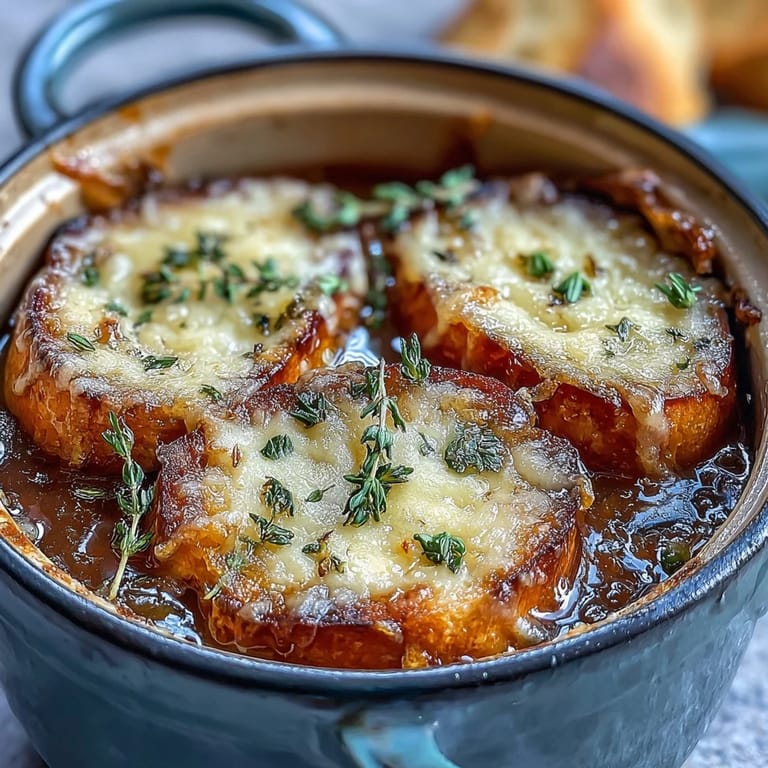
- Ladle your liquid gold into oven-safe bowls, float your toasted bread on top, and blanket generously with cheese. Watch carefully under the broiler as the cheese transforms into a molten, bubbling crust that signals perfection.
 Pin it
 The first time I served this to my foodie friend Laura, she grew quiet after the first spoonful. I worried something was wrong until she looked up with an expression of pure contentment and said, This tastes like memories I havent even made yet. Since then, this soup has become our tradition whenever one of us needs comfort, celebration, or just a moment to slow down and remember what matters.
The Art of Caramelization
My first attempts at caramelizing onions always ended with either burnt bitter messes or pale, barely-cooked disappointments. The breakthrough came when I started using my Dutch oven which distributes heat more evenly than my thin-bottomed pans ever could. Now I know patience is the secret ingredient, allowing the onions to gradually release their moisture and natural sugars while concentrating their essence into something entirely new.
Bread and Cheese Selection
After much delicious experimentation, Ive found that day-old baguette actually works better than fresh, as it maintains its integrity when meeting the hot soup. The bread should be substantial enough to absorb some broth without disintegrating but not so thick or hard that it becomes difficult to eat. As for the cheese, while traditional Gruyère is ideal, Ive discovered that a blend with some aged Swiss or even a touch of sharp white cheddar can create wonderful variations.
Serving and Pairing Suggestions
French onion soup deserves to be the star of your meal, but a simple green salad dressed with a bright vinaigrette offers the perfect counterpoint to its richness. The crisp acidity of the greens cleanses your palate between spoonfuls of that deep, savory broth and stretchy cheese.
- A cold, crisp white wine like Chablis or Sauvignon Blanc cuts through the richness beautifully, especially on warmer evenings when you still crave the comfort of soup.
- For a complete experience, serve small portions as a starter before a simple roast chicken or lean steak dinner.
- Keep extra toasted baguette slices on the side for anyone who wants to soak up every last drop of that precious broth.
 Pin it
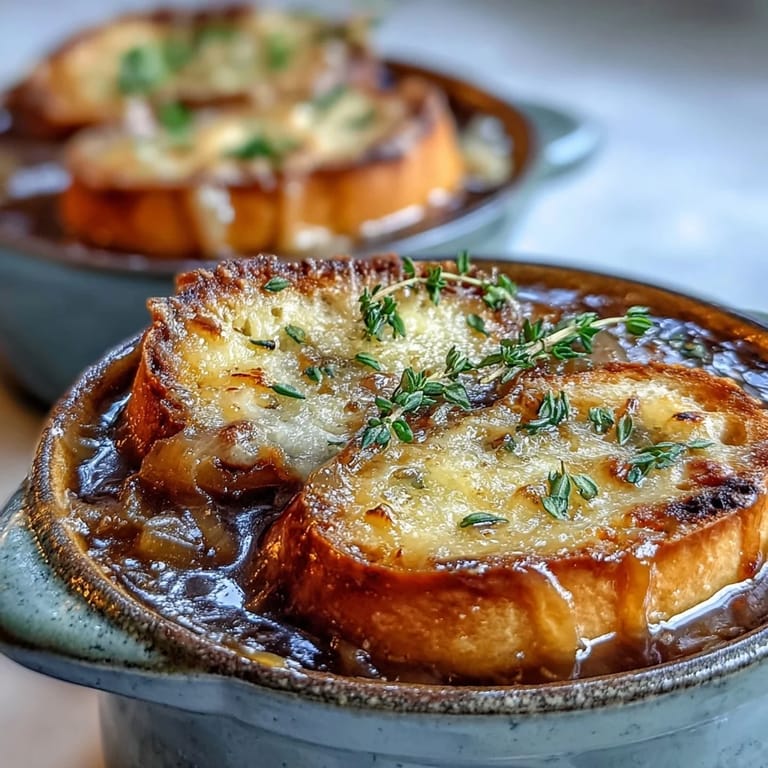
 This French onion soup isnt just a recipe but a reminder that transformations take time. Like those humble onions that become something extraordinary with patience and attention, some of lifes best moments come from slowing down and savoring the process.
Recipe FAQ
- → Why use a Dutch oven?
The heavy, even heat distribution helps onions caramize uniformly without burning, while the tight-fitting lid locks in moisture during simmering.
- → Can I make this vegetarian?
Yes, simply swap beef broth for vegetable broth and either omit Worcestershire or choose a vegetarian-friendly brand.
- → How long does it take to caramelize onions properly?
Plan for 40-45 minutes over medium heat, stirring frequently. This slow process develops the deep sweetness and rich color that makes this dish special.
- → What cheese works best for topping?
Gruyère is traditional for its nutty flavor and excellent melting properties. Swiss or Emmental make great alternatives with similar characteristics.
- → Can this be made ahead?
The soup base actually improves after refrigerating 1-2 days. Add the bread and cheese just before serving for the best texture.
- → What wine should I use?
A dry white wine like Sauvignon Blanc or Pinot Grigio works well. Avoid sweet wines as they'll affect the final flavor balance.